Unlocking Growth: The Power of Paid Ads for Small Businesses
Did you know that Facebook Ads convert better than any other platform, with a 9.21% conversion rate? Also, 88% of businesses in India say that paid campaigns help them get noticed more. For small businesses, this is a great way to reach the right people and grow sales. Let’s look at how platforms like Google and Facebook can help your business grow with smart advertising strategies.
Small businesses often face the challenge of getting noticed in a crowded marketplace. With limited resources and high competition, standing out can seem like a huge task. Paid advertising is a solution that allows businesses to target the right audience, increase visibility, and boost sales. Whether you are new to advertising or have tried it before, understanding how paid advertising works and how to make it work for your business is key to growth.
Understanding Paid Advertising for Small Businesses
Paid advertising means paying a platform to show your business to a wider audience. There are several types of paid ads, including Google Ads for business and Facebook Ads for business, which allow you to target people based on their interests, location, age, and other factors. These ads help you reach potential customers who might not otherwise know about your business.
Are paid ads effective for small businesses? Discover the impact of paid advertising by reading our blog!
Why Paid Advertising Works for Small Businesses
- Targeted Audience: One of the biggest advantages of paid ads is the ability to target your ideal customer. With tools like Google Ads for business and Facebook Ads for business, you can choose the audience that is most likely to be interested in your products or services. This helps to ensure that your money is spent efficiently, reaching those who are more likely to convert.
- Increased Visibility: Whether you are running a local store or an online business, paid ads can help get your business in front of more people. 88% of businesses in India have found that paid ads help increase their visibility and improve customer engagement.
- Better Return on Investment (ROI): Many small businesses report higher sales and a better return on investment (ROI) after using paid ads. With platforms like Google Ads for business, you only pay when someone clicks on your ad, making it a cost-effective method of advertising. The results can be measured and adjusted based on performance, helping you maximise the effectiveness of your budget.
- Measurable Results: One of the best things about paid advertising is the ability to measure results. Platforms like Google and Facebook give you detailed analytics, so you can see how many people are engaging with your ads, how much they are spending, and how your business is performing. This allows you to tweak your campaigns for even better results.
Choosing the Right Platform: Google Ads vs Facebook Ads
Both Google Ads for business and Facebook Ads for business are popular choices, but each platform has its strengths depending on your business goals.
Google Ads for Business
Google Ads is a pay-per-click (PPC) platform, where businesses only pay when someone clicks on their ad. It is great for businesses that want to target people who are actively searching for products or services. For example, if someone searches for “best coffee shop near me” or “affordable wedding dresses,” your ad can appear in the search results.
The key benefit of Google Ads for business is that it helps you target people who already have an interest in what you’re selling. Since they are already searching for related topics, they are more likely to click on your ad and convert.
Facebook Ads for Business
Facebook Ads for Business is ideal for businesses looking to target a specific audience based on interests, location, age, and other factors. Unlike Google Ads, Facebook ads appear on users’ feeds, whether they are actively searching for your product or not. This is called “social advertising” and allows you to reach potential customers who might not have known about your business but are interested in what you have to offer.
For example, if you own a fitness store, you can target people who like fitness-related pages, live in a specific area, and fall within a certain age range. Facebook Ads for Business makes it easy to reach a highly targeted audience with just a few clicks.
Budgeting for Paid Advertising
When starting out with paid advertising, one of the first things to consider is your budget. The amount you spend on ads will depend on several factors, including your business goals, the platform you choose, and the type of ads you create.
- Start Small: If you’re new to paid advertising, it’s a good idea to start with a small budget and test different ad campaigns. This allows you to see what works without spending too much upfront. For example, you can set a daily budget for your ads and monitor how well they perform.
- Set Clear Goals: Before you start running ads, think about what you want to achieve. Do you want to increase website traffic, get more people to sign up for your newsletter, or drive sales? Having clear goals will help you create more effective ads and set a budget that aligns with your objectives.
- Measure and Adjust: As you run ads, make sure to track their performance. If an ad is not performing well, don’t hesitate to adjust your budget or change the targeting. With platforms like Google Ads for Business and Facebook Ads for Business, you can make real-time changes to improve your ad performance.
Creating Effective Ad Campaigns
To make the most of your paid advertising, it’s important to create ads that are clear, compelling, and visually appealing. Here are some tips for creating ads that will drive results:
- Use Eye-catching Visuals: Whether it’s an image, a video, or a carousel ad, make sure your visuals stand out. High-quality images or videos will grab people’s attention and encourage them to learn more about your business.
- Write Clear and Engaging Copy: Your ad copy should be short, clear, and focused on the benefits of your product or service. Use a strong call-to-action (CTA), like “Shop Now” or “Learn More,” to encourage users to take the next step.
- Target the Right Audience: As mentioned earlier, both Google Ads for business and Facebook Ads for business offer powerful targeting tools. Use them to ensure your ads are shown to the right people. You can target based on location, interests, age, and even behaviour.
- Test Different Ad Formats: It’s important to test different types of ads to see what works best for your business. Try running both text ads and image ads on Facebook, or experiment with different keywords on Google. By testing and tracking, you can optimise your campaigns for the best results.
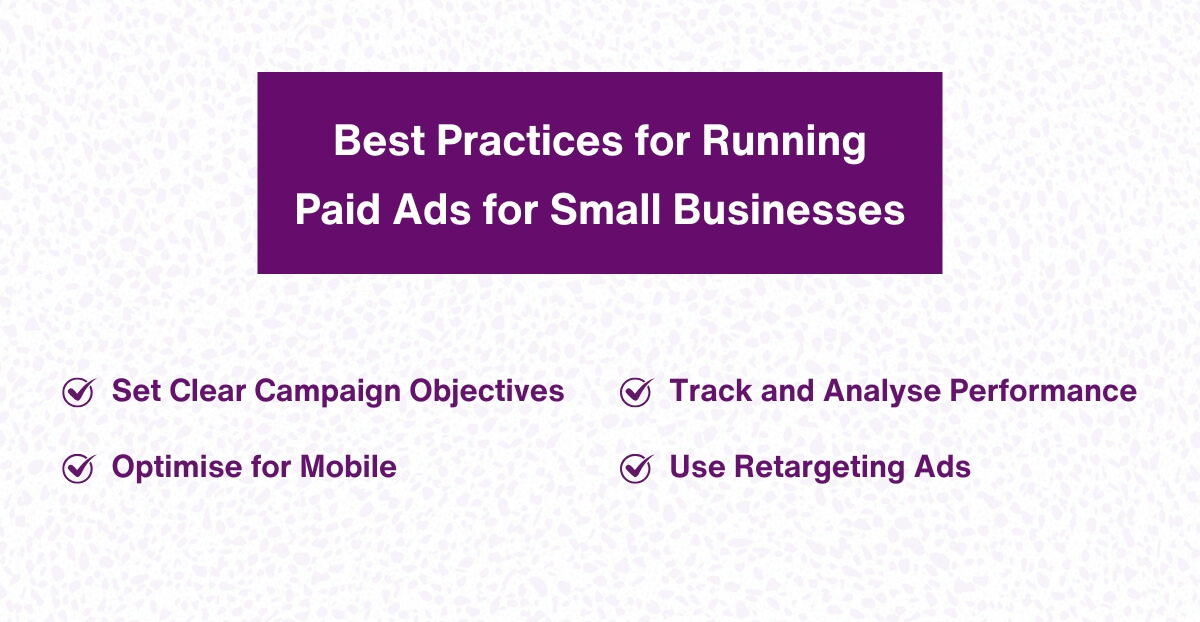
Best Practices for Running Paid Ads
- Set Clear Campaign Objectives: Having a clear goal for your ad campaign, such as driving traffic, generating leads, or increasing sales, helps you measure success and optimise your ads.
- Optimise for Mobile: With many people using smartphones to browse the internet, make sure your ads are mobile-friendly. Ads that work well on mobile devices are more likely to convert.
- Track and Analyse Performance: Both Google Ads for business and Facebook Ads for business offer detailed analytics. By tracking metrics like click-through rate (CTR), cost-per-click (CPC), and conversion rates, you can understand how your ads are performing and make adjustments as needed.
- Use Retargeting Ads: Retargeting is a powerful strategy that shows ads to people who have visited your website or interacted with your business. This can help bring back potential customers needing a little nudge to convert.
Conclusion
Paid advertising can be a game-changer for small businesses looking to increase visibility, drive traffic, and boost sales. Whether you use Google Ads for business or Facebook Ads for business, the key is to create targeted, engaging ads that reach the right audience. By setting a realistic budget, testing different ad formats, and tracking performance, you can unlock growth for your business through paid advertising.
If you’re ready to boost your reach and maximise your marketing efforts, consider availing our Paid Campaign Management service today. Let us help you create targeted campaigns that drive results!
FAQs
1. What is paid advertising, and how does it work for small businesses?
Paid advertising refers to paying a platform like Google or Facebook to display your ads to a targeted audience. Small businesses can benefit by using these ads to reach potential customers who may not be aware of their brand. Ads can be targeted based on factors such as location, age, and interests, ensuring the right people see them. Platforms like Google Ads for Business and Facebook Ads for Business provide tools to measure performance, helping businesses optimise campaigns for the best results.
2. How much should a small business spend on paid ads?
The amount you spend on paid advertising depends on your goals, industry, and platform. Many small businesses start with a small budget and adjust as they learn what works. Platforms like Google Ads for business offer flexibility, allowing you to set daily or monthly budgets. Tracking performance helps you optimise spending and maximise return on investment (ROI).
3. What are the benefits of using Facebook ads for my small business?
Facebook Ads for Business allows you to reach a large, targeted audience. With over 2 billion active users, Facebook helps you connect with potential customers based on their interests, demographics, and behaviours. It’s an effective tool for increasing brand awareness, generating leads, and driving sales. The platform offers a variety of ad formats, including video, carousel, and image ads, to capture attention and drive engagement.
4. Can paid advertising help increase sales for small businesses?
Yes, paid advertising can significantly boost sales by increasing visibility and driving traffic to your website or store. Studies show that businesses that use paid ads often see higher sales. For example, many small businesses report improved performance with platforms like Google Ads for Business and Facebook Ads for Business, which help target customers with high conversion potential, ultimately leading to increased revenue.
5. What is the difference between Google Ads and Facebook Ads for small businesses?
Google Ads for Business targets users based on their search queries, making it ideal for businesses that want to capture demand when potential customers are actively searching for products or services. Facebook Ads for Business, on the other hand, allows businesses to target users based on interests, location, age, and more, helping you reach people who may not be actively searching but are still interested in your offering. Both platforms are effective, but the choice depends on your business goals and audience.