Top 10 Trends in the Food Business Industry You Need to Know in 2025
The food business industry continues to evolve rapidly, driven by changing consumer preferences, technological advancements, and a growing focus on sustainability. Whether you are an established entrepreneur or someone just starting a venture, understanding these emerging trends can help you stay competitive.
From securing the right food business license to setting up successful stalls at exhibitions, keeping up with industry trends is essential for success. Let’s explore the top 10 trends that will shape the food business landscape in 2025.
1. Health-Conscious Eating on the Rise
Consumers are increasingly prioritising their health and seeking food options that are nutritious and balanced. The demand for plant-based, organic, and gluten-free products is growing. Entrepreneurs in the food business can cater to this demand by offering healthier alternatives and transparent labelling about nutritional content.
Tip: Consider adding fresh juices, low-calorie meals, or keto-friendly dishes to your menu.
2. Sustainability and Eco-Friendly Practices
Sustainability has become a crucial factor for consumers when choosing where to dine or buy food. The use of biodegradable packaging and sourcing ingredients from local farmers are popular practices.
Action: Reducing food waste and adopting zero-waste policies can significantly attract environmentally conscious customers.
3. Digital Food Services Continue to Expand
With busy lifestyles, consumers are increasingly relying on online platforms to order food. The rise of food delivery apps and direct online orders through restaurant websites is transforming the way the food business operates.
Example: Many small restaurants are investing in user-friendly mobile apps and optimising their websites for online orders.
4. Food Stalls Gaining Popularity
Food stalls at exhibitions and local events are trending as cost-effective ways for businesses to reach new customers. They provide opportunities for businesses to showcase their offerings creatively and gain brand exposure.
To learn more about setting up a successful food stall, read this detailed guide.
5. Hyper-Local Food Offerings
Consumers are gravitating towards local and traditional food options. Highlighting the uniqueness of regional ingredients can make your business stand out.
Idea: Offering regional dishes with a creative twist can capture the interest of food enthusiasts.
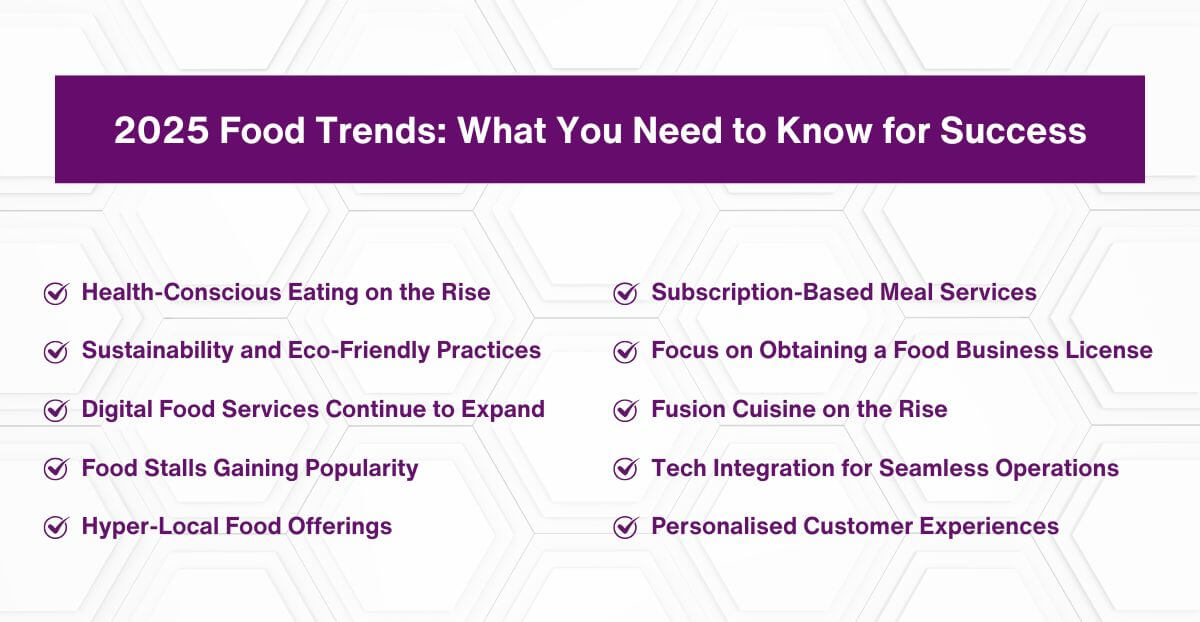
6. Subscription-Based Meal Services
Meal subscription services are gaining popularity as people seek convenient and cost-effective dining solutions. Businesses can offer weekly or monthly meal packages tailored to specific dietary preferences.
Why It Matters: It ensures steady revenue and helps build customer loyalty.
7. Focus on Obtaining a Food Business License
A food business license is a crucial requirement for any venture to operate legally and build customer trust. In India, an FSSAI license ensures food safety and hygiene.
Tip: Ensure your business complies with regulations by obtaining the right license. You can get FSSAI License Registrations here.
8. Fusion Cuisine on the Rise
Consumers are looking for unique and memorable dining experiences. Fusion cuisine, which combines elements from different culinary traditions, is becoming increasingly popular.
Example: Think of dishes like butter chicken tacos or masala pasta.
9. Tech Integration for Seamless Operations
Technology is transforming how food businesses operate. Tech integration improves efficiency and customer satisfaction, from AI-driven order management systems to digital payment solutions.
Suggestion: Implementing a simple point-of-sale system or using CRM tools can streamline your business processes.
10. Personalised Customer Experiences
Consumers appreciate personalised service, whether it’s customised meal options or tailored offers based on their preferences.
Strategy: Use customer data to understand their preferences and offer targeted promotions.
Conclusion
The food business landscape in 2025 is filled with exciting opportunities driven by changing consumer preferences, technological advancements, and the push towards sustainability. Entrepreneurs who adapt to these trends and meet market demands will undoubtedly thrive. Whether getting a food business license or setting up innovative stalls at exhibitions, staying informed and agile is key. Keep exploring new ideas, embrace innovation, and serve up success on a plate.
FAQs
1. What are the top food business trends to watch in 2025?
In 2025, trends like plant-based foods, tech-driven services, personalised meal options, and a focus on sustainability are expected to shape the industry. Businesses adopting these trends can better meet customer expectations and boost growth.
2. How is technology transforming the food business?
Technology is reshaping the food business with innovations like AI-driven food recommendations, online delivery platforms, and automated kitchen solutions. Staying updated with tech advancements can help businesses streamline operations and enhance customer experiences.
3. Why is sustainability important in the food business?
Consumers are increasingly choosing brands that prioritise eco-friendly practices. Using biodegradable packaging, reducing food waste, and sourcing locally are sustainable practices that not only benefit the environment but also attract conscious consumers.
4. What steps are essential for obtaining a food business license?
Getting a food business license involves registering with the appropriate authorities, ensuring food safety compliance, and providing the necessary documentation. This ensures your business is legally recognised and trusted by customers.
5. How can small businesses stand out in the competitive food market?
Small businesses can thrive by offering unique menu options, focusing on personalised customer experiences, and leveraging digital marketing. Attending exhibitions and events is also a great way to gain visibility, as explained in this helpful guide.