Selling on E-commerce Platforms: A Guide for Small Businesses
In today’s digital age, e-commerce has revolutionised the way businesses operate. According to the latest figures, more than 4 crore MSMEs (Micro, Small, and Medium Enterprises) have registered on the Udyam portal, indicating a surge in interest in online selling. Whether you are a new business owner or looking to expand your brick-and-mortar operations, selling on e-commerce platforms can significantly boost your reach and sales.
This guide will help you navigate the essential steps to successfully sell products on e-commerce platforms, optimise your listings, and understand how to leverage the top e-commerce platforms to drive growth for your small business.
Why Sell on E-commerce Platforms?
Selling on e-commerce platforms allows small businesses to tap into a vast online market. With the right strategy, you can showcase your products to a global audience, work from anywhere, and operate 24/7. The benefits include lower operational costs, flexibility, and the ability to scale your business without needing a physical storefront. Many small business owners are choosing to sell on e-commerce platforms to gain exposure, attract new customers, and increase sales.
E-commerce platforms provide a wealth of tools and resources, such as inventory management, payment processing, and marketing features, all in one place. This makes it easier for small businesses to manage their operations while reaching potential customers on a larger scale.
Choosing the Right E-commerce Platform for Your Business
The first step in selling on e-commerce platforms is selecting the right platform for your business. There are many top e-commerce platforms to choose from, and each has its own set of features. Let’s take a look at some of the most popular ones to help you make an informed decision.
-
Shopify
Shopify is one of the top e-commerce platforms known for its user-friendly interface, ease of use, and scalability. With a variety of themes and apps available, you can customise your online store to suit your brand. Shopify is ideal for businesses of all sizes, offering tools for everything from marketing to customer engagement. The platform supports multiple payment methods, integrates easily with social media, and allows you to sell across different channels, including your website, Facebook, and Instagram.
-
WooCommerce
WooCommerce is a popular e-commerce plugin for WordPress users. If you already have a WordPress website, WooCommerce is an excellent choice. This platform offers a range of customisation options and is ideal for businesses with specific design needs. WooCommerce is free to use, though you’ll need to pay for hosting and any premium themes or plugins.
-
Etsy
If you sell handmade or vintage items, Etsy is one of the best e-commerce platforms to showcase your products. With a dedicated audience of buyers looking for unique goods, Etsy provides a community-oriented marketplace where small businesses can thrive. Etsy handles most of the technical aspects, including payments and shipping, so you can focus on creating your products.
-
Amazon
Amazon is the largest online marketplace, and selling on Amazon can give you access to millions of potential customers. However, the competition is fierce, and Amazon charges fees for each sale made on the platform. While selling on e-commerce platforms like Amazon offers vast exposure, it’s important to weigh the fees against the potential sales volume.
-
BigCommerce
BigCommerce is another excellent choice for businesses looking to scale. With a comprehensive set of tools for inventory management, marketing, and SEO, BigCommerce offers more advanced features than some other platforms. However, it may require a little more technical knowledge to get started. BigCommerce is suitable for businesses with large inventories or those looking to expand quickly.
-
Wix
Wix is a drag-and-drop website builder with an integrated e-commerce solution. It’s an excellent choice for small businesses that want an easy-to-use platform to sell products online. Wix is cost-effective, offers a range of design templates, and allows for customisation, making it suitable for smaller businesses with basic needs.
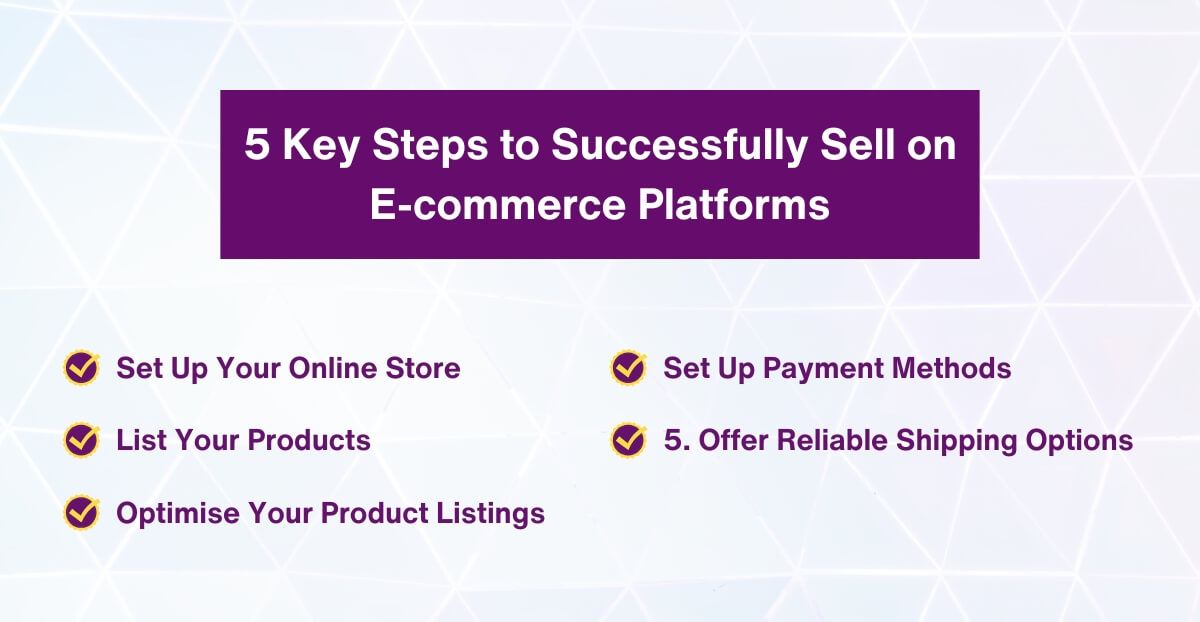
5 Key Steps to Successfully Sell on E-commerce Platforms
Now that you have selected your platform, it’s time to focus on setting up your store and optimising it for success. Here are the key steps to follow when selling on e-commerce platforms.
1. Set Up Your Online Store
Your first task is to create an online store. Most e-commerce platforms offer easy-to-follow instructions to help you set up your store quickly. Make sure your store reflects your brand’s identity through customisable design options, including logo, colour scheme, and layout. A well-designed store will attract more customers and make them feel confident about purchasing your products.
2. List Your Products
Listing your products is the next important step. When selling on e-commerce platforms, you’ll need to provide detailed product descriptions, high-quality images, and pricing information. Make sure your product descriptions are clear, and concise, and include relevant keywords to help customers find your products in search results.
3. Optimise Your Product Listings
Optimising your listings is essential for driving traffic and increasing sales. Here are a few tips to optimise your product listings:
- Use High-Quality Images: Customers can’t physically touch or feel your products online, so high-quality, well-lit images are crucial. Show your products from different angles and in use.
- Write Compelling Product Descriptions: Provide clear and detailed descriptions of your products. Include key features, benefits, and sizing information.
- Use Keywords: Incorporate relevant keywords into your product descriptions, titles, and tags. This will help your products appear in search engine results and improve visibility on the platform.
4. Set Up Payment Methods
Setting up payment methods is one of the most critical steps when selling on e-commerce platforms. You’ll need to choose payment processors that are convenient for your customers and ensure that your payments are secure. Popular options include PayPal, credit and debit cards, and newer methods like Apple Pay and Google Pay.
5. Offer Reliable Shipping Options
Shipping is a vital part of the e-commerce process. Be sure to offer multiple shipping options and provide clear information about delivery times and costs. Many top e-commerce platforms allow you to integrate with logistics companies for seamless order fulfilment. Offering free shipping can be a great incentive for customers, but make sure you account for the additional costs in your pricing strategy.
How to Market Your E-commerce Business
Once your store is set up and running, the next step is to market your products and reach a wider audience. There are several strategies you can use to promote your business when selling on e-commerce platforms:
1. Leverage Social Media
Social media platforms like Facebook, Instagram, and Pinterest are powerful tools for driving traffic to your e-commerce store. Create engaging content, run ads, and interact with your customers to build a loyal following. You can also link your social media profiles to your e-commerce store, allowing customers to shop directly from your posts.
2. Use Email Marketing
Email marketing is another effective way to engage with your customers. Collect customer emails and send out newsletters featuring product updates, promotions, and discounts. This will keep your customers informed and encourage repeat purchases.
3. Optimise for SEO
Search engine optimisation (SEO) is crucial for ensuring your e-commerce store ranks well in search engine results. Focus on using relevant keywords, optimising your product descriptions, and creating high-quality content on your site. You can also use tools like Google Ads to run paid campaigns and drive targeted traffic to your store.
4. Participate in Online Marketplaces
If you’re selling on e-commerce platforms like Amazon, Etsy, or eBay, take advantage of their marketing tools. Many of these platforms offer paid advertising options, promotions, and special deals that can help boost your visibility and attract more customers.
Conclusion
Selling on e-commerce platforms offers small businesses incredible opportunities to reach a larger audience and increase sales. You can turn your online store into a successful business by selecting the right platform, optimising your product listings, offering excellent customer service, and using effective marketing strategies. Remember to monitor your store’s performance regularly and adjust your strategies. With dedication and the right tools, your small business can thrive in the e-commerce world.
For more insights into selling online and understanding different e-commerce models, check out our blog on the ONDC Network vs Traditional E-commerce Platforms.
To get more help with market linkages for your small business, explore the Market Linkages Solution.
FAQs
1. What are e-commerce platforms?
E-commerce platforms are online services that allow businesses to sell products or services to customers over the Internet. These platforms provide a set of tools to manage online stores, process payments, track inventory, and handle customer orders. Examples include Shopify, WooCommerce, and Amazon.
2. How do I choose the best e-commerce platform for my business?
Choosing the best e-commerce platform depends on your business needs, budget, and technical expertise. Factors like ease of use, customisation options, payment methods, and scalability should be considered. Popular platforms like Shopify are great for ease of use, while WooCommerce works well for businesses with a WordPress site.
3. How can I optimise my product listings on e-commerce platforms?
To optimise your product listings, use high-quality images, write clear and detailed descriptions, and include relevant keywords. Also, ensure your product titles are concise and easy to understand. This improves visibility on search engines and makes it easier for customers to find your products.
4. What payment methods can I offer on e-commerce platforms?
Most e-commerce platforms support various payment methods such as credit and debit cards, PayPal, digital wallets like Google Pay and Apple Pay, and even cash on delivery in some regions. Offering multiple payment options can make your store more accessible and convenient for customers.
5. How can I market my products on e-commerce platforms?
You can market your products through social media advertising, email campaigns, SEO strategies, and paid ads on the e-commerce platform itself. Running promotions and discounts can also attract more customers and boost sales. Using these strategies consistently can help drive traffic and grow your business.