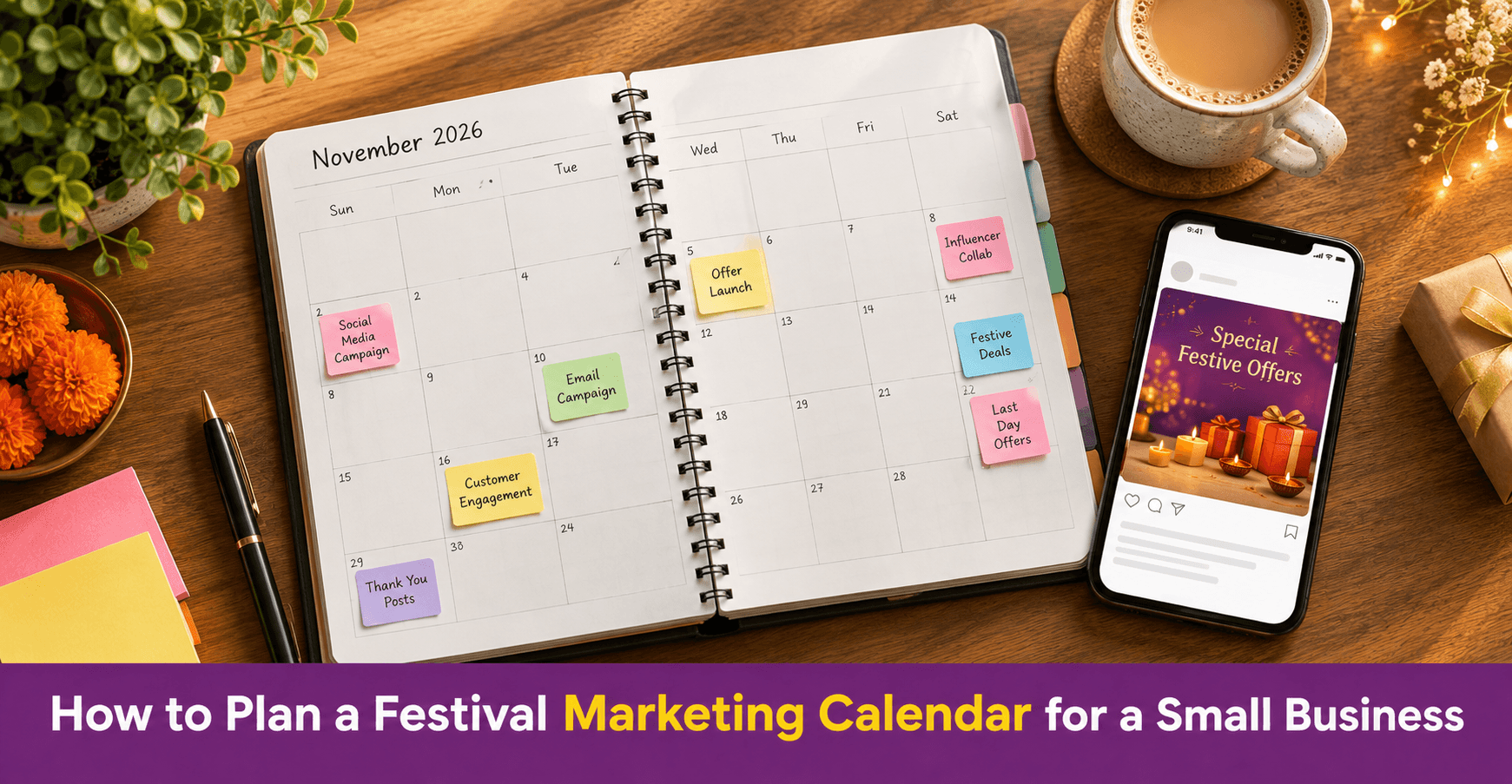
How to Plan a Festival Marketing Calendar for a Small Business in India
A festival marketing calendar is a plan that maps out promotions, content, and offers around India’s major festivals well before each one arrives. For a small business, this means deciding in advance what to promote for Diwali, Eid, Christmas, Holi, and other relevant festivals, rather than scrambling to put together a sale post the week a festival begins.
However, many small businesses treat each festival as a separate, last-minute task instead of part of a recurring yearly pattern. This guide covers how to build a festival marketing calendar that works across India’s festival calendar, not just a single occasion, so that planning becomes a repeatable habit rather than a yearly scramble.
Key Takeaways
- A festival marketing calendar maps promotions across India’s major festivals in advance, rather than planning each one separately as it approaches.
- India’s festival calendar includes both pan-India occasions, such as Diwali and Holi, and regional ones, such as Onam and Pongal, which matter differently depending on where a business’s customers are based.
- Planning content and offers four to six weeks ahead of each festival gives enough time for design, messaging, and inventory preparation without a last-minute rush.
- Reusing a proven festival campaign structure across different festivals saves planning time each time a new one approaches.
- Reviewing what worked after each festival, and noting it directly in the calendar, makes the next year’s planning faster and better informed.

What Is a Festival Marketing Calendar?
A festival marketing calendar is a planning document that lists relevant festivals across the year, along with the promotions, content, and offers a business intends to run around each one. It sits alongside a broader marketing or content calendar, but focuses specifically on festival-driven promotional activity.
For a small business in India, this calendar typically needs to account for a wider spread of occasions than a single-festival plan. Diwali and Holi are widely observed across most of India, while festivals such as Onam, Pongal, Durga Puja, and Raksha Bandhan matter more in specific regions or communities. A useful calendar reflects which festivals are actually relevant to a business’s own customer base, rather than listing every festival on the Indian calendar by default.
Why Does Festival Planning Matter for a Small Business in India?
Festival planning matters because customer attention and spending intent rise sharply around India’s major festivals, and a business without a plan in place often misses this window or scrambles to respond to it late. Waiting until a festival is a week away leaves little time for design, messaging, or preparing stock.
In addition, festivals repeat every year on a broadly predictable schedule. A business that documents what worked during one year’s Diwali campaign has a head start the following year, rather than starting the planning process from zero each time. This compounding advantage is one of the strongest reasons to treat festival marketing as a recurring calendar exercise rather than a one-off task each time a festival approaches.
How to Build a Festival Marketing Calendar in Five Steps
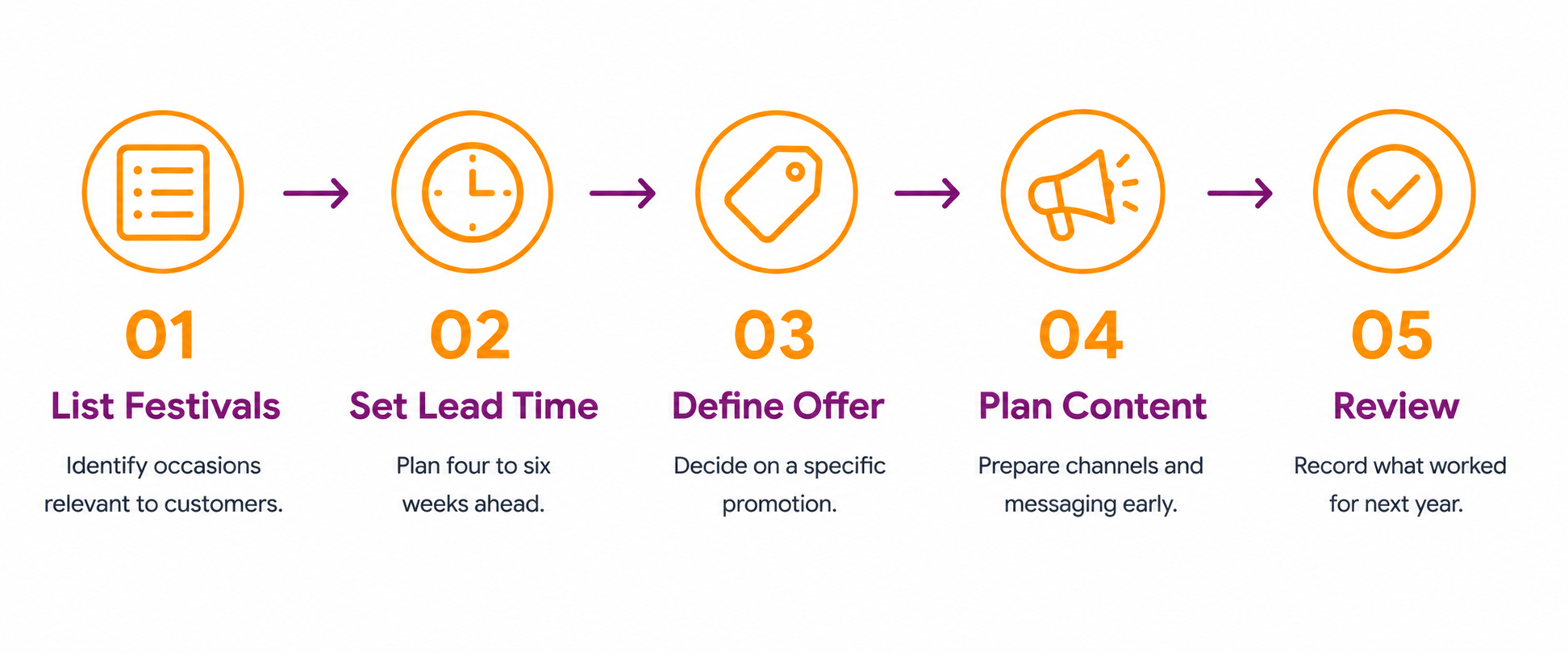
Building a festival marketing calendar follows a consistent structure that works across any festival on the list, not just one.
Step 1: List the festivals relevant to the business- Start with major pan-India festivals such as Diwali, Holi, Eid, and Christmas, then add regional or community-specific festivals relevant to the business’s actual customer base, such as Onam, Pongal, or Durga Puja.
Step 2: Set a planning lead time for each festival- Work backward from each festival date by four to six weeks to set a deadline for finalising offers, content, and any design work needed. This lead time gives enough room to prepare without rushing.
Step 3: Define the offer or promotion for each festival- Decide what will actually be promoted, whether it is a discount, a festival-specific product, or a limited-time bundle. A specific, well-defined offer performs better than a generic “festive sale” message repeated across every occasion.
Step 4: Plan the content and channels in advance- Decide which platforms will carry the promotion, such as Instagram, WhatsApp broadcasts, or email, and draft the content ahead of the lead-time deadline rather than the week of the festival itself.
Step 5: Record what worked after each festival. Note which offers, content types, or channels performed best directly in the calendar. This turns the calendar into a growing reference document rather than a static list that gets rebuilt from scratch every year.
How to Prioritise Festivals for a Small Business
Not every festival deserves the same level of planning effort, and prioritising the right ones makes a festival marketing calendar more manageable.
| Festival Type | Examples | Planning Priority |
| Major pan-India festivals | Diwali, Holi | High — plan well in advance, across multiple channels |
| Widely observed community festivals | Eid, Christmas, Raksha Bandhan | High to medium — prioritise if relevant to the customer base |
| Regional festivals | Onam, Pongal, Durga Puja, Ganesh Chaturthi | Medium to high, depending on the business’s location and customer base |
| Minor or niche occasions | Smaller local observances | Low — plan only if a clear, direct connection to the business exists |
A business based in Kerala, for instance, would prioritise Onam at the same level as Diwali, while a business in a different region might give it lower priority. This is why a copied, generic festival list is less useful than one built around a business’s actual customers.
How to Reuse a Festival Campaign Structure Across Occasions
Once a festival campaign structure works well, it can be reused for other festivals with adjustments to the offer, messaging, and visuals, rather than rebuilt from scratch each time.
A structure that includes a specific offer, a countdown or lead-in period, a peak promotional push around the festival itself, and a short post-festival follow-up works across most festivals with minor changes. This reuse is what makes a festival marketing calendar genuinely time-saving over a full year, rather than requiring the same planning effort for each occasion individually.
Conclusion
A festival marketing calendar works best when it covers the full spread of festivals relevant to a business, prioritised by how much they matter to that business’s actual customers, rather than treating every occasion identically. Planning four to six weeks ahead, defining a specific offer for each festival, and reusing a proven campaign structure across occasions all reduce the effort needed each time a festival approaches.
Therefore, start by listing the festivals genuinely relevant to the business, prioritise them by customer relevance, and build one reusable campaign structure that can be adapted from festival to festival.
However, the calendar is only as useful as the review that follows each festival. Recording what worked, directly in the calendar itself, is what turns a one-time planning effort into a compounding advantage year after year.
Your Next Step

Frequently Asked Questions
How to plan a festival marketing calendar for a small business in India?
List the festivals relevant to the business’s actual customer base, starting with major pan-India festivals and adding regional ones where relevant. Work backward from each festival date by four to six weeks to plan offers, content, and design. Define a specific offer for each festival rather than a generic sale message, and record what worked after each one for future reference.
Which festivals should a small business prioritise for marketing in India?
Prioritise major pan-India festivals such as Diwali and Holi, then add widely observed community festivals like Eid and Christmas where relevant to the customer base. Regional festivals such as Onam, Pongal, or Durga Puja should be prioritised based on where the business’s customers are actually located, rather than included by default.
How far in advance should festival marketing be planned?
Planning four to six weeks ahead of each festival date gives enough time to finalise offers, prepare content, and handle any design work needed. This lead time avoids the last-minute scramble that happens when festival planning starts only a week or two before the occasion.
What is a good seasonal marketing strategy for small businesses in India?
A good seasonal marketing strategy treats festivals as a recurring yearly pattern rather than isolated events. This means building a reusable campaign structure, prioritising festivals by relevance to the actual customer base, and reviewing what worked after each occasion to improve the following year’s planning.
Can the same festival campaign structure be used for different festivals?
Yes. A structure that includes a specific offer, a lead-in period, a peak promotional push, and a short follow-up can be reused across most festivals with adjustments to the offer, messaging, and visuals for each specific occasion. This reuse saves significant planning time across a full year of festivals.