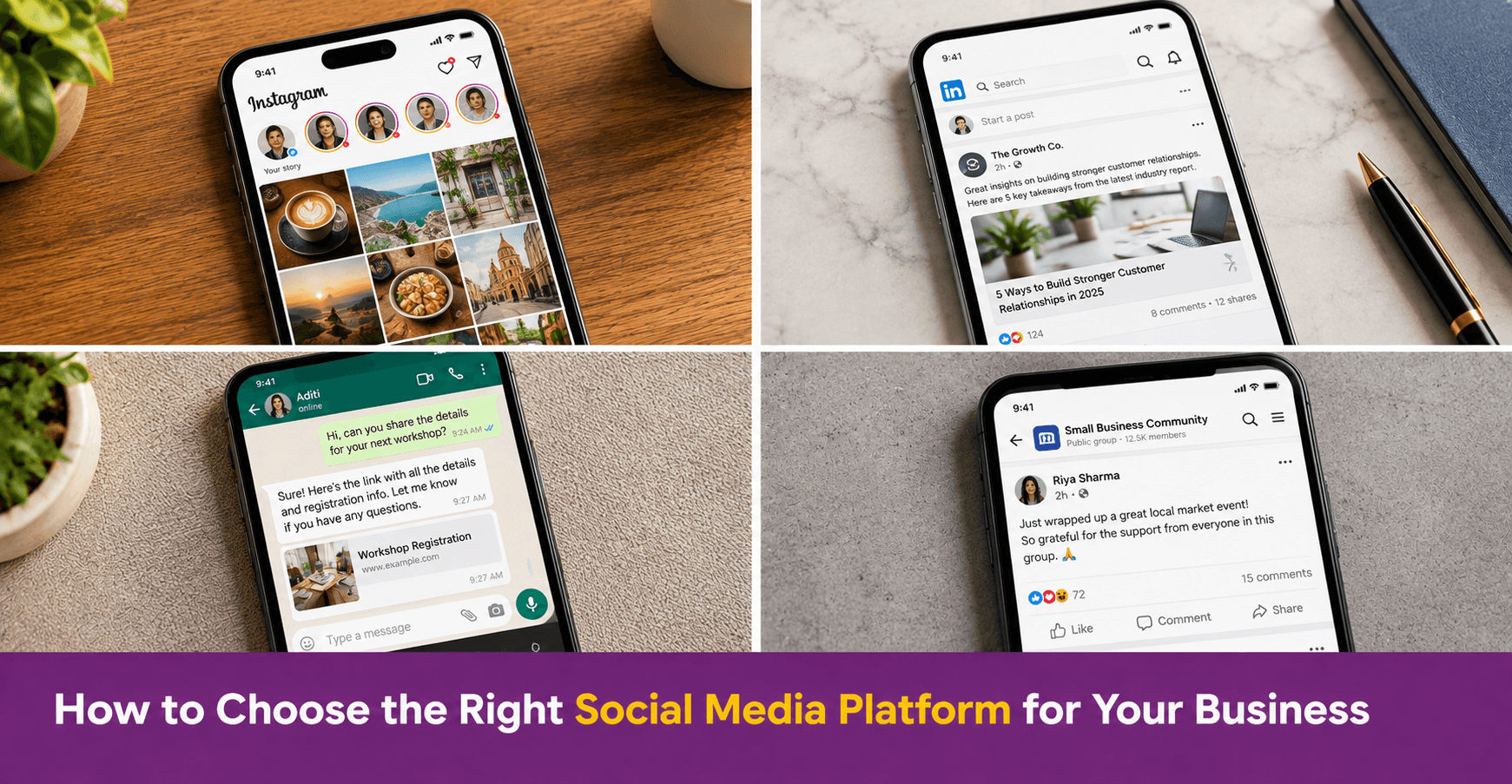
How to Choose the Right Social Media Platform for Your Business
Choosing the right social media platform means picking the one or two platforms where a business’s actual customers already spend time, rather than trying to maintain a presence everywhere at once. For a small business, this decision affects how much effort is required to stay active and how much of that effort actually reaches the right audience.
However, many small businesses default to whichever platform feels most familiar or most talked about, without checking whether that platform actually fits their product, service, or customer base. This guide covers how each major platform differs, and a practical way to decide which ones are worth a small business’s limited time.
Key Takeaways
- The right social media platform depends on where a business’s actual customers spend time, not which platform is currently most popular in general.
- Visual, product-based businesses tend to perform well on Instagram, while service businesses selling to other businesses often see more relevant engagement on LinkedIn.
- Facebook remains useful for reaching a broader, often older audience and for features like Groups and Marketplace, even as some younger users shift toward other platforms.
- WhatsApp Business functions differently from a discovery platform. It is best suited for direct communication with customers who already know the business.
- Maintaining one or two platforms well produces better results for a small business than spreading limited time thin across every available platform.
What Does It Mean to Choose the Right Social Media Platform?
Choosing the right social media platform means matching a business’s product, audience, and available time to the platform where that combination is most likely to succeed, rather than choosing based on general popularity or personal preference. A platform that works well for one type of business may not work at all for another.
A visually driven product business and a business-to-business consulting service, for example, need very different platforms to reach their respective audiences effectively. The right choice depends on specific factors about the business itself, not a single platform that works best for every business.
How to Decide Which Social Media Platforms Fit a Business
Deciding which platforms fit a business comes down to a few consistent questions, applied honestly rather than based on assumption.
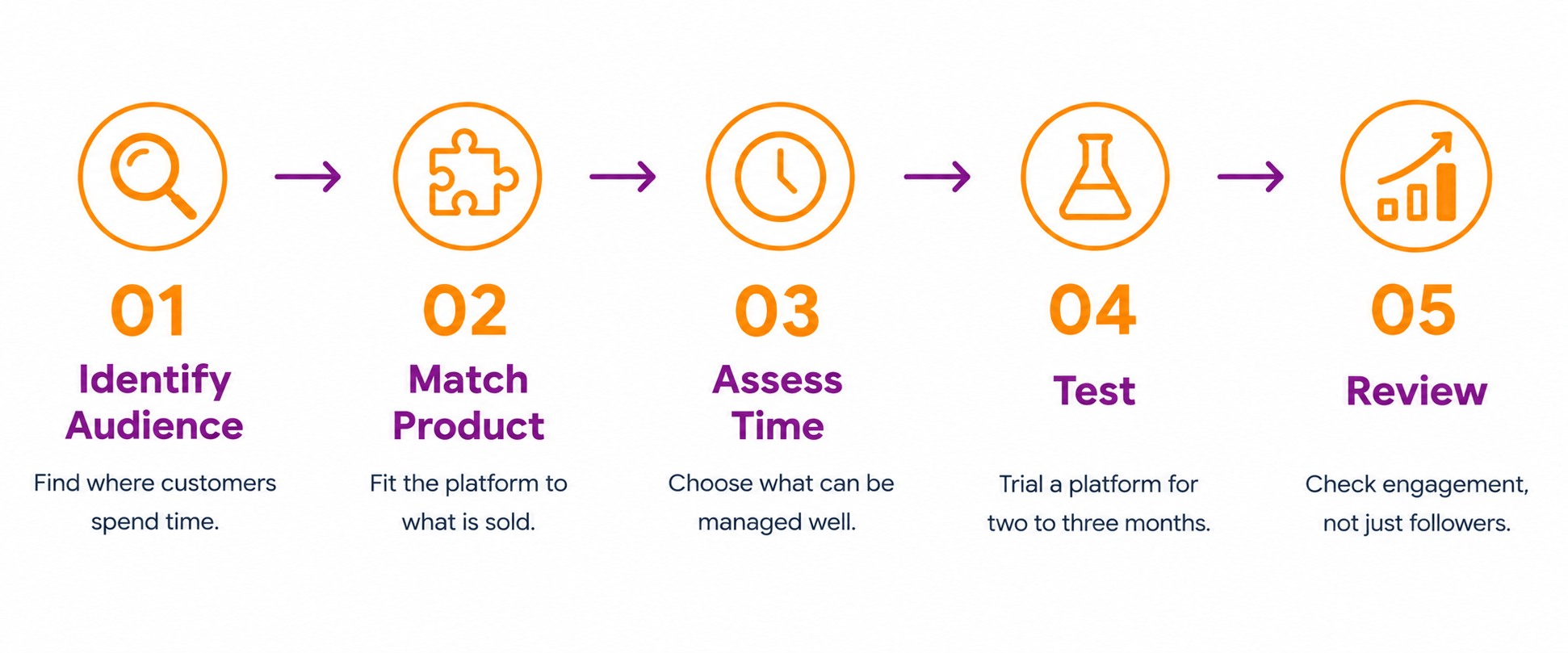
Step 1: Identify where the actual target audience spends time- Consider the age range, interests, and habits of the customers a business is trying to reach, rather than where the business owner personally spends the most time online.
Step 2: Match the platform to the product or service type- Visual, product-based businesses such as food, fashion, or handmade goods tend to suit image and video-first platforms. Service-based or business-to-business offerings often perform better on platforms built around professional networking and longer-form content.
Step 3: Consider how much time can realistically be committed- A platform maintained inconsistently performs worse than one platform maintained well. Choosing fewer platforms that can be managed properly is more effective than spreading effort across several that get updated rarely.
Step 4: Test with a defined trial period- Commit to a platform for a set period, such as two to three months, before judging whether it is working. Early results on a new platform are often inconsistent and do not reflect its long-term potential.
Step 5: Review engagement, not just follower count- A smaller audience that comments, messages, and buys is more valuable than a larger one that scrolls past without engaging. Reviewing actual engagement helps confirm whether a platform choice is working.
How Do the Major Social Media Platforms Differ for Business Use?
Each major platform serves a different purpose for a small business, and understanding these differences makes the platform choice easier.
| Platform | Best Suited For | Content Style | Typical Use Case |
| Visual, product-based businesses | Photos, short videos, Stories | Product discovery, brand storytelling | |
| Broader, often older audience reach | Posts, events, Groups, Marketplace listings | Local community reach, customer service, events | |
| WhatsApp Business | Direct communication with known customers | One-to-one and broadcast messages | Order confirmations, customer queries, follow-ups |
| Business-to-business services and professional offerings | Articles, updates, professional networking | Reaching other businesses, hiring, thought leadership | |
| YouTube | Businesses with tutorial, demonstration, or explainer content | Longer-form video | In-depth product demos, how-to content, reviews |
A business rarely needs all five. Most small businesses find that one or two platforms, chosen based on the factors above, cover their actual needs effectively.
How to Avoid Common Mistakes When Choosing a Platform
Certain assumptions lead small businesses to choose platforms poorly. Recognising these patterns helps avoid the same mistakes.
Trying to maintain a presence on every available platform at once is one of the most common mistakes. This usually results in inconsistent posting across all of them rather than strong presence on any single one. Choosing a platform based on where the business owner personally prefers to spend time, rather than where the target audience actually is, is another common error. A founder who enjoys a particular platform personally may still be choosing the wrong one for the business if its actual customers are elsewhere.
How to Know If a Platform Choice Is Working
A platform choice is working when it produces measurable engagement and, ultimately, business outcomes such as inquiries, orders, or bookings, not simply a growing follower count on its own.
Reviewing basic metrics, such as how many people engage with posts, how many messages or inquiries come through the platform, and whether that activity converts into actual business, gives a clearer picture than follower count alone. If a platform consistently fails to produce this kind of engagement after a reasonable trial period, it is a signal to revisit the decision rather than continuing out of habit.
Conclusion
Choosing the right social media platform depends on matching a business’s actual audience, product type, and available time to the platform best suited to reach them, rather than defaulting to whichever platform feels most familiar or popular. Instagram tends to suit visual, product-based businesses, LinkedIn suits business-to-business services, Facebook offers broader community reach, WhatsApp Business supports direct communication, and YouTube suits businesses with genuine video or tutorial content to share.
Therefore, start by identifying where the target audience actually spends time, then commit to one or two platforms that fit both the business and the time realistically available to manage them well.
However, a platform decision is not permanent. Reviewing engagement after a defined trial period, and adjusting based on what the data actually shows, matters more than getting the choice perfect from the start.
Your Next Step

Frequently Asked Questions
How to choose the right social media platform for a small business?
Identify where the business’s actual target audience spends time, then match that to a platform suited to the product or service type. Visual, product-based businesses tend to suit Instagram, while business-to-business services often perform better on LinkedIn. Commit to one or two platforms that can realistically be managed well, rather than spreading effort thin across many.
Should a small business be active on every social media platform?
No. Maintaining a presence on every platform at once usually results in inconsistent posting and weak engagement across all of them. Most small businesses see better results by choosing one or two platforms suited to their audience and product, and managing those consistently.
Is Instagram or Facebook better for a small business?
This depends on the business type and audience. Instagram tends to suit visually driven, product-based businesses reaching a younger audience, while Facebook offers broader reach, including an often older audience, along with features like Groups and Marketplace listings useful for local businesses.
How long should a business test a social media platform before deciding if it works?
A trial period of two to three months gives a more accurate picture than judging results in the first few weeks. Early activity on a new platform is often inconsistent, so a defined trial period helps separate genuine underperformance from normal early-stage variability.
Is WhatsApp Business a social media platform for marketing?
WhatsApp Business functions differently from discovery-focused platforms like Instagram or Facebook. It works best for direct, one-to-one or broadcast communication with customers who already know the business, such as order confirmations and follow-ups, rather than for reaching entirely new audiences.