
The Role of Content Marketing in a Modern Digital Marketing Strategy
Businesses that consistently capture attention are those that invest in content marketing with clarity and intent. As customer behaviour evolves and digital platforms become more competitive, a strong digital marketing strategy must be built on meaningful and relevant communication. Organisations are shifting from high-volume, generic output to thoughtful, insight-driven content that reflects real expertise and delivers value.
Research-backed approaches show that brands aligning their messaging with customer intent see stronger engagement and improved conversions. When integrated into a focused digital marketing strategy, content marketing becomes a key driver of visibility, credibility, and long-term growth. It allows businesses to connect with audiences in a way that feels authentic, while guiding them towards informed decisions.

Understanding the Strategic Value of Content Marketing
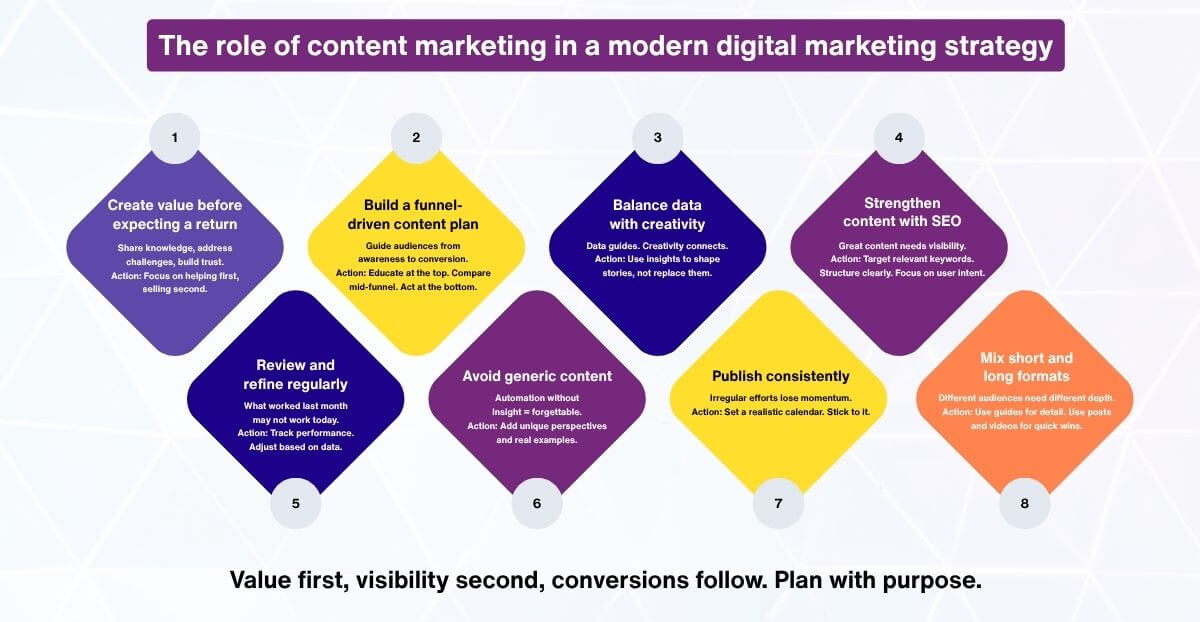
At its core, content marketing is about creating value before expecting a return. It enables businesses to share knowledge, address challenges, and position themselves as trusted voices in their industry. Within a well-structured digital marketing strategy, content becomes the foundation that supports every other activity, from social media to search visibility.
For industry leaders, this approach holds significant importance. Decision-makers rely heavily on information before engaging with a brand. When businesses consistently deliver insightful and relevant content marketing, they build credibility over time. A carefully planned digital marketing strategy ensures that this content reaches the right audience at the right moment, increasing the chances of meaningful engagement.
Building a Funnel-Driven Content Strategy
An effective digital marketing strategy must address the entire customer journey, from initial awareness to final conversion. This is where content marketing plays a central role by guiding audiences through each stage with clarity and purpose.
At the awareness stage, businesses should focus on educational content that answers key questions and introduces solutions. Simple blog posts, short videos, and social media updates work well to attract attention. During the consideration stage, audiences seek deeper insights. Detailed articles, comparisons, and practical guides help build trust and confidence. At the conversion stage, content must be precise and action-oriented, encouraging the audience to take the next step.
By aligning content marketing efforts with the customer journey, businesses create a smooth and engaging experience. A strong digital marketing strategy ensures that every piece of content serves a purpose and contributes to overall growth.
Combining Data, Creativity, and Technology
Modern content marketing thrives on the balance between data and creativity. Businesses now have access to valuable insights about customer preferences, behaviours, and trends. When these insights are integrated into a digital marketing strategy, they help shape content that is both relevant and effective.
At the same time, creativity remains essential. Data can guide decisions, but it cannot replace the human ability to tell stories, simplify complex ideas, and connect emotionally with audiences. The most successful content marketing strategies combine analytical thinking with creative execution, ensuring that content is both informative and engaging.
Technology plays a supporting role in this process. Tools can assist in research, planning, and performance tracking. However, the true strength of a digital marketing strategy lies in how well businesses use these tools to enhance their content rather than replace human insight.
The Role of SEO in Strengthening Content Impact
Search visibility is a critical element of any digital marketing strategy, and content marketing is central to achieving it. Without proper optimisation, even high-quality content may struggle to reach its intended audience.
Effective SEO ensures that content aligns with what users are actively searching for. This involves selecting relevant keywords, structuring content clearly, and focusing on user intent. When SEO is integrated with content marketing, businesses improve their chances of appearing in search results and attracting organic traffic.
A well-planned digital marketing strategy uses SEO to enhance the reach of content while maintaining quality and relevance. This approach supports long-term growth by building both visibility and trust.
Creating High-Performing Content That Converts
High-performing content marketing focuses on delivering value in a way that is easy to understand and act upon. Businesses must prioritise clarity, relevance, and structure to keep their audience engaged.
Long-form content, such as guides and case studies, works well for audiences seeking detailed information. These formats allow businesses to demonstrate expertise and provide actionable insights. Short-form content, on the other hand, helps capture attention quickly and drive initial engagement. A balanced mix of formats within a digital marketing strategy ensures wider reach and stronger impact.
Consistency is another important factor. Regular publishing keeps the audience engaged and reinforces brand presence. Over time, this consistency builds trust, making it easier to convert interest into action through content marketing.
Addressing Challenges in Content Marketing
While content marketing offers significant opportunities, it also presents challenges that businesses must address. One common issue is the creation of generic content that fails to stand out. This often occurs when there is an over-reliance on automation without adding unique insights or perspectives.
Another challenge is maintaining consistency. Many businesses begin with strong efforts but struggle to sustain them over time. Without a clear digital marketing strategy, content initiatives can lose direction and fail to deliver results.
To overcome these challenges, businesses should focus on originality, planning, and continuous improvement. Regular evaluation of performance metrics helps identify what works and where adjustments are needed. A structured approach ensures that content marketing remains effective and aligned with business goals.
The Role of deAsra and dreamBIG
For entrepreneurs and business leaders, platforms like deAsra play an important role in strengthening strategic thinking. Through initiatives such as the dreamBIG podcast, deAsra supports and engages business owners by sharing practical insights, actionable strategies, and real-world experiences.
These initiatives enable businesses to refine their digital marketing strategy and make better use of content marketing. By learning from shared experiences and structured guidance, entrepreneurs can adopt approaches that are both practical and impactful.
Conclusion
The role of content marketing in a modern digital marketing strategy is central to business success. It helps organisations attract attention, build trust, and guide customers through their decision-making journey. When executed effectively, it becomes a powerful tool for long-term growth.
A well-defined digital marketing strategy ensures that content efforts are purposeful and aligned with audience needs. By focusing on quality, consistency, and relevance, businesses can maximise the impact of their content marketing and stay competitive in an evolving digital landscape.

FAQs
1. Why is content marketing important in a digital marketing strategy?
Content marketing helps businesses communicate their value, build trust, and engage audiences effectively. It forms the foundation of a strong digital marketing strategy by driving awareness and supporting conversions.
2. How can businesses align content with the customer journey?
Businesses should create content tailored to each stage of the funnel. Awareness content educates, consideration content builds trust, and conversion content encourages action, making content marketing more effective.
3. What types of content deliver the best results?
A mix of long-form and short-form content works well. Guides, case studies, and videos are particularly effective in engaging audiences and strengthening a digital marketing strategy.
4. How can businesses maintain consistency in content marketing?
Planning and scheduling content in advance helps maintain consistency. A clear digital marketing strategy ensures that efforts remain focused and aligned with business goals.
5. What challenges should businesses be aware of in content marketing?
Common challenges include creating generic content and maintaining regular output. Addressing these issues requires a structured approach and continuous improvement within the digital marketing strategy.