
How to Create a Sales Strategy: A Step-by-Step Guide for Your Business
“A sales strategy defines your market positioning and clarifies how you communicate the value of your products or services to your target audience.” – Mr. Rahul Limaye
Why Every Leader Needs a Tailored Sales Strategy
Imagine running a business without a clear plan to win customers. Competitors would snap them up in no time. Mr. Rahul Limaye, a veteran with over 30 years in sales and growth, warns that a missing sales strategy leaves your offerings directionless. In a recent dreamBIG podcast episode, he shared battle-tested insights with host Vaishali Aparajit. This guide distils his wisdom into a practical walkthrough. You will learn strategies to increase sales through goal-setting, market targeting, process design, and smart resource use.
A strong sales strategy acts as your blueprint. As Mr. Limaye explains in this detailed blog, it aligns teams and drives revenue. Whether you lead a tech firm, retail chain, or service provider, these steps will sharpen your approach.

Step 1: Set Crystal-Clear Goals for Your Sales Strategy
Start with the end in mind. Ask: What revenue do you want in the next quarter? How many new clients must you acquire? Mr. Limaye stresses that goals give your sales strategy direction.
Break them into measurable targets. A software company might aim for 50 enterprise deals worth £500,000 each. A fashion brand could target 20% growth via online channels. Write goals using the SMART framework – Specific, Measurable, Achievable, Relevant, Time-bound.
These targets fuel strategies to increase sales. They help you track progress and adjust quickly. Without them, efforts scatter.
Step 2: Identify Your Ideal Target Market
Who buys from you? Pinpointing the right audience sharpens every sales strategy. Mr. Limaye advises ongoing research. Use customer data, surveys, and AI tools to uncover preferences.
Create buyer personas. For B2B, note job titles, company size, and pain points. For B2C, focus on age, income, and lifestyle. A tax consultant might target retailers needing compliance help.
This step unlocks strategies to increase sales. Tailor messages to resonate. A boutique selling silk saris could poll women aged 40–55: “Would you buy 82 variations of black silk?” Strong interest validates demand.
Continuous research keeps your sales strategy relevant. Markets shift – stay ahead.
Step 3: Choose Between B2B and B2C Models
Decide early. Mr. Limaye offers four parameters to guide your sales strategy.
- Product Type: B2B involves complex, custom solutions such as ERP systems. B2C focuses on standardised items like groceries.
- Target Market: B2B serves smaller, specialised groups with high-value deals. B2C reaches larger, diverse crowds through high-volume, low-value transactions.
- Sales Cycle: B2B stretches longer with multiple decision-makers. B2C wraps up quickly, often on impulse.
- Marketing: B2B builds trust via in-depth content. B2C sparks emotions with bold branding, such as a sports shoe promising better posture.
B2B demands relationship-building. B2C thrives on volume. Pick what fits your strengths. This choice shapes strategies to increase sales like networking for B2B or social campaigns for B2C.
Step 4: Design a Repeatable Sales Process
Map the journey from lead to close. A solid process powers any sales strategy. Break it into stages:
- Lead Generation – Use AI for high-quality prospects.
- Qualification – Consultative questions reveal needs.
- Presentation – Highlight utility, not features.
- Handling Objections – Address concerns with honesty.
- Closing – Secure commitment.
- Follow-Up – Build retention.
Mr. Limaye champions the consultative approach. “Don’t push products – explain their utility,” he says. Take inspiration from Gujju Benna Nashta, started at 77. The founder built trust through meaningful conversations.
Document this process. Train teams. It creates consistency and scales strategies to increase sales.
Step 5: Build Customer Acquisition Tactics
Acquisition feeds growth. Blend proven strategies to increase sales into your sales strategy:
- Networking: Seek referrals and collaborations. A cross-region meeting sparks fresh ideas.
- Cognitive Presence: Share value online. Post “Three tax-saving tips for retailers” on LinkedIn.
- Technology: AI analyses data for personalised outreach.
Combine these. A hotel could partner with a fashion boutique for pop-up events. Diversify channels – email, social, events. Track what works.
Step 6: Master Retention to Sustain Growth
Keeping customers costs less than finding new ones. Embed retention in your sales strategy. Mr. Limaye lists practical moves:
- Personalised Communication – Frame products as premium or practical.
- Loyalty Programmes – Reward repeat buys.
- Multi-Channel Access – List on Swiggy or your app.
- Feedback Loops – Invite unhappy customers back.
A restaurant responding to a poor review with a free meal rebuilds trust. These strategies to increase sales turn buyers into advocates.
Step 7: Leverage Feedback as a Growth Engine
Treat feedback like gold. It refines your sales strategy. Use it to:
- Test Ideas – Beta launches gather insights.
- Fix Pain Points – Public responses show care.
One negative review handled well can boost perceived value. Integrate feedback into promotions. Happy customers spread the word, fuelling strategies to increase sales.
Step 8: Allocate Resources Wisely
People, tools, and budget drive execution. Align them with your sales strategy. Hire consultative sellers. Invest in CRM software. Train on AI analytics.
For economic uncertainty, diversify revenue. A chemical firm pivoted to hand wash during the pandemic – profits jumped 70%. Scenario planning prepares you.
White-labelling offers quick cash. Sell an AI comb under a big brand in Pune, then launch your own in Delhi. Balance short-term gains with long-term vision.
Step 9: Adapt in Uncertain Times
Markets fluctuate. Build resilience into your sales strategy. Conduct regular research. Collaborate across sectors. Prepare for scenarios.
Mr. Limaye urges calm leadership. “Accept uncertainty as inevitable,” he says. These strategies to increase sales turn challenges into opportunities.
Step 10: Prepare for the Future
Stay proactive. Run AI polls. Tailor offerings – cartoons for millennials, Warli art for traditional buyers. Your sales strategy must evolve daily.
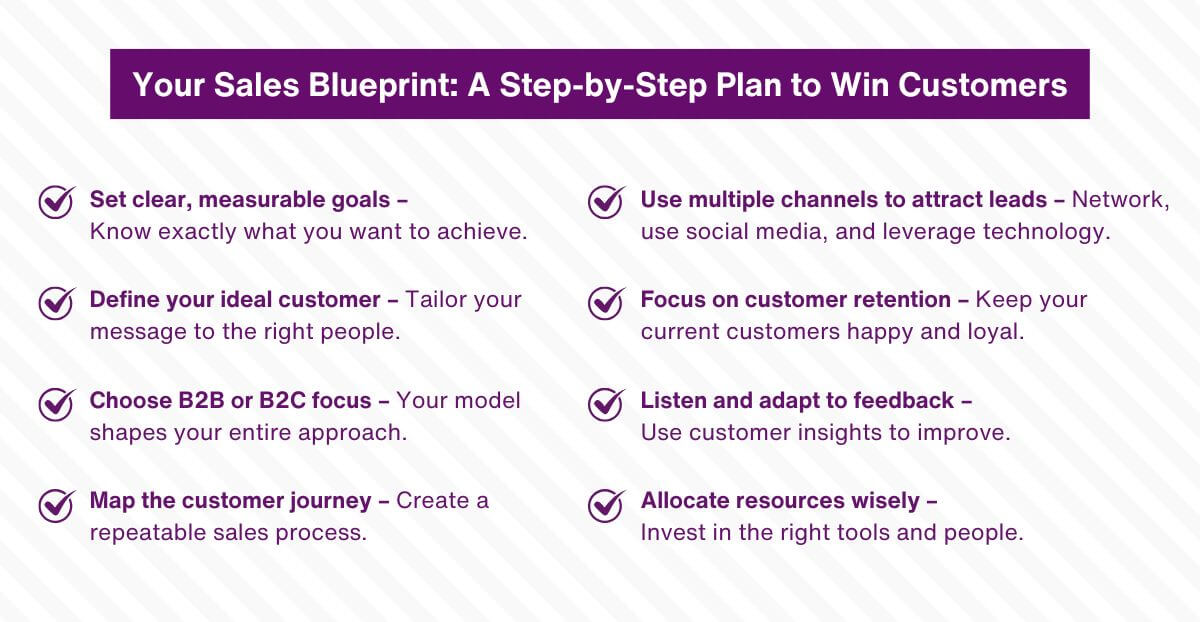
Conclusion: Your Sales Strategy in Action
Crafting a winning sales strategy demands clarity, customisation, and adaptability. Set goals, know your market, design processes, and allocate resources. Blend acquisition with retention. Use feedback and technology wisely.
As Mr. Limaye closes, “Success in sales comes from adaptability, customer focus, and leveraging insights from data and feedback.” Start today. Pick one step, implement it this week, and watch revenue climb. Your business deserves a roadmap that delivers results.

FAQs
1. What is the first step in creating a sales strategy?
Begin with goal-setting. Define exact revenue targets and customer numbers. Mr. Limaye insists goals provide direction. Use SMART criteria to make them actionable. This foundation supports all strategies to increase sales and keeps teams aligned.
2. How do I choose between B2B and B2C for my sales strategy?
Evaluate product complexity, market size, cycle length, and marketing style. B2B suits custom solutions with long cycles; B2C fits standard items with quick buys. Mr. Limaye’s four-parameter framework simplifies the decision and aligns your sales strategy with reality.
3. Why is customer retention part of a sales strategy?
Retention costs less than acquisition and builds steady revenue. Personalised messages, loyalty rewards, and quick feedback responses create loyalty. These strategies to increase sales turn one-time buyers into lifelong advocates who refer others.
4. How can feedback improve my sales strategy?
Feedback reveals gaps and opportunities. Beta tests refine products; public responses to complaints build trust. Mr. Limaye views it as a treasure that sharpens messaging and boosts perceived value, directly lifting strategies to increase sales.
5. Should market research be ongoing in a sales strategy?
Yes. Daily data from purchases, competitors, and AI tools keeps you competitive. Polls validate ideas fast. Continuous research ensures your sales strategy adapts to shifting preferences and uncovers new strategies to increase sales.