
Compliance Training Made Engaging: How to Move Beyond ‘Check-the-Box’
Picture this: instead of employees clicking through dull slides with glazed eyes, your team actively discusses real choices that could prevent a safety incident or protect sensitive data. Compliance training no longer feels like a regulatory burden—it becomes a moment of genuine insight and shared responsibility. For too long, compliance training for employees has suffered from the same predictable format: long videos, dense text, and a quick quiz at the end. Yet leaders who treat these programmes as opportunities rather than obligations discover real value. Mandatory topics such as workplace safety, harassment prevention, data protection, and ethical conduct can shape behaviour and strengthen culture when approached creatively.
Explore practical ideas shared in deAsra’s dreamBIG podcast series on training and retention, where experts stress that investing time in employee development pays dividends far beyond the initial effort. The same logic applies here: thoughtful compliance training builds role clarity and confidence.

The Hidden Cost of Boring Compliance Training
Traditional compliance training often prioritises covering every rule over helping people understand why those rules matter. Employees complete modules quickly, earn their certificate, and return to work with little behaviour change. Knowledge fades fast when the content feels disconnected from daily tasks. This approach wastes time and resources while leaving real risks unaddressed.
Leaders must recognise that people learn best through relevance and interaction. A safety module that simply lists dos and don’ts rarely sticks. The same holds for harassment prevention or anti-bribery rules. When compliance training for employees ignores the human side—emotions, context, decision-making—it fails to influence actions. Shifting the focus to practical understanding and positive outcomes changes everything.
Start with Relevance and Role Clarity
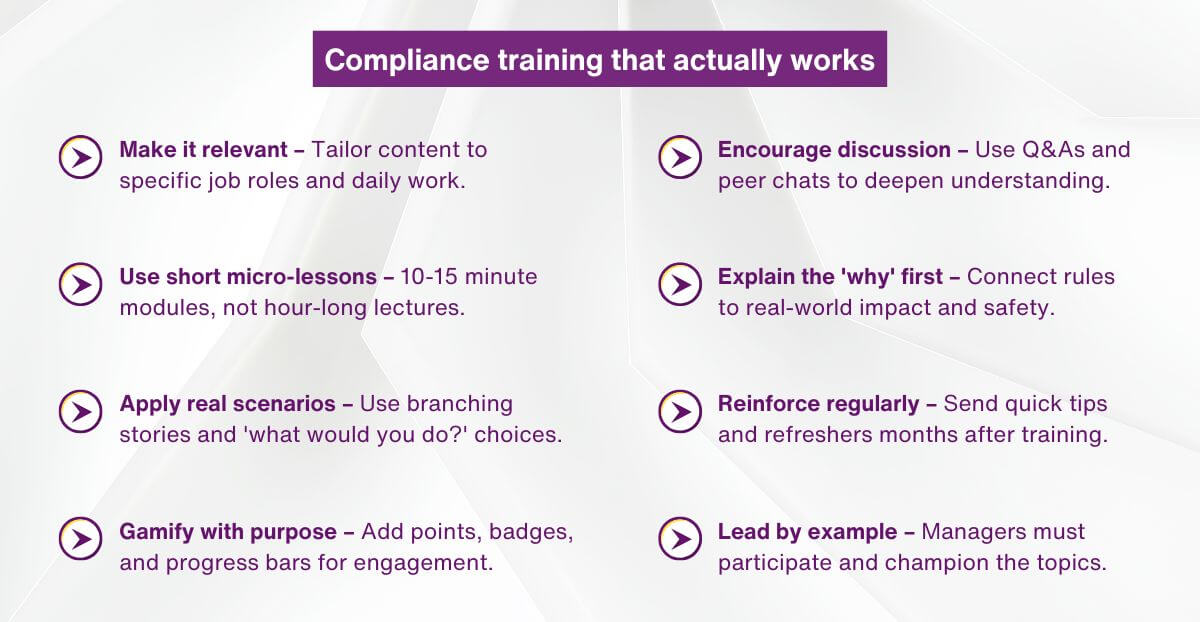
Make every module feel personal. Tailor content to specific roles so employees see immediate value. A warehouse team needs hands-on safety examples, while office staff benefit from data privacy scenarios tied to email and file handling. Role-specific examples reduce the “this doesn’t apply to me” mindset and increase engagement.
Begin each session by explaining the “why” behind the rules. Show how compliance protects colleagues, customers, and the business itself. When people understand the bigger picture, they move from compliance out of fear to compliance out of conviction. This simple shift turns compliance training into a shared mission rather than an imposed task.
Embrace Microlearning for Better Retention
Break long courses into short, focused segments of 10–15 minutes. Employees can complete these modules during natural breaks without disrupting their workflow. Short bursts respect busy schedules and match modern attention patterns.
Add quick interactive elements—polls, drag-and-drop exercises, or multiple-choice decisions—to keep minds active. Immediate feedback after each question reinforces correct thinking and corrects misunderstandings on the spot. Microlearning makes compliance training for employees feel manageable and effective rather than overwhelming.
Bring Rules to Life with Scenarios and Stories
Scenario-based learning stands out as one of the strongest tools available. Present realistic situations where the learner must choose a course of action. Branching paths show the consequences of each decision, letting participants experience outcomes safely. This method builds judgment and confidence far better than reading lists of rules.
Storytelling works equally well. Share anonymised real cases or industry examples that illustrate the impact of compliant and non-compliant behaviour. Short animated videos or narrated stories make abstract concepts concrete and memorable. When compliance training uses narratives, employees connect emotionally and remember the lesson longer.
Add Gamification Without Losing Seriousness
Introduce elements like points, badges, progress bars, or friendly team leaderboards. These features tap into natural motivation and create a sense of accomplishment. Keep the tone professional—reward thoughtful decisions rather than speed alone.
For sensitive topics such as harassment prevention, focus rewards on empathy, correct reporting steps, and supportive actions. Done carefully, gamification makes compliance training for employees more enjoyable while preserving the gravity of the subject matter.
Encourage Dialogue and Peer Learning
Even in online formats, build in discussion opportunities. Use forums, live Q&A sessions, or small group breakout rooms where employees share how they apply guidelines in their work. Peer perspectives often carry more weight than top-down instruction.
Invite managers to join sessions and share personal reflections. When leadership visibly participates, it signals that compliance matters at every level. Open dialogue transforms compliance training from a solo task into a team conversation.
Reinforce Learning Long After the Module Ends
One-off training rarely changes habits. Send timely reminders, quick tip sheets, or mobile-accessible refreshers at key moments—for example, before a major project starts or during peak safety-risk periods.
Link positive behaviour to recognition. A simple thank-you in a team meeting or a mention in company updates shows that ethical conduct is noticed and valued. Consistent reinforcement keeps compliance training for employees alive and relevant throughout the year.
Mr. Sajiri Chidgupkar, a seasoned HR expert featured in deAsra’s dreamBIG podcast, puts it clearly: “Every employee needs training… the employer’s major role is investing in training.” This truth applies perfectly to compliance programmes.
He also reminds us that skipping investment carries a higher cost: “It’s like saying, ‘I won’t buy insurance because I’ll never have an accident.’” Proactive training protects the organisation in ways that become obvious only when risks materialise.
Build a Culture Where Compliance Feels Natural
The most powerful compliance training happens within a wider culture of openness and learning. Leaders who communicate transparently, encourage questions, and model ethical behaviour create an environment where rules feel like shared values rather than external demands.
In smaller organisations, start simple. Use affordable digital tools, draw on internal expertise for scenarios, and focus on high-impact topics first. Over time, these efforts help compliance become part of the organisation’s identity.
Conclusion
Turning compliance training into an engaging experience requires intention, creativity, and consistency. Microlearning, scenarios, storytelling, gamification, dialogue, and ongoing reinforcement work together to create lasting impact. The result is not just regulatory coverage, but teams that make better decisions instinctively.
Organisations that invest in meaningful compliance training for employees reduce risks, lift engagement, and build stronger foundations for growth. Begin with one small change—perhaps shorter modules or a single scenario—and build from there. The difference will show in behaviour, morale, and peace of mind.

FAQs
1. Why does most compliance training feel like a chore?
Many programmes rely on passive formats—long readings, click-through slides, and basic quizzes—that prioritise completion over understanding. Employees finish quickly without connecting the content to their work, so the material fades fast, and behaviour stays unchanged.
2. How can small businesses create engaging compliance training without a big budget?
Use free or low-cost tools for microlearning, interactive quizzes, and simple scenarios. Draw on real workplace examples and internal knowledge to customise content. deAsra supports and engages businesses with practical, affordable strategies that deliver strong results even with limited resources.
3. Is gamification appropriate for serious topics like harassment or safety?
Yes, provided it focuses on rewarding correct decisions, empathy, and responsible actions rather than speed or trivial elements. Well-designed gamification motivates participation while keeping the subject’s importance front and centre.
4. What are the best ways to know if compliance training is working?
Look at practical outcomes: fewer incidents, higher reporting rates, positive feedback from pulse surveys, and visible changes in daily behaviour. Completion numbers alone tell only part of the story—focus on application and impact.
5. Can online compliance training match the engagement of face-to-face sessions?
Modern online formats often outperform traditional classrooms. Interactive scenarios, videos, branching choices, discussion forums, and mobile access offer flexibility and personalisation that keep learners involved and make learning stick better.