
Aligning Your Sales and Marketing Strategy for Maximum Lead Generation
In the competitive landscape of modern business, sales and marketing strategy alignment stands as a powerful driver of growth. When these two functions operate in harmony, organisations break down traditional silos to create a seamless lead handoff process and build a unified revenue engine. This integration ensures every campaign feeds directly into qualified opportunities while sales insights sharpen future efforts. Industry leaders who master sales and marketing strategy alignment witness higher pipeline quality, faster conversions, and consistent revenue momentum.

Why Silos Between Sales and Marketing Hurt Lead Generation
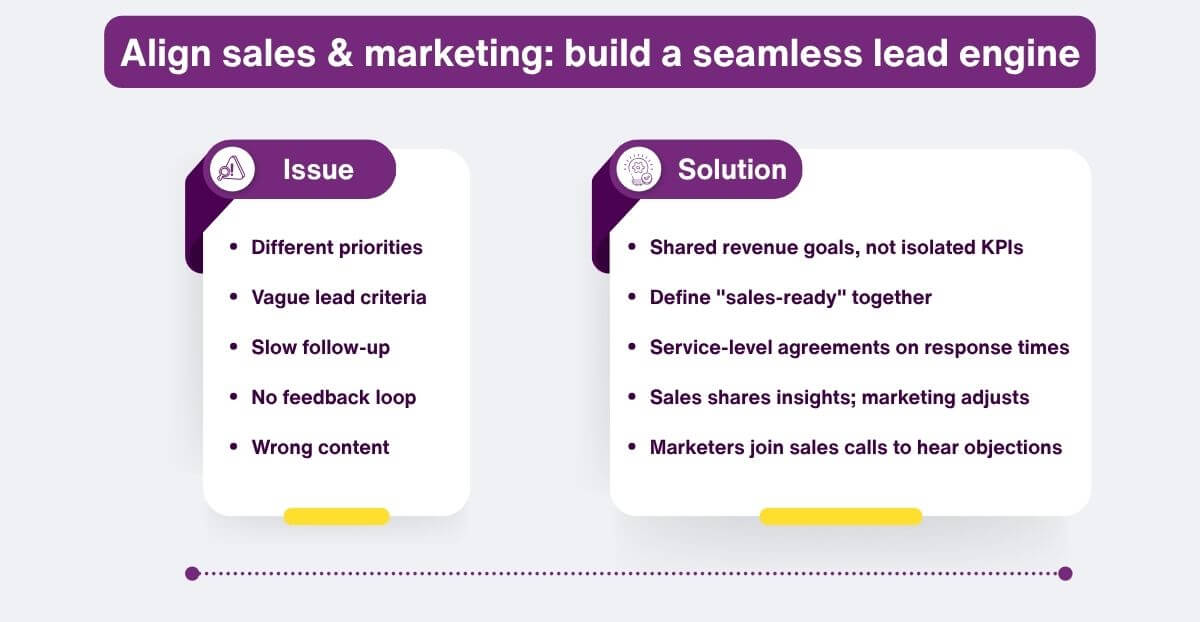
Many businesses still treat sales and marketing as separate departments with different priorities. Marketing often focuses on generating volume, while sales demand quality. This disconnect creates friction during lead handoff, where promising prospects slip away due to mismatched expectations or delayed follow-up.
A unified approach changes the game. When teams share goals, data, and buyer insights, the entire process becomes smoother. Marketing crafts messages that resonate with real customer pain points, and sales teams receive well-prepared leads ready for meaningful conversations. The result is a seamless lead handoff process that reduces lost opportunities and accelerates the path from awareness to closed deals.
The Foundation of Effective Sales and Marketing Strategy Alignment
True alignment begins with shared objectives tied to revenue outcomes rather than isolated targets. Both teams must agree on ideal customer profiles, qualification criteria, and success metrics. This common language eliminates guesswork and builds trust across functions.
Regular joint planning sessions allow teams to review performance together. They can analyse what content performs best in the field and adjust campaigns based on actual sales feedback. Such collaboration turns marketing efforts into precise tools that support the sales strategy while giving marketers clear visibility into how their work contributes to revenue.
Sales and marketing strategy alignment also demands the right technology. A centralised platform that connects customer relationship management systems with content libraries ensures everyone works from the same insights. This setup supports consistent messaging across channels and creates a unified revenue engine that moves prospects forward without friction.
Breaking Down Silos for Seamless Lead Handoff
The handoff moment often reveals the deepest cracks in alignment. Leads generated by marketing may sit untouched if sales find them unqualified, while valuable opportunities get overlooked due to poor communication.
To fix this, organisations should establish clear service-level agreements that define response times and qualification standards. Marketing teams benefit from sitting in on sales calls to understand real buyer objections, while sales professionals share frontline insights that refine targeting.
Building a Unified Revenue Engine Through Collaboration
A strong sales and marketing strategy creates a closed-loop system where insights flow freely in both directions. Sales teams provide feedback on which messages and materials actually move deals forward. Marketing uses this intelligence to develop more targeted campaigns and valuable content.
This feedback loop strengthens the entire revenue engine. Campaigns become sharper, content gains higher adoption rates, and forecasting improves through shared visibility. Teams stop optimising for their own metrics and start working toward collective success.
Mr. Rahul Limaye, a seasoned expert featured on the Dream Big podcast by deAsra, emphasises practical wisdom in this area. He notes that success comes from understanding customer needs deeply rather than pushing products.
Choosing the Right Model to Strengthen Your Sales Strategy
Businesses must decide whether a B2B or B2C approach best fits their offerings, as this choice shapes the entire sales and marketing strategy. B2B typically involves longer cycles, multiple decision-makers, and an emphasis on ROI and custom solutions. B2C focuses on shorter cycles, emotional appeal, and higher volume with standardised products.
Understanding these differences helps leaders align their teams more effectively. For instance, B2B lead generation benefits from consultative content and detailed case studies, while B2C efforts may lean on social campaigns and quick promotions. The right model ensures marketing and sales efforts complement each other without wasted resources.
You can explore detailed guidance on this topic here: B2B vs B2C Sales Strategy: Key Differences & Execution.
Practical Steps to Align Sales and Marketing Strategy for Better Leads
Start by bringing leadership from both teams together to define joint goals around pipeline quality and revenue targets. Schedule regular reviews to discuss performance and adjust tactics based on real data.
Invest in enablement resources that equip sales teams with marketing-approved materials while incorporating field feedback. Encourage cross-functional training so marketers understand sales challenges and salespeople appreciate the effort behind lead generation.
deAsra supports and engages entrepreneurs through resources like the Dream Big podcast, where experts share actionable insights on growth. Listen to the conversation with Mr. Rahul Limaye for practical perspectives: Sales Growth – deAsra Foundation.
Leveraging Insights and Technology for Sustained Growth
Continuous market research remains essential for keeping the sales and marketing strategy relevant. Teams should analyse data from customer interactions, competitor moves, and shifting preferences to spot new opportunities.
AI and analytics tools can identify high-quality leads and highlight patterns that improve targeting. However, technology works best when it supports human judgment and collaborative decision-making rather than replacing it.
In uncertain economic conditions, adaptability becomes a competitive advantage. Diversifying revenue streams and forming strategic collaborations help maintain momentum while the unified revenue engine keeps operations efficient.
Conclusion
Aligning your sales and marketing strategy delivers far more than incremental improvements. It creates a powerful, seamless lead handoff process and builds a unified revenue engine capable of driving sustainable growth. By breaking down silos, sharing insights, and focusing on shared outcomes, businesses can generate higher-quality leads and convert them more effectively.
Industry leaders who invest in this alignment gain clearer positioning, stronger customer experiences, and better resilience in changing markets. The journey requires commitment to collaboration and willingness to refine processes continuously, but the rewards appear in improved pipeline health and revenue performance.
Start small by initiating joint planning sessions and establishing clear handoff protocols. Over time, these steps compound into significant advantages that set your organisation apart from competitors still operating in silos.

FAQs
1. What does sales and marketing strategy alignment actually mean in practice?
It means both teams share common goals, data, buyer insights, and processes so that marketing efforts directly support sales conversations, and sales feedback improves future campaigns. This creates smoother operations and better results across the customer journey.
2. How can businesses improve the lead-handoff process between marketing and sales?
Establish clear qualification criteria, service-level agreements for response times, and regular joint reviews. Shared technology platforms and cross-team training also help ensure leads move forward without delays or confusion.
3. Why is breaking down silos important for lead generation?
Silos cause mismatched messaging, poor lead quality, and lost opportunities. When teams collaborate closely, marketing generates more relevant leads and sales close them faster, resulting in a stronger overall pipeline and unified revenue engine.
4. Should companies follow the same sales and marketing strategy for B2B and B2C models?
No. B2B usually requires longer cycles and relationship-focused approaches, while B2C benefits from quicker, emotion-driven tactics. Choosing the right model and aligning teams accordingly improves efficiency and lead quality in each case.
5. How does customer feedback contribute to a better sales and marketing strategy?
Feedback reveals real pain points, validates messaging, and highlights gaps in content or processes. Using it to refine campaigns and sales approaches helps both teams create more relevant experiences that attract and convert higher-quality leads.