
Common Business Branding Mistakes That Make You Look Unprofessional (And How to Fix Them)
In a crowded marketplace, a polished business branding presence separates thriving enterprises from those that fade into the background. Many industry leaders invest time and resources into operations, yet overlook how business branding shapes perceptions of professionalism and credibility. Poor choices in this area can erode trust instantly, while a thoughtful business branding strategy builds lasting loyalty and justifies premium positioning.
As highlighted in deAsra’s dreamBIG podcast episode on branding for business growth, expert insights reveal that effective business branding goes far beyond surface elements. For deeper exploration, read this insightful resource on branding for business growth. Small missteps often lead to big consequences, but they are fixable with deliberate action.
Business branding forms the foundation of how customers view your organisation. When executed well, a strong business branding strategy fosters emotional connections, drives repeat business, and supports sustainable expansion. Yet many businesses fall into traps that project amateurism rather than authority. Recognising these pitfalls early allows leaders to refine their approach and project confidence across every interaction.

Inconsistent Visuals Undermine Professionalism
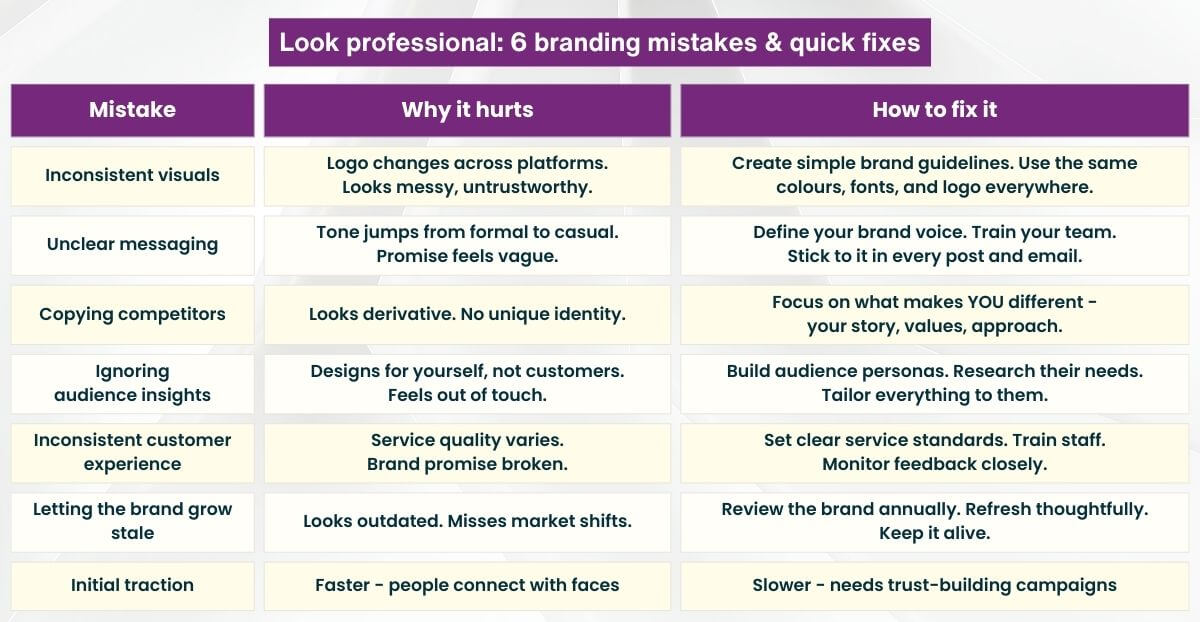
One of the most frequent errors in business branding occurs when visuals lack uniformity across platforms. A logo might appear one way on the website, differently on social media, and yet another on packaging or business cards. This inconsistency confuses audiences and signals a lack of attention to detail. Customers interpret scattered appearances as disorganisation, which damages perceived reliability.
To correct this, develop comprehensive brand guidelines that specify logo usage, colour palettes, typography, and imagery rules. Apply these standards rigorously to every touchpoint. Regular audits ensure alignment, and tools like simple templates help teams maintain cohesion without constant redesigns. A unified visual language reinforces professionalism and makes your business branding instantly recognisable.
Unclear Messaging Dilutes Your Authority
Another common issue arises from vague or shifting messaging. Businesses sometimes communicate mixed values, switch tones abruptly, or fail to articulate a clear promise. When customers encounter contradictory statements—perhaps professional on one channel and casual on another—they question the brand’s authenticity. This erodes confidence and makes it harder to build loyalty.
The solution lies in defining a consistent brand voice and core messages from the outset. Craft a style guide that outlines tone, key phrases, and prohibited language. Train teams to adhere to these principles in all communications, from emails to social posts. Regularly review content to confirm it aligns with your intended identity. Clear, steady messaging strengthens trust and positions your business branding strategy as dependable.
Copying Competitors Stifles Originality
Many organisations fall into the trap of imitating successful rivals, adopting similar logos, colour schemes, or taglines in hopes of quick gains. While inspiration has value, direct copying makes a business appear derivative and unoriginal. Audiences notice the lack of a unique identity, which diminishes perceived expertise and makes differentiation difficult.
Instead, focus on what sets your organisation apart—your values, story, or approach to customer needs. Conduct thorough audience research to uncover genuine gaps. Build a business branding strategy rooted in authenticity rather than imitation. Original elements, even subtle ones like distinctive storytelling or specialised service approaches, create memorable impressions and foster genuine connections.
Neglecting Target Audience Insights Leads to Misalignment
Failing to deeply understand the target audience ranks high among branding errors. Businesses often design for personal preferences rather than customer realities, resulting in messaging or visuals that miss the mark. This disconnect makes the brand feel irrelevant or out of touch, reducing engagement and conversion rates.
Address this by investing in audience personas based on research, feedback, and data. Map out demographics, preferences, pain points, and aspirations. Tailor every aspect of business branding to resonate with these insights. Periodic surveys and interaction analysis keep understanding current, ensuring your efforts remain relevant and professional.
Overlooking Consistency in Customer Experiences
Even strong visuals and messaging falter when customer interactions vary wildly. Inconsistent service quality, delayed responses, or mismatched employee behaviour contradict brand promises and project unreliability. Customers form opinions from every encounter, and discrepancies quickly undermine credibility.
Standardise experiences through clear processes and training. Develop SOPs for common interactions, emphasise brand values in onboarding, and monitor feedback closely. Consistency across delivery builds the emotional trust that elevates business branding from functional to exceptional.
Ignoring Brand Evolution and Maintenance
Some businesses treat business branding as a one-time task, neglecting updates as the organisation grows or markets shift. Outdated elements or stagnant messaging make a brand appear stagnant or disconnected from current realities.
Schedule annual reviews to assess relevance and refresh where needed. Evolve thoughtfully—major changes require careful planning to retain equity. Maintenance keeps business branding vibrant and aligned with ongoing growth.
The Value of Investing in Proper Branding
Strong business branding delivers measurable returns, including higher customer loyalty, reduced acquisition costs, and the ability to command better pricing through perceived value. As Mr Dhruva Pakhnikar, a renowned design entrepreneur featured on deAsra’s dreamBIG podcast, explains: “Effective branding allows your small business to command better pricing by building trust and perceived value.”
He further notes that the customer ultimately defines perception. For more on these financial benefits, explore deAsra’s article on the ROI of good business branding. deAsra supports and engages entrepreneurs through resources like the dreamBIG podcast series, offering practical guidance to refine business branding strategy and avoid common pitfalls.
Conclusion
Avoiding these mistakes transforms business branding from a potential weakness into a powerful asset. Leaders who prioritise consistency, clarity, originality, audience focus, and ongoing care project true professionalism. Start by auditing current efforts against these points, then implement targeted fixes. A refined business branding strategy not only enhances appearance but drives real growth and resilience. Take action today—your professional image depends on it.

FAQs
1. What is the most damaging mistake in business branding?
Inconsistent visuals across platforms often cause the greatest harm. They confuse customers and signal disorganisation, quickly eroding trust. Fixing this with strict brand guidelines restores a polished, unified appearance.
2. How can small businesses afford a proper business branding strategy?
Begin with self-education through free resources and tools like Canva. Focus on core elements—vision, voice, and consistency—before investing in professionals. deAsra supports and engages entrepreneurs with accessible insights via the dreamBIG podcast.
3. Does copying competitors really hurt my brand?
Yes, it makes your business seem unoriginal and less credible. Audiences value authenticity. Develop unique elements based on your strengths to stand out genuinely.
4. How often should I review my business branding?
Conduct a full review annually, with quarterly checks for consistency. This keeps your business branding relevant as your organisation and market evolve.
5. Can personal branding support my business branding efforts?
Absolutely. When aligned, a founder’s authentic presence builds trust and humanises the brand. Share stories and expertise consistently to reinforce your overall business branding strategy.