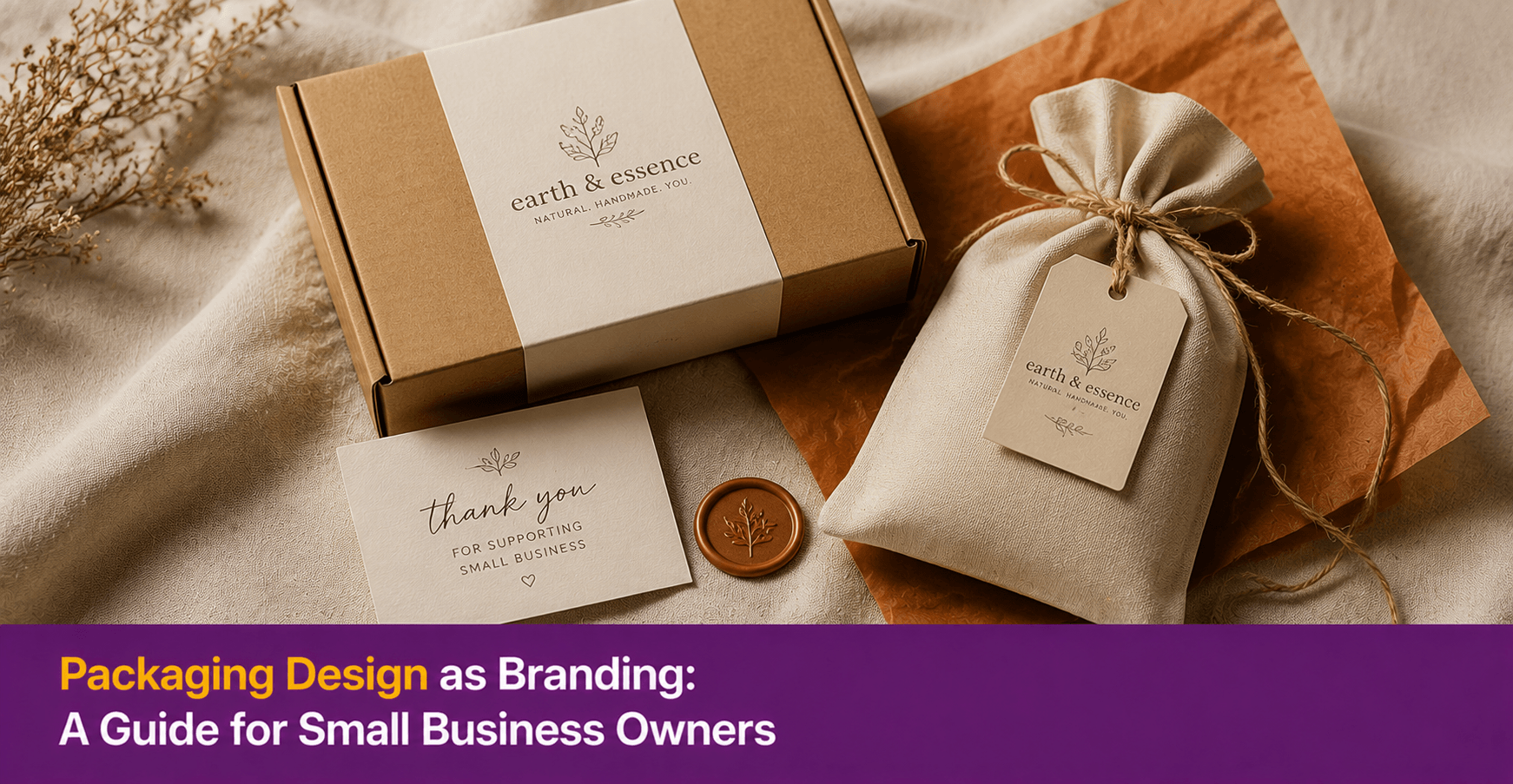
Packaging Design as Branding: A Guide for Small Business Owners
Packaging design is a branding tool, not just a functional container. For product-based small businesses, packaging is often the first physical thing a customer interacts with after making a purchase. It is where the brand becomes tangible. A package with consistent colours, a clear logo, and a thoughtful design builds brand recognition with every customer interaction. This guide covers what packaging design involves as a branding tool, which elements to focus on, and how to build strong packaging on a limited budget.
Key Takeaways
- Packaging design is part of the brand experience. For product businesses, it is often the most memorable physical brand touchpoint a customer has
- Consistent packaging reinforces brand recognition. A customer who recognises your packaging before reading the label is a customer who remembers your brand
- Strong product packaging design does not require expensive custom boxes. Labels, stickers, tissue paper, and branded tape applied consistently can create a professional brand experience at low cost
- The unboxing experience matters especially for businesses that sell online or through delivery. How a product arrives shapes the customer’s impression of the brand just as much as the product itself
- Packaging design should use the same colours, fonts, and logo as the rest of the brand. Inconsistency between your Instagram page and your packaging creates a disconnect that weakens brand trust

What Is Packaging Design as a Branding Tool?
Packaging design as a branding tool means using the physical container, label, wrapping, or box of a product to communicate brand identity. It covers every element a customer encounters when they receive or handle the product: the colour of the box, the font on the label, the texture of the wrapping, the seal on the bag, and any note inside.
For most small businesses, packaging design serves three brand functions. First, it creates visual recognition. A customer who sees your packaging on a shelf or in a delivery bag should identify it as yours before reading the label. Second, it communicates quality — a product in well-designed packaging signals care and professionalism. Third, it extends the brand experience into the physical world. For businesses that sell primarily on Instagram or WhatsApp, the package is often the first real-world encounter the customer has with the brand.
Why Does Packaging Design Matter for Small Businesses?
Packaging design matters because it reaches the customer at the moment they are most engaged: when they are opening something they paid for and are looking forward to using.
Two customers receive the same product. One receives it in a plain, unmarked bag. The other receives it in a bag with a branded sticker, tissue paper, and a small thank-you card. The product is identical. The impression of the business is not. The second customer is more likely to photograph the package, share it, recommend the business, and return for a repeat purchase.
For businesses in competitive categories — home food, handmade goods, beauty, fashion accessories, gifting — packaging design often differentiates a memorable brand from a forgettable one. It is also one of the most cost-effective brand investments for small business owners. Even small packaging changes create a disproportionate improvement in brand perception.
What Elements of Packaging Design Build a Brand?
Strong product packaging design is built from four elements that should align with the rest of the brand’s visual identity.
| Packaging Element | What It Communicates | Low-Cost Application |
| Logo | Brand identity and recognition | Printed sticker or rubber stamp applied to plain packaging |
| Colour | Brand personality and consistency | Coloured tissue paper, ribbons, or tape in brand colours |
| Typography | Professionalism and style | Consistent font on printed labels or stickers |
| Finishing detail | Care and thoughtfulness | Handwritten thank-you card, branded seal sticker, twine |
Each element contributes to a cumulative brand impression. A package does not need all four elements to be effective. Even one or two applied consistently create more recognition than generic packaging with no brand identity.
The most important rule: every packaging element should match the brand’s visual identity. If your Instagram page uses a cream and forest green palette, your tissue paper, stickers, and labels should use the same colours. Inconsistency between digital and physical brand touchpoints confuses customers and weakens recognition.
How Do You Design Packaging on a Low Budget?
Effective product packaging design does not require expensive custom-manufactured boxes or minimum order quantities of 1,000 units. Most small businesses can create a professional packaging experience using a combination of off-the-shelf materials and custom printed elements.
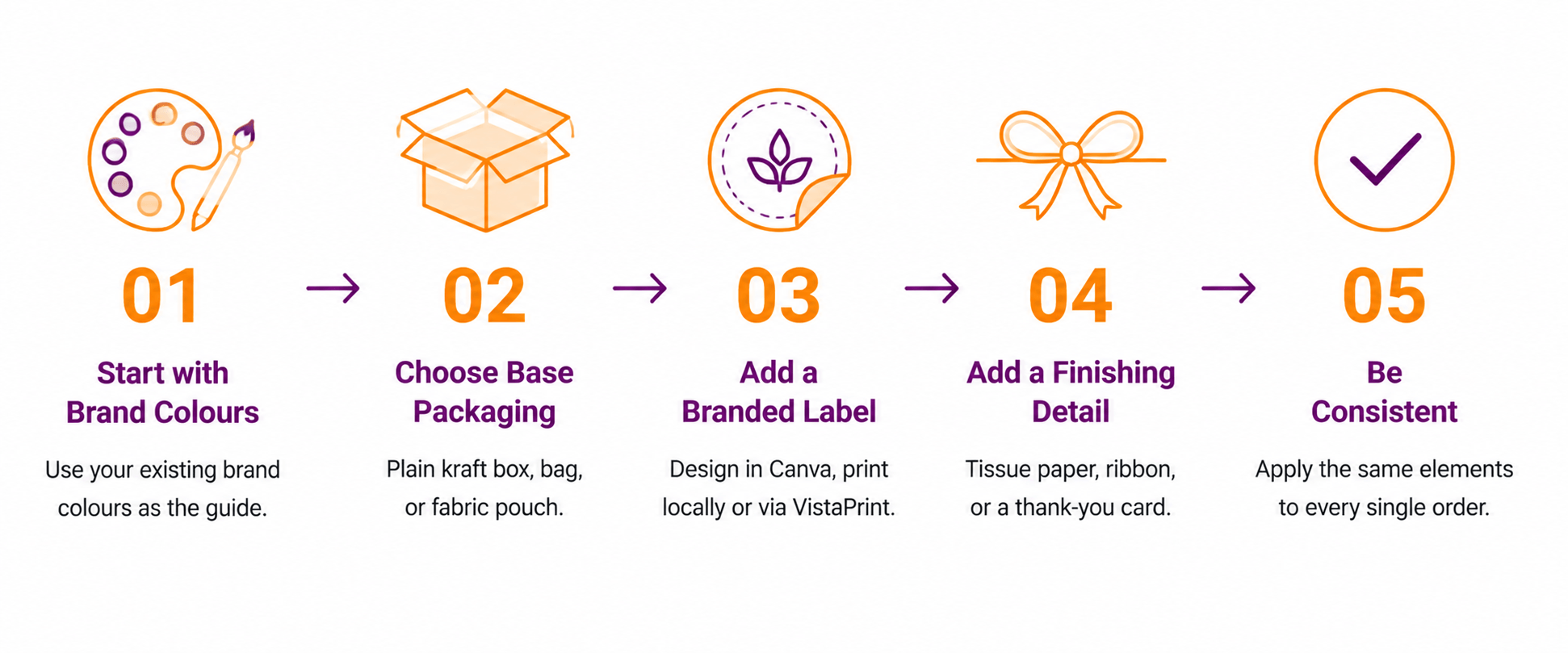
Step 1: Start with your brand colours and logo- Before choosing any packaging material, confirm your brand colours and logo. Every packaging decision should reference these. If your brand uses deep blue and gold, your tissue paper, stickers, and labels should reflect this palette.
Step 2: Choose a base packaging material- For most small product businesses, this is a plain kraft box, a clear or coloured poly bag, or a fabric pouch. Plain base materials are significantly cheaper than custom-printed equivalents and provide a neutral canvas for branded elements.
Step 3: Add a branded label or sticker- A well-designed product label or sticker applied to plain packaging creates an immediately branded experience. Design your label in Canva using your brand fonts and colours. Print through a local printer or VistaPrint India. A minimum run of 100 to 200 stickers costs very little and goes a long way for a small business.
Step 4: Add a finishing detail- One small finishing element elevates plain packaging significantly. Options include tissue paper in brand colours, a ribbon or twine, a wax seal, or a small printed thank-you card. None are expensive, and each adds thoughtfulness that customers notice and remember.
Step 5: Be consistent- Apply the same elements to every order, every time. A customer who receives a beautifully packaged first order and a plain, unbranded second order registers the inconsistency as carelessness. Consistency is what converts a packaging decision into a brand asset.
What Packaging Design Approaches Work for Different Small Business Types?
Different product categories call for different packaging priorities.
Home food businesses (tiffin, baked goods, mithai, pickles): Food packaging must comply with FSSAI labelling requirements — product name, ingredients, net weight, manufacturing date, and FSSAI licence number are mandatory on the label. Within these requirements, a well-designed label in brand colours on a clean container creates a professional product appearance. Branded paper bags, printed tissue, or a simple sticker seal on a box add to the experience without significant cost.
Handmade and craft businesses (jewellery, pottery, candles, home décor): Packaging for handmade products should reflect the craft’s values. Natural kraft paper, fabric pouches, recycled boxes, and twine align with the handmade, artisan positioning most craft businesses want to project. A small card with the maker’s name and the story behind the piece adds a personal dimension that mass-produced alternatives cannot replicate.
Fashion and apparel businesses: Apparel packaging prioritises presentation. A folded garment wrapped in tissue, sealed with a branded sticker, and placed in a kraft or fabric bag with a label creates a gift-like experience. Hang tags with the brand logo and care instructions add professionalism to even a basic clothing item.
Beauty and skincare businesses: Skincare packaging serves both brand and regulatory purposes. Labels must include ingredients, usage instructions, and any mandatory declarations. Within these requirements, consistent fonts, colours, and a clean label design position the product as premium and trustworthy.
What Common Packaging Design Mistakes Do Small Businesses Make?
Using packaging that does not match the brand’s digital presence: A customer who follows your Instagram page and then receives a product in generic packaging feels a disconnect between the brand they engaged with online and the product they received in person.
Changing packaging design too frequently: Updating packaging colours, fonts, or label designs every few months prevents customers from building recognition. Consistent packaging over time creates the repetition that makes a brand memorable.
Overloading the label with information: A label crowded with text, multiple fonts, and competing visual elements looks unprofessional regardless of print quality. A clean, minimal design with one clear focal point communicates confidence and quality more effectively than a busy one.
Ignoring the inside of the package: The outside of the package creates the first impression. The inside creates the lasting one. Beautiful packaging on the outside means little if the inside is careless. No tissue, loose items, and no protective wrap undermine the brand experience at the moment of opening.
Conclusion
Packaging design is one of the most tangible brand investments a product-based small business can make. It reaches the customer at the moment of highest engagement: when they are opening something they purchased. It shapes the brand impression more durably than most digital touchpoints.
Strong packaging does not require a large budget. A branded sticker, tissue paper in brand colours, and a small thank-you card together create a recognisable brand experience. Consistency applied over time builds the recognition that converts a first purchase into a repeat one.
Your Next Step

FAQs
How does packaging design help a small business build its brand?
Packaging design reinforces brand identity at the moment of purchase or delivery. A consistent logo, brand colours, and a finishing detail on every package create visual recognition over time. For product businesses, packaging is often the first physical brand touchpoint. How the product arrives shapes the customer’s impression of the brand.
What is the most cost-effective way to create branded packaging for a small business?
Start with plain kraft boxes or bags and add a custom-printed sticker or label in your brand colours and fonts. Design the label in Canva and print through a local printer or VistaPrint India. Add one finishing element — tissue paper, a ribbon, or a branded seal sticker. This approach creates a professional brand experience for significantly less than custom-manufactured packaging.
Does food packaging in India have specific labelling requirements?
Yes. FSSAI requires the product name, ingredients list, net weight, manufacturing date, best before date, and FSSAI licence number on every food label. These requirements apply to all food businesses, including home-based producers. Design your label to meet these requirements while maintaining your brand’s visual identity.
How many packaging elements does a small business need to create a branded experience?
Even two or three consistent elements create a recognisable brand experience. A branded sticker plus tissue paper in brand colours is enough to differentiate a package from generic alternatives. Each additional element adds to the impression, but consistency across whatever elements you choose matters more than the number of elements used.
Should packaging design change as a small business grows?
Minor refinements are fine — improving print quality, using better materials, adding new product variants. Major redesigns that change the colour palette, logo, or overall visual identity need careful handling. Customers who recognise your current packaging will need time to adjust to a new one. Evolve packaging gradually rather than changing it completely, unless the brand itself is undergoing a deliberate repositioning.