Avoid Common Social Media Calendar Mistakes in 2026
Industry leaders across sectors know that a well-structured social media calendar can turn scattered efforts into steady business growth. Yet many professionals still struggle with basic planning errors that limit reach and revenue. This article explores the most frequent pitfalls in managing a social media content calendar and offers clear solutions. Whether you run a service firm, retail outlet, or tech venture, mastering your social media calendar helps maintain brand voice and attract qualified leads without daily chaos.
A thoughtful social media calendar acts as a strategic roadmap. It aligns posts with business goals, ensures regular visibility, and prevents last-minute scrambling. deAsra supports and engages nano entrepreneurs through practical resources, including the dreamBIG podcast featuring insightful conversations with experts like Mr. Sagar Babar. One valuable discussion appears here: Social Media Marketing Strategy: Boost Your Online Presence. Another useful guide on the fundamentals can be found at: What is a Social Media Calendar and Why You Absolutely Need One. These resources highlight how proper planning saves time and builds credibility for busy leaders.

Over-Scheduling Content Without Realistic Capacity
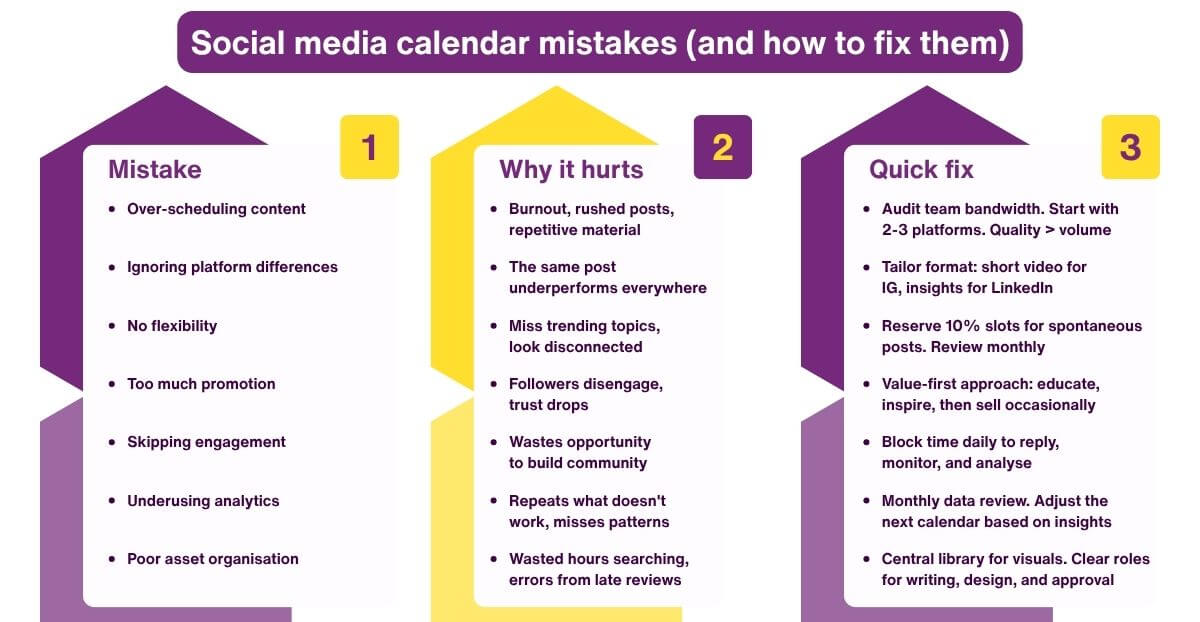
Many leaders fill their social media calendar with ambitious daily posts across multiple platforms. This approach often leads to burnout and declining quality. When teams attempt too many posts, the content becomes repetitive or rushed, which audiences notice quickly.
The solution lies in an honest assessment of available time and resources. Start by auditing your team’s bandwidth for a typical week. Choose two or three primary platforms that match your target audience instead of spreading efforts thinly. A simple social media calendar template in Google Sheets works well for beginners, allowing clear slots for creation, review, and scheduling. Aim for consistent output rather than volume.
Ignoring Audience Preferences and Platform Differences
A common error occurs when the same content appears unchanged across Instagram, LinkedIn, and Facebook. Each platform serves different demographics and content styles, so identical posts rarely perform well everywhere. Younger users on visual platforms expect short, engaging videos, while professional networks favour thoughtful written insights.
To avoid this pitfall, tailor every entry in your social media content calendar to the chosen channel. Define clear content pillars such as educational tips, customer stories, or behind-the-scenes glimpses. These pillars keep messaging consistent while allowing platform-specific adaptations. Review audience insights weekly to understand peak times and preferred formats. A flexible social media calendar template with separate columns for each platform makes this adjustment straightforward. Leaders who invest time here see stronger connections and higher interaction rates.
Lack of Flexibility in the Planning Process
Some professionals treat their social media calendar like a fixed contract with no room for change. When unexpected industry news, local events, or trending topics arise, rigid plans prevent timely responses. This stiffness can make brands appear disconnected from current conversations.
Build adaptability into your system from the start. Reserve roughly ten per cent of slots in your social media content calendar for spontaneous opportunities or trend-related posts. Monthly review sessions allow teams to shift upcoming items based on performance data. Use a social media calendar template that includes status markers such as draft, review, and approved. This structure supports quick updates without losing overall direction.
Failing to Balance Value and Promotion
Excessive promotional posts quickly erode audience interest. When every update in the social media calendar focuses on direct sales, followers disengage, and trust diminishes. Audiences visit social platforms seeking useful information or entertainment, not constant advertisements.
Apply a simple value-first approach to fix this issue. Fill most slots in your social media content calendar with helpful material that educates or inspires. Limit direct promotions to a smaller share of the schedule. For example, share practical industry tips, customer success stories, or quick how-to videos. This method builds goodwill and makes occasional offers feel natural rather than pushy. Track which content types receive the strongest response and adjust future entries accordingly. A thoughtful social media calendar template with dedicated fields for content type helps maintain this healthy balance.
Neglecting Engagement After Posting
Many calendars stop at the scheduling stage and overlook the vital follow-up work. Posting without monitoring comments, questions, or shares wastes the opportunity to strengthen relationships. Unanswered interactions signal that the brand does not value its community.
Incorporate engagement time directly into your social media calendar. Block specific slots each week for responding to followers and analysing early performance. Encourage team members to reply promptly and use insights to refine upcoming posts. Tools that offer mobile access make this task manageable even during travel or meetings. Consistent interaction turns passive viewers into loyal supporters and provides valuable feedback for improving the entire social media content calendar.
Underutilising Analytics and Data Insights
Some teams create detailed plans yet rarely check results. They continue posting similar material month after month without noticing which topics resonate or which timings work best. This habit leads to stagnant performance and missed opportunities for optimisation.
Make data review a core part of your routine. Schedule a short analysis session at the end of each month within your social media calendar. Examine metrics such as reach, engagement duration, and audience location. Identify patterns and update the social media calendar template for the following period. Free platform tools provide sufficient information for most businesses, while simple spreadsheets help visualise trends over time. This practice ensures continuous improvement and keeps the social media calendar aligned with actual business outcomes.
Poor Asset Organisation and Team Coordination
Disorganised files and unclear approval processes slow down execution. Teams waste hours searching for images or videos, or they publish content with errors because reviews happen too late. These operational gaps reduce overall efficiency.
Create a central library for all visuals, logos, and video clips to streamline workflow. Assign clear roles in your social media content calendar so everyone understands responsibilities for writing, designing, and approving. Even solo leaders benefit from a basic review step before scheduling. Modern social media calendar template options include gallery views and collaboration features that make coordination smoother. Good organisation frees up mental energy for creative thinking and strategic decisions.
Mr. Sagar Babar, a respected voice in entrepreneurship, once noted the importance of genuine storytelling and discipline in building online presence. His experiences highlight how consistent effort, rather than sporadic bursts, creates lasting impact.
Conclusion
Avoiding these common mistakes transforms your social media calendar from a source of stress into a powerful growth tool. Start with a realistic social media calendar template, focus on audience needs, and review progress regularly. deAsra supports and engages industry leaders by sharing actionable insights through the dreamBIG podcast and related resources. Commit to disciplined planning and flexibility, and your social media content calendar will deliver stronger visibility, credibility, and results across sectors. Small adjustments today compound into significant advantages tomorrow.

FAQs
1. What is the main purpose of a social media calendar?
A social media calendar provides a structured plan that outlines posting dates, platforms, and content types. It helps businesses maintain consistency, align posts with goals, and reduce daily decision fatigue. With a clear social media calendar template, teams can batch-create content and respond more effectively to opportunities while keeping brand messaging steady.
2. How often should a small business update its social media content calendar?
Review and adjust your social media content calendar at least once a month. Weekly checks of early engagement data allow minor tweaks, while a deeper monthly session helps refine themes and timing. This rhythm prevents the plan from becoming outdated and supports steady performance improvements.
3. Can a free social media calendar template work for large teams?
Yes, many free or low-cost social media calendar template options scale well with collaboration features. Start simple with spreadsheet formats and add columns for status tracking and asset links. As the team grows, migrate to tools with visual previews and approval workflows to maintain efficiency.
4. What are the biggest risks of ignoring flexibility in a social media calendar?
Without flexibility, brands miss chances to join relevant conversations or adapt to sudden events. A rigid social media calendar can make content feel disconnected, reducing engagement. Leaving buffer space and scheduling review time helps organisations stay responsive while preserving overall strategy.
5. How does analytics improve the effectiveness of a social media calendar?
Regular analytics reveal which posts gain traction and when audiences are most active. These insights guide updates to the social media content calendar, ensuring future entries deliver better results. Consistent data review turns guesswork into informed decisions and strengthens long-term outcomes.