Top 6 Government Loan Schemes for Small Businesses in India
Did you know that Micro, Small, and Medium Enterprises (MSMEs) in India employ over 15.5 crore people as of 2023, contributing around 30% to the country’s GDP? MSMEs form the backbone of India’s economy, driving industrial output and providing employment to millions. However, securing the right funding is often challenging for small business owners. The good news is that the government has rolled out several government loan schemes for small businesses to help entrepreneurs secure the funding they need to expand their ventures.
In this blog, we’ll explore key government loan schemes for small businesses in India, their eligibility criteria, and practical steps to help entrepreneurs apply and succeed in securing funding.
1. Pradhan Mantri Mudra Yojana (PMMY)
The Pradhan Mantri Mudra Yojana is one of the most widely used government loan schemes for small businesses. Aimed at non-corporate, non-farm small enterprises, it offers loans up to Rs. 10 lakh under three categories:
- Shishu: Loans up to Rs. 50,000 for budding startups and small-scale businesses.
- Kishor: Loans from Rs. 50,000 to Rs. 5 lakh, suitable for businesses looking to expand.
- Tarun: Loans from Rs. 5 lakh to Rs. 10 lakh, perfect for established businesses aiming for larger growth.
With easy eligibility criteria and no requirement for collateral, the scheme helps small businesses access credit easily. The application can be made through various financial institutions like commercial banks, microfinance institutions (MFIs), and non-banking financial companies (NBFCs).
2. Credit Guarantee Fund Trust for Micro and Small Enterprises (CGTMSE)
The CGTMSE scheme offers credit without the need for collateral or third-party guarantees. It is ideal for new and existing micro and small enterprises, helping them avail loans of up to Rs. 2 crore. The unique aspect of this scheme is that it provides credit facilities through financial institutions while the guarantee is given by the government, ensuring that financial institutions take a lower risk.
Businesses that have just started operations or are planning expansion can benefit from this government loan scheme for small businesses in India, especially in terms of accessing credit without offering assets as security.
3. Stand-Up India Scheme
The Stand-Up India Scheme is designed to promote entrepreneurship among women and SC/ST communities by providing bank loans for greenfield enterprises in manufacturing, services, or trading sectors. The loan amount ranges from Rs. 10 lakh to Rs. 1 crore, helping first-time entrepreneurs get their businesses off the ground.
This scheme mandates that each bank branch must provide at least one loan to a woman entrepreneur and one to an SC/ST entrepreneur. The eligibility criteria include being an SC/ST or female entrepreneur and having a business that is a greenfield venture, i.e., it’s a new enterprise.
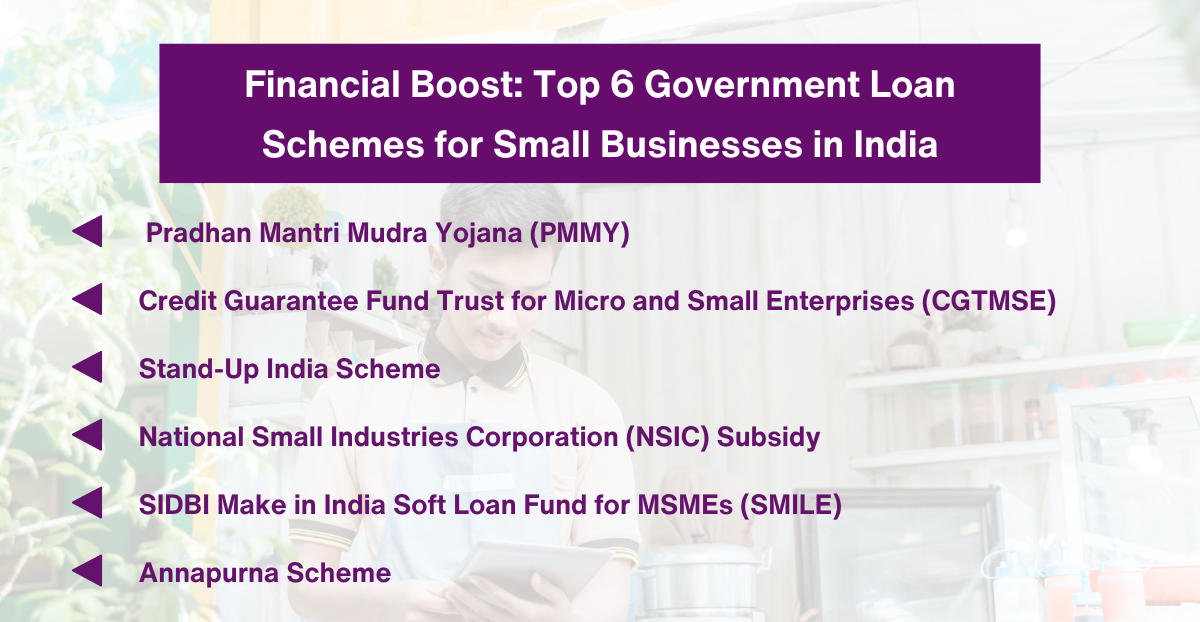
4. National Small Industries Corporation (NSIC) Subsidy
NSIC provides a unique subsidy to small businesses under two key aspects:
- Credit Support: Helping MSMEs get financial assistance from various banks and financial institutions.
- Marketing Support: Providing a platform for small businesses to market their products and services through government tenders and international trade shows.
This scheme not only facilitates financial access but also helps small businesses gain market visibility, which is crucial for growth. The government loan schemes for small businesses like NSIC provide dual benefits—credit and visibility.
5. SIDBI Make in India Soft Loan Fund for MSMEs (SMILE)
As part of the government’s initiative to boost the Make in India campaign, SIDBI’s SMILE scheme offers loans to MSMEs in sectors that are aligned with the Make in India campaign. The scheme focuses on providing soft loans, which are loans with a lower interest rate or deferred payment schedules.
This loan scheme is ideal for MSMEs engaged in manufacturing, helping them expand their operations or upgrade their existing infrastructure. SMILE offers flexible loan repayment options, making it easier for businesses to manage cash flow while ensuring they grow sustainably.
6. Annapurna Scheme
Targeting women entrepreneurs in the food sector, the Annapurna Scheme provides loans up to Rs. 50,000 to support working capital and business setup costs, including buying equipment or setting up a food stall. This scheme helps women get their food business off the ground with minimal financial burden.
Check out 5 Key Government Schemes for Women Entrepreneurs to learn more about schemes that empower women entrepreneurs.
How to Apply for Government Loan Schemes for Small Businesses
Navigating government loan schemes for small businesses in India requires a thorough understanding of the application process. Here are some practical steps to help you get started:
- Check Eligibility: Each scheme comes with specific eligibility criteria, such as the type of business, loan amount, and documentation required. For example, some schemes are designed specifically for women entrepreneurs or SC/ST communities.
- Complete Documentation: Accurate and complete documentation is essential to ensure approval. You’ll typically need business registration papers, financial statements, tax returns, and a detailed business plan.
- Prepare a Strong Business Proposal: Craft a comprehensive business proposal highlighting your business model, market potential, and financial projections. Need help preparing your business proposal? Explore this funding proposal guide to get started.
- Apply Through the Right Channel: Depending on the scheme, applications can be made through banks, financial institutions, or dedicated government portals. Research which financial institution offers the scheme you’re eligible for and initiate the application process.
- Seek Expert Advice: Consulting with professionals or organisations like the deAsra Foundation can provide invaluable insights and guidance. These experts can help streamline the application process and increase your chances of getting the loan approved.
Maximising the Benefits of Government Loan Schemes
While the availability of government loan schemes is a big advantage, there are certain strategies you can adopt to ensure success:
- Leverage Multiple Schemes: Some businesses can benefit from multiple schemes simultaneously. For instance, a woman entrepreneur in the food business can benefit from both the Annapurna Scheme and Mudra Yojana.
- Build a Strong Credit Profile: Ensure your business has a solid credit score to improve your chances of getting loans approved quickly.
- Stay Updated on New Schemes: Government schemes are updated frequently. Keeping an eye on new schemes and updates to existing ones will ensure you never miss out on potential opportunities.
Conclusion
India offers a robust range of government loan schemes for small businesses, designed to boost entrepreneurship and economic growth. Whether you’re just starting your business journey or looking to scale, these schemes can provide the financial boost you need. By understanding the eligibility requirements and preparing a strong application, small business owners can take full advantage of these resources and set their businesses up for success.
Ready to take the next step? Explore more resources and support at the deAsra Foundation to help you transform your business vision into reality.
Discover government schemes tailored to your business.

FAQs
1. What are the top government loan schemes for small businesses in India?
Some of the top government loan schemes for small businesses in India include the Pradhan Mantri Mudra Yojana (PMMY), Stand-Up India Scheme, Credit Guarantee Fund Trust for Micro and Small Enterprises (CGTMSE), National Small Industries Corporation (NSIC) Subsidy, and the SIDBI Make in India Soft Loan Fund (SMILE). These schemes aim to provide collateral-free loans, easy access to credit, and financial assistance for new and existing businesses.
2. How can I apply for a government loan for my small business?
To apply for a government loan scheme for small businesses in India, start by identifying the scheme that best suits your needs and ensure you meet the eligibility criteria. Prepare necessary documents like business registration, financial records, and a business proposal. Applications are generally made through banks, NBFCs, or government portals, depending on the scheme. Expert assistance from institutions like the deAsra Foundation can streamline your application process.
3. Are government loans for small businesses collateral-free?
Yes, many government loan schemes for small businesses in India, like the Pradhan Mantri Mudra Yojana (PMMY) and CGTMSE, offer collateral-free loans. These schemes provide credit without the need for personal or business assets as security, making it easier for small businesses to access funding. However, it’s crucial to check individual scheme terms as some may have specific requirements.
4. What is the interest rate for government loans under the Mudra Yojana?
Interest rates under the Pradhan Mantri Mudra Yojana (PMMY) vary based on the bank or financial institution offering the loan and the category of the loan (Shishu, Kishor, or Tarun). Typically, the rates range from 7.30% to 12%, depending on the loan amount and the business’s profile. These rates are generally more favourable than traditional loans due to government support.
5. What government schemes are available for women entrepreneurs in India?
India has several government loan schemes targeted at empowering women entrepreneurs, such as the Annapurna Scheme for women in the food sector and the Stand-Up India Scheme, which promotes entrepreneurship among women from SC/ST communities. These schemes provide financial assistance and support to encourage women-led businesses. You can find more details on women-specific schemes in this guide.
DISCLAIMER:
This blog is provided by the deAsra Foundation (“deAsra”) for informational purposes only, offering insights that may be beneficial for micro, small, and medium-sized enterprises (MSMEs).
PLEASE NOTE: This blog is neither written nor endorsed by any governmental organization nor has any affiliation or connection with any government ministry in India. deAsra makes no warranty or representation regarding the information provided through this blog and disclaims its liabilities in respect thereof, including any liability for authenticity, errors, omissions, or inaccuracies in this blog, if any. Any action on the blog readers’ part based on the information provided in this blog is at his/her/its own risk and responsibility. deAsra reserves the right to modify the information contained in this blog at any time at its sole discretion. deAsra agrees that though all efforts have been made to ensure the veracity of the information in this blog, the same should not be construed as an accurate replacement for authorized commentary on the subject matter before it is used for any legal, financial, or business purposes. deAsra accepts no responsibility for the information’s accuracy, completeness, usefulness or otherwise. In no event will deAsra be liable for any loss, damage, liability, or expense incurred or suffered that is claimed to have resulted from the use or misuse of the information in this blog. We advise you to corroborate the information through authenticated sources and professional consultants before relying on the information stated in this blog. All the information in this blog is for educational and reference purposes only, and we do not make or charge any money to provide this information. Links to the relevant websites included in this blog are provided for readers’ convenience only. deAsra is not responsible for the contents or reliability of linked websites and does not necessarily endorse the views expressed therein. deAsra does not always guarantee the availability of such linked pages. If any content has been unintentionally published or copyrighted material in violation of the law, please don’t hesitate to contact us, and we will have it removed immediately.