Rebranding Strategy For Your Business: When, Why, and How to Do It Successfully
A strong brand identity drives recognition, trust, and growth. Yet many businesses reach a point where the existing identity no longer supports their ambitions. A deliberate rebranding strategy becomes essential to realign the organisation with its current vision, audience expectations, and market position. This process goes far beyond changing colours or logos; it refreshes the entire soul of the business while protecting established equity. In the dreamBIG podcast by deAsra, Mr. Dhruva Pakhnikar explained that branding represents “a feeling or emotion which is there in the customer’s mind.” Effective rebranding nurtures and updates that feeling to keep it relevant and powerful.
Business leaders across sectors often hesitate, fearing disruption. A well-planned rebranding strategy avoids alienating loyal customers by building on proven strengths and communicating change clearly. deAsra supports and engages entrepreneurs through practical resources, including this episode on branding for business growth, to guide such transitions thoughtfully.

Why Rebranding Matters Now
Markets evolve quickly. New customer preferences, technological shifts, and competitive pressures demand that brands stay dynamic. When the current identity lags behind these changes, the business loses momentum.
Rebranding restores clarity and relevance. It sharpens positioning, strengthens emotional connections, and supports higher pricing power in competitive sectors. The process signals maturity and forward momentum to customers, employees, partners, and investors.
Many organisations treat rebranding as a cosmetic exercise. Mr. Dhruva Pakhnikar highlighted in the podcast that visual elements form only “5 to 10% of the entire brand.” True rebranding strategy starts with the core—vision, values, customer perception, and consistent behaviour—before touching any surface elements.
Done correctly, rebranding delivers measurable outcomes: improved engagement, stronger recall, renewed loyalty, and easier talent acquisition. It transforms potential stagnation into sustained competitive advantage.
Key Signs It’s Time for a Rebrand
Spotting the need early prevents a gradual decline. Several reliable indicators appear across industries.
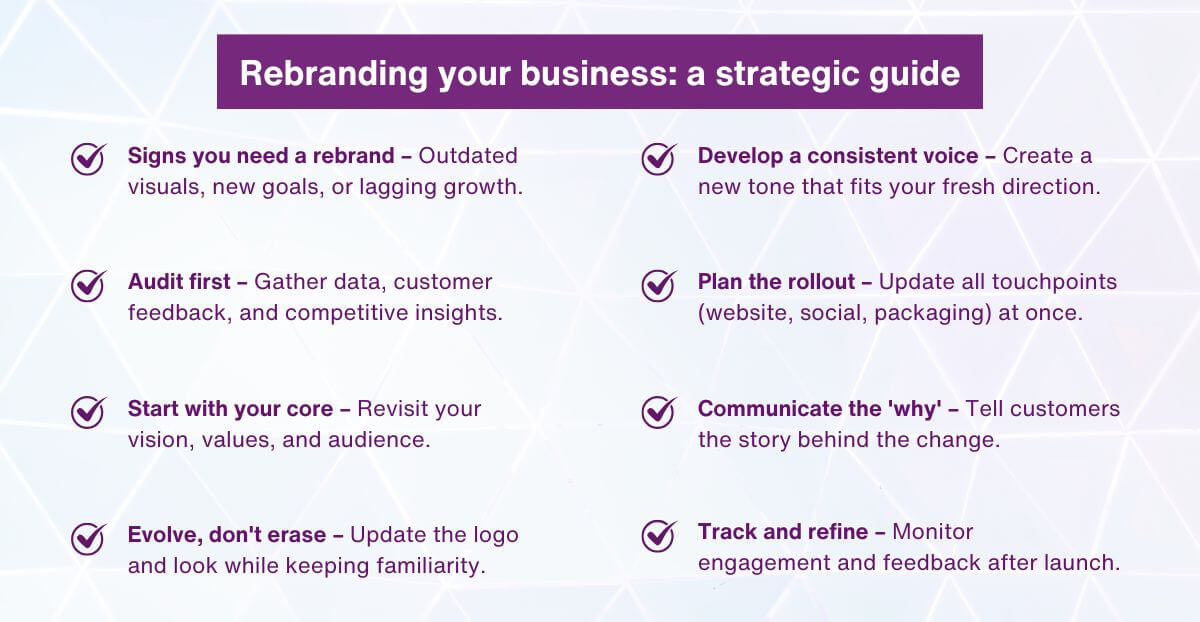
First, the brand feels misaligned with current business goals. Expanded offerings, new target segments, or strategic pivots create a gap between what the organisation does today and how it presents itself.
Second, performance metrics show a consistent decline. Lower website traffic, reduced social engagement, falling repeat purchases, or weaker conversion rates point to fading resonance with the audience.
Third, visuals and communication style appear outdated. Tired designs, overly formal tone, or lack of inclusivity clash with modern expectations for approachable and culturally aware interaction.
Fourth, significant internal changes require fresh expression. Mergers, acquisitions, leadership transitions, sustainability commitments, or product line shifts demand an identity that accurately reflects the present reality. These signs rarely appear overnight. Proactive leaders recognise them and initiate a structured rebranding strategy to turn challenges into opportunities for renewal.
How to Execute a Successful Rebranding Strategy
A clear, phased approach minimises risk and maximises impact. Follow these steps to guide the process effectively.
Step 1: Perform a Comprehensive Brand Audit
Collect hard data and honest feedback. Review analytics, customer surveys, employee insights, social sentiment, and competitive positioning. Pinpoint what still works well and what creates friction. This foundation ensures the rebranding strategy remains grounded in reality.
Step 2: Redefine Core Strategic Elements
Revisit the long-term vision, core values, and target audience psychology. Identify white spaces in the market and clarify the unique emotional or functional value the brand delivers. Detailed guidance on foundational work appears in deAsra’s blog: how to build a strong business brand from scratch.
Step 3: Develop Consistent Messaging and Voice
Create a natural, inclusive tone that adapts across platforms while remaining recognisable. Test messages internally to confirm team alignment before public exposure. Focus on authenticity and emotional relevance to rebuild deeper connections.
Step 4: Evolve the Visual Identity
Update logo, colour palette, typography, and imagery with attention to scalability, balance, and modern aesthetics. Make changes evolutionary rather than revolutionary so existing customers recognise continuity. Visuals reinforce the refreshed soul without overshadowing it.
Step 5: Roll Out Changes Systematically
Apply updates across every touchpoint—website, packaging, social channels, employee communications, and customer service protocols. Share transparent explanations of the evolution and its benefits to build understanding and excitement.
Step 6: Monitor Progress and Maintain Consistency
Track engagement, Net Promoter Score, brand awareness, and other relevant metrics. Treat rebranding as an ongoing commitment to consistent nourishment rather than a finished project. Regular reviews keep the identity aligned with future developments.
This structured rebranding strategy protects heritage while enabling forward movement.
Common Pitfalls to Avoid During Rebranding
Several mistakes undermine even well-intentioned efforts. Skipping the audit phase leads to changes that feel disconnected from reality. Copying competitors erodes uniqueness and authenticity.
Over-emphasising visuals while neglecting internal culture or service standards creates superficial results. Inconsistent application across channels confuses audiences and dilutes impact.
The solution lies in disciplined planning, strong internal alignment, and continuous customer focus. Bring in experienced guidance when internal resources cannot cover the full scope.
Conclusion
A timely and purposeful rebranding strategy breathes new life into a business. It clarifies direction, deepens customer loyalty, and strengthens market position for the long term. Leaders who approach rebranding with honesty, structure, and consistency achieve lasting transformation.
deAsra supports and engages entrepreneurs at every stage with actionable insights, community support, and proven frameworks. Embrace the evolution deliberately. The refreshed brand you build today will carry your organisation forward with confidence and clarity.

FAQs
1. What separates rebranding from a minor brand refresh?
Rebranding involves strategic shifts in purpose, positioning, messaging, and audience connection, while a refresh updates surface elements like colours or fonts without changing the core identity. Choose rebranding when fundamental realignment is needed to match business evolution.
2. How much time does a typical rebranding strategy require?
Most projects take 4–12 months. The audit and strategy phase often lasts 1–3 months, design and internal alignment another 2–4 months, and rollout with monitoring the remaining period. Careful pacing prevents rushed execution and audience confusion.
3. Can small or medium businesses execute an effective rebranding strategy on a limited budget?
Yes. Begin with internal audits and low-cost tools for research and content creation. Prioritise consistency in messaging and customer interactions before investing heavily in visuals. deAsra resources provide practical, affordable steps tailored for smaller enterprises.
4. How can a business avoid losing loyal customers during rebranding?
Communicate openly about the reasons, benefits, and continuity of core values. Introduce changes gradually, retain recognisable elements, and invite feedback throughout. Emphasise how the evolution enhances rather than replaces what customers already value.
5. When does personal branding play a role in the rebranding strategy?
Personal branding becomes valuable when the founder or key leaders strongly embody the organisation’s values and story. It humanises the brand, builds trust, and boosts recall, particularly in service-based or founder-led businesses. Alignment between personal and business identity remains essential for authenticity.