
From Concept to Reality: The Role of Business Planning & Idea Validation
Starting a business is exciting, but turning an idea into a successful venture requires careful business planning. A well-structured plan helps entrepreneurs define their vision, assess feasibility, and reduce risks. Many businesses fail due to a lack of preparation, so thorough business idea validation is essential before investing time and money.
Entrepreneurs must conduct market research, analyse competitors, and test their ideas to ensure they meet customer needs.
Discover expert guidance on business planning and idea validation here.
The Importance of Business Planning
A clear business planning process helps entrepreneurs build a strong foundation. It provides structure, direction, and a roadmap for growth. Whether launching a small venture or expanding an existing one, a detailed plan increases the chances of success. Understanding how to create a business plan ensures that key aspects like financial management, marketing, and operations are covered.
5 Key Benefits of Business Planning
A well-thought-out plan offers several advantages:
- Clarity in Goals – It helps define short-term and long-term business objectives.
- Financial Stability – It provides accurate cost estimates and revenue projections.
- Market Understanding – Research-driven planning helps businesses target the right audience.
- Risk Management – Entrepreneurs can anticipate challenges and develop strategies to tackle them.
- Funding Support – A structured plan improves credibility when applying for loans. Read more about securing loans with a solid plan.
5 Steps to Business Idea Validation
Before executing an idea, it is crucial to validate it to ensure market demand. Here are the essential steps for business idea validation:
1. Market Research
A thorough study of the industry, customer behaviour, and competitors helps refine the business idea. Entrepreneurs should analyse trends, pricing strategies, and customer preferences.
2. Competitor Analysis
Understanding competitors helps in identifying gaps in the market and positioning the business uniquely. Observing what works and what doesn’t saves time and resources.
3. Identifying the Target Audience
Defining the ideal customer profile helps in creating tailored products or services. Understanding customer pain points ensures the business provides real solutions.
4. Financial Feasibility
Analysing initial investments, operating costs, and expected revenue helps determine profitability. Financial projections guide decision-making and attract investors.
5. Creating a Prototype
A sample product or service allows entrepreneurs to test market response before a full launch. Gathering feedback and making improvements ensures better chances of success.
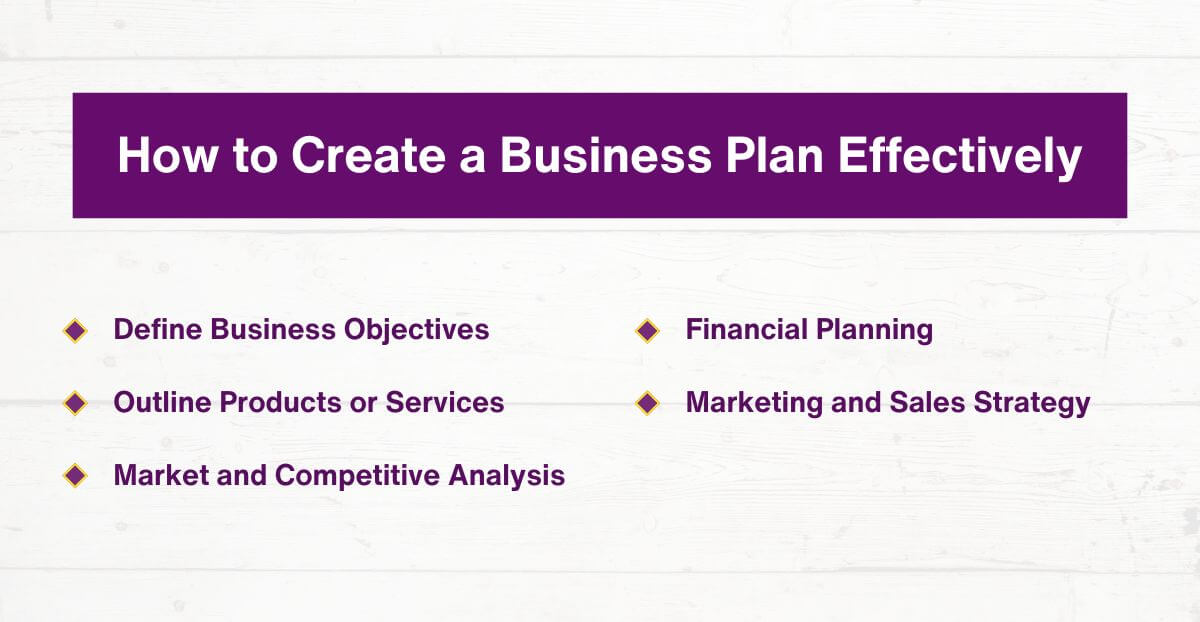
How to Create a Business Plan Effectively
A well-structured plan is essential for guiding operations and achieving business goals. Here’s a step-by-step approach to how to create a business plan:
1. Define Business Objectives
Clearly state the business’s mission, vision, and goals. This helps maintain focus and align strategies accordingly.
2. Outline Products or Services
Detail the offerings, unique selling points, and benefits to customers. Highlight how they solve existing problems in the market.
3. Market and Competitive Analysis
Include findings from research on industry trends, customer demographics, and competitors.
4. Financial Planning
List estimated costs, funding requirements, pricing strategies, and revenue expectations. This is crucial for securing investments and managing finances effectively.
5. Marketing and Sales Strategy
Define promotional tactics, customer engagement plans, and sales techniques to ensure steady growth.
Benefits of Business Planning
The benefits of business planning extend beyond setting up a business. It provides clarity, minimises risks, and enhances operational efficiency. Entrepreneurs with a well-structured plan can:
- Make Informed Decisions – Every step is backed by data and research.
- Attract Investors – A strong plan increases credibility in front of investors and banks.
- Ensure Long-Term Stability – Structured operations lead to sustainability and scalability.
- Improve Resource Allocation – Financial and human resources are utilised effectively.
- Stay Competitive – Continuous planning helps businesses adapt to market changes.
5 Practical Ways to Test Business Ideas
Once a plan is in place, testing the idea through real-world application ensures its feasibility. Entrepreneurs can:
- Conduct Pilot Runs – Launch small-scale versions of the product or service to test market response.
- Gather Customer Feedback – Use surveys, interviews, and focus groups to understand consumer needs.
- Make Iterative Improvements – Modify the business model based on insights from testing phases.
- Use Digital Platforms – Social media, websites, and online marketplaces help in reaching potential customers and analysing demand.
Conclusion
Transforming an idea into a successful business requires thorough business planning and business idea validation. Entrepreneurs must define their vision, conduct market research, analyse competition, and test their ideas before investing fully. Understanding how to create a business plan and applying it effectively leads to structured growth and sustainability.
The benefits of business planning are immense, from securing funding to mitigating risks and ensuring long-term success. By following a step-by-step approach, entrepreneurs can turn their business concepts into profitable realities.
FAQs
1. Why is business planning important for a new venture?
Business planning is crucial for setting a strong foundation. It helps entrepreneurs define their vision, set achievable goals, and identify potential challenges. A well-structured plan provides clarity on operations, marketing strategies, financial projections, and risk management. It also plays a key role in securing investments or loans, as it demonstrates the feasibility and sustainability of the business.
2. How can I validate my business idea before launching?
Business idea validation ensures that your idea is viable before investing significant resources. It involves conducting market research to understand customer needs, analysing competitors to identify gaps, and seeking feedback from potential customers. Entrepreneurs can also test their ideas through pilot runs, surveys, or prototype development. A validated idea reduces the risk of failure and increases the chances of success.
3. What are the benefits of business planning for small businesses?
The benefits of business planning go beyond just documentation. It helps entrepreneurs stay organised, manage resources effectively, and set clear growth objectives. A well-prepared plan improves decision-making, reduces financial risks, and enhances adaptability in changing market conditions. It also increases credibility when seeking funding from investors or banks.
4. How to create a business plan that attracts investors?
To create a business plan that appeals to investors, ensure it covers essential aspects such as market analysis, target audience, competitive positioning, revenue model, and financial projections. Investors look for a solid business case backed by realistic numbers, growth potential, and a clear strategy for profitability. The plan should be concise, data-driven, and demonstrate long-term sustainability.
5. How do financial projections help in business planning?
Financial projections are a key component of business planning, as they provide an estimate of future revenue, expenses, and profitability. These projections help business owners make informed financial decisions, manage cash flow, and set pricing strategies. They are also critical for securing loans or attracting investors, as they show how the business will generate returns and sustain itself in the long run.