Business Branding vs. Marketing: What’s the Difference and Why It Matters
“Brand is the soul of the organisation,” says Dhruva Pakhnikar, a global design entrepreneur and founder of Dominic’s Design Global. He traces branding’s roots to ancient cattle marking for ownership, evolving into today’s emotional connections where brands like Google invite customers to “use me.” Customers themselves now shape perceptions. For small business owners eager to grow, grasping this foundation is essential. Explore practical strategies in this blog from deAsra Foundation, which draws from real insights on business branding.
Tailored for industry leaders and nano entrepreneurs across sectors, this guide clarifies business branding versus marketing. It defines each, highlights differences, and shows why alignment drives success. Especially for branding for small businesses, understanding this prevents wasted efforts and builds lasting growth.

What is Business Branding?
Business branding forms the core identity of your company. It defines who you are, your values, mission, and the emotional bonds you create with customers. Unlike fleeting promotions, business branding is about perception and trust built over time. For example, a local bakery might craft its branding around “homemade warmth” with rustic logos, earthy tones, and stories of family recipes. This evokes comfort, turning buyers into loyal fans who return for the feeling, not just the bread.
Dhruva Pakhnikar emphasises: “Logo… is just like 5 to 10% of the entire brand.” Visuals are peripheral; the true power lies in nurturing the business’s soul through consistent values. In smaller operations, branding for a small business often begins subconsciously. A neighbourhood tailor gains a reputation through reliable quality and personal chats. Conscious efforts elevate this—defining a vision and audience psychology to stand out. Small business branding requires authenticity over big spends. Focus on what makes you unique, like eco-friendly practices, to foster deep connections.
What is Marketing?
Marketing involves tactics to promote products or services and drive sales. It focuses on visibility, persuasion, and conversions through channels like ads, emails, or events. The goal is immediate action from potential customers. Consider that bakery running a “Fresh loaves at 20% off” email blast. This marketing push fills shelves quickly but doesn’t build inherent loyalty. It’s tactical, responding to market needs with targeted campaigns.
For digital-savvy owners, marketing shines on social media with reels or boosted posts. Yet, without roots in business branding, it feels generic. A jeweller’s flash sale ad works better if tied to a premium identity. Marketing measures success via metrics like clicks and revenue. It’s dynamic, adapting to trends, but relies on a strong base to avoid one-off wins.
Why Differentiate Business Branding and Marketing?
Distinguishing business branding from marketing avoids confusion that stalls growth. Business branding is strategic and enduring, shaping how people feel about your company. Marketing is operational, executing plans to sell. In competitive landscapes, blending them wrongly leads to dilution. Strong business branding provides context, making marketing resonant. Weak branding turns promotions into noise, eroding trust.
Dhruva Pakhnikar warns of pitfalls like over-relying on visuals. For branding for a small business, start inward: reflect on vision and customer feedback to inform marketing. This separation empowers scaling. A craft store’s branding as “artisan heritage” justifies premium pricing, while marketing handles seasonal fairs.
Key Differences Between Them
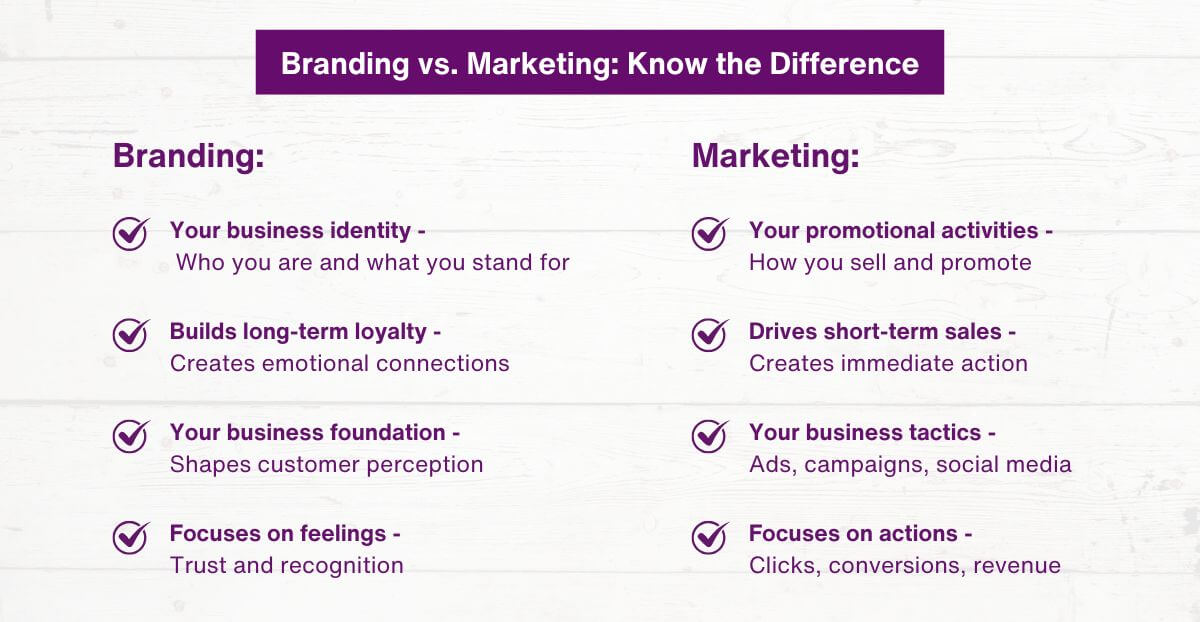
Business branding focuses on identity and emotions, creating long-term loyalty. Marketing targets short-term sales through promotions and outreach. Branding evokes feelings—like trust in a sustainable clothing line’s ethos. Marketing amplifies this with ads showing product benefits. Misalignment, like flashy sales clashing with minimalist branding, confuses audiences.
For branding for small businesses, psychology plays a key role: use space for perceived value, as in Apple’s designs. Marketing then deploys targeted SEO or influencers. Small business branding is holistic, influencing every touchpoint. Marketing is siloed, often budgeted separately, but thrives on branding’s authenticity.
Why Strong Business Branding Supports Marketing?
Robust branding amplifies marketing ROI by building inherent value. Customers connected emotionally respond better to promotions, seeing them as extensions of trusted identity. In examples like Patanjali’s indigenous roots, branding creates instant recall. Marketing campaigns ride this wave, boosting sales without starting from scratch. For a fitness app, branding for a small business as “empowerment” makes workout challenges irresistible.
Dhruva Pakhnikar states: “Recall value is the most important part of a brand these days.” This recall turns marketing into advocacy, reducing acquisition costs. Alignment yields premiums and retention. A rebranded cafe saw a marketing lift in footfall 30% post-identity refresh, per deAsra insights.
How to Align Business Branding and Marketing
Alignment starts with shared goals. Map marketing tactics to branding pillars, ensuring consistency in tone and visuals across campaigns. Use storytelling: small business branding shares origins, while marketing weaves them into ads. Tools like Canva unify designs affordably. Measure holistically—track branding via sentiment, marketing via conversions. Refine with feedback loops.
See this simple guide for practical steps in branding for a small business.
Actionable Tips for Entrepreneurs
- Define Core Identity: Outline values and audience for branding. Create guidelines to guide marketing.
- Ensure Consistency: Uniform logos, colours, and voice build trust in small business branding.
- Leverage Stories: Use narratives in branding for small businesses, promote via marketing channels.
- Audience Research: Tailor both to psychology for resonant small business branding and precise ads.
- Track and Adjust: Monitor engagement; align via data.
- Budget Smart: Free AI aids branding for small businesses, freeing funds for marketing.
- Value Delivery: Consistent quality fuels organic growth.
- Stay Authentic: Avoid trends; true branding for small businesses endures.
Conclusion
Mastering business branding versus marketing unlocks potential. Branding crafts the soul; marketing the voice. Together, they drive loyalty and sales. As Dhruva Pakhnikar advises, prioritise recall for remembrance. For small business branding, this bedrock ensures marketing succeeds. Start aligning today for resilient growth.

FAQs
1. What separates business branding from marketing?
Business branding builds emotional identity and long-term trust through values and perceptions, while marketing drives immediate sales via promotions and ads. For branding for small businesses, prioritise the soul—vision and customer bonds—before tactical pushes, ensuring promotions feel authentic rather than forced.
2. How does branding for a small business benefit marketing efforts?
Strong small business branding creates loyalty and recall, making marketing more effective by turning one-time buyers into advocates who trust your promotions. It amplifies ROI, as emotional ties make ads resonate, reducing costs and boosting conversions in competitive markets.
3. Can small businesses afford strong business branding?
Absolutely, branding for small businesses thrives on authenticity and free tools like Canva or AI prompts, not big budgets. Start subconsciously with service quality, then formalise vision and consistency to build a foundation that supports scalable marketing without financial strain.
4. What common mistake do owners make in small business branding?
Many equate small business branding with logos alone, ignoring the deeper soul, as Dhruva Pakhnikar notes, visuals are just 5-10%. This leads to superficial efforts; focus instead on values, psychology, and consistency for true emotional connections that enhance marketing.
5. How to measure success in aligning both?
Gauge business branding via retention rates and sentiment analysis, while marketing success shows in conversions and traffic. For branding for small businesses, track overall growth like repeat business and engagement; regular feedback loops ensure harmony, proving alignment drives sustainable results.