Creating a Culture of Continuous Learning: How to Make Training a Core Company Value
In India’s bustling business environment, where market shifts and technological advances demand constant adaptation, continuous learning emerges as the foundation for enduring organisational strength. Industry leaders from retail, hospitality, manufacturing, services, and beyond increasingly view continuous learning as essential to maintaining relevance and driving performance.
By prioritising continuous learning, companies empower employees to build skills, embrace change, and deliver superior results. Establishing a culture of continuous learning turns this practice into a shared priority, fostering environments where ongoing development feels natural and valued rather than imposed.

Why Continuous Learning Matters More Than Ever
Continuous learning serves as a powerful investment that yields immediate and lasting returns. When employees receive regular opportunities to refine their abilities and acquire new knowledge, productivity rises, errors decrease, and innovation flourishes. In smaller enterprises, this often begins with straightforward actions such as clear role guidance on the first day and hands-on demonstrations from experienced team members.
As organisations expand, these efforts scale through more organised methods. The importance of continuous learning becomes clear in its capacity to equip teams for evolving demands, from adopting digital tools to meeting heightened customer expectations in competitive Indian markets.
Building Organisational Resilience Through Ongoing Development
The importance of continuous learning also lies in its role in building organisational resilience. Businesses that cultivate continuous learning create spaces where employees actively pursue knowledge, test fresh approaches, and exchange ideas freely. This cultural shift encourages a forward-thinking attitude that questions routine practices and seeks better solutions. Across sectors, the importance of continuous learning reveals itself through teams that respond quickly to obstacles and capitalise on emerging possibilities, giving companies a distinct advantage in India’s fast-moving economy.
Step 1: Embed Continuous Learning as a Core Value
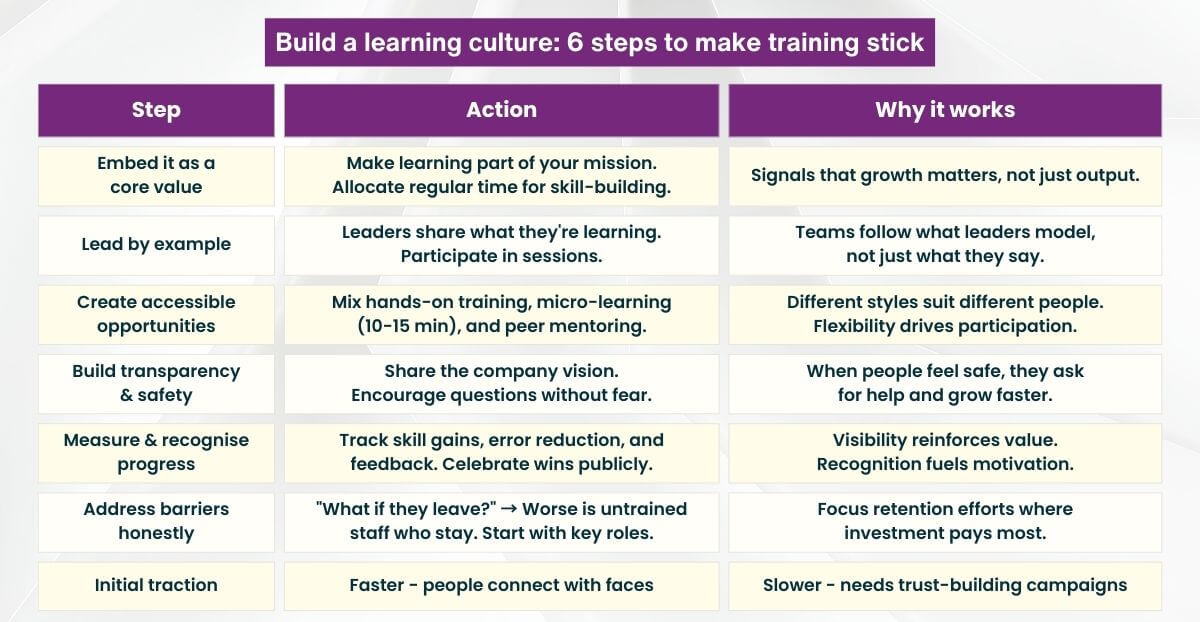
To foster an environment where employees are encouraged and empowered to pursue ongoing development, embed continuous learning as a fundamental company value from the outset. Allocate dedicated periods—such as weekly or monthly slots—for focused skill-building. Clearly explain to the team how continuous learning supports both business objectives and personal career progression. This transparency motivates participation and demonstrates commitment.
Step 2: Lead by Example and Foster Constructive Feedback
Leadership sets the tone through visible example. When senior members actively engage in their own development—whether through reading, courses, or skill-sharing—it inspires confidence across the organisation. Encourage open, constructive feedback after every task or learning activity. Deliver input thoughtfully, focusing on positives alongside constructive suggestions for improvement. Such exchanges promote self-reflection and reinforce that growth is a supported journey.
Step 3: Design Accessible and Varied Learning Opportunities
Design accessible learning opportunities that suit different needs and schedules. Hands-on training proves highly effective in smaller teams, where observation, peer mentoring, and practical application accelerate progress. Supplement these with flexible options like short, focused sessions or self-directed resources. Document essential processes—simple checklists for onboarding, key expectations, and skill outlines—to maintain consistency and reduce confusion.
Step 4: Create Transparency, Safety, and Team Connection
A culture of continuous learning flourishes when built on transparency and mutual respect. Regularly share the company’s long-term vision, so employees understand how their development contributes to shared success. Promote psychological safety, enabling team members to voice questions, request support, or propose ideas without hesitation. Incorporate light team activities—such as group outings or collaborative exercises—to strengthen bonds and show that learning can include elements of enjoyment and connection.
Step 5: Address Common Challenges Head-On
Overcome typical barriers with practical strategies. Employees who believe they already possess sufficient knowledge may resist further training; address this through respectful discussions that acknowledge their expertise while highlighting organisation-specific practices and expectations. Concerns about investing in training only for staff to depart later are common, yet the alternative—an under-skilled employee who remains—poses a far greater performance risk. Recognise that certain entry-level roles experience natural turnover, but focus retention efforts on key positions where long-term value justifies the investment.
Insights from Experts and Practical Resources
Practical guidance from experienced voices reinforces these principles. As Ms. Sajiri Chidgupkar explains in the deAsra dreamBIG podcast, “Every employee needs training… the employer’s major role is investing in training.” This viewpoint highlights how continuous learning generates productivity benefits that outweigh short-term concerns. Similarly, she notes, “What’s worse is not training someone who stays.” These insights remind leaders that consistent development strengthens teams regardless of occasional attrition.
Enhance traditional methods with digital approaches as resources allow. The deAsra blog post on creating engaging online employee training recommends bite-sized modules of 10-15 minutes, interactive quizzes, videos, and animations to sustain interest. Gamification elements like badges, points, and leaderboards add motivation, while mobile-friendly designs accommodate busy schedules.
deAsra supports and engages entrepreneurs and small to medium businesses by delivering accessible resources such as the dreamBIG podcast series and insightful blogs. Explore the episode on Training and Retention for grounded advice tailored to smaller setups. These tools demonstrate that continuous learning can take root even in resource-constrained settings through leader time investment, peer collaboration, and simple documentation.
Step 6: Measure, Recognise, and Sustain Progress
Sustain momentum by measuring results systematically. Monitor key indicators before and after initiatives—such as task completion speed, error reduction, customer satisfaction scores, or output quality. Gather qualitative input through quick polls or conversations to understand experiences and refine approaches. Publicly recognise achievements to highlight value and encourage continued involvement. Over time, these efforts solidify a culture of continuous learning where development integrates seamlessly into daily operations.
The Lasting Impact on Engagement and Retention
The importance of continuous learning extends to enhanced employee engagement and loyalty. Teams that experience growth opportunities report greater satisfaction and commitment, contributing to lower turnover in India’s challenging talent landscape. When continuous learning aligns with career paths and organisational goals, it creates a virtuous cycle of improvement and retention.
Conclusion
Building this foundation requires consistent effort across all levels. Begin modestly with leader-led sessions and basic documentation, then layer in feedback loops, varied formats, and measurement. As participation grows, the culture of continuous learning becomes self-reinforcing, with employees advocating for and contributing to development activities.
Leaders who champion this approach cultivate motivated teams, foster innovation, and secure long-term success. Commit to these principles today, implement them steadily, and observe how continuous learning elevates performance and resilience across your enterprise.

FAQs
1. What makes continuous learning essential for small and medium businesses in India?
Continuous learning enables smaller organisations to adapt quickly to market changes, improve service quality, and reduce costly mistakes. It builds employee confidence and capability without requiring large investments, leading to better productivity and a stronger competitive position in dynamic sectors.
2. How can business leaders start building a culture of continuous learning on a limited budget?
Leaders can begin with hands-on training, weekly skill discussions, and simple documentation of processes. Lead by personal example, provide constructive feedback, and use free or low-cost resources like videos and peer mentoring to make continuous learning accessible and routine.
3. In what ways does continuous learning improve employee retention?
Continuous learning demonstrates investment in staff growth, offering clear career paths and skill enhancements that increase job satisfaction and loyalty. Employees who see development opportunities are far less inclined to leave for small external incentives, reducing turnover expenses.
4. What is the role of feedback in supporting continuous learning?
Feedback provides clear insights into performance strengths and improvement areas respectfully. Delivered regularly after activities, it encourages reflection, motivates progress, and signals that continuous learning receives organisational support as an ongoing process.
5. How should companies assess the effectiveness of their continuous learning initiatives?
Evaluate through observable changes such as fewer errors, quicker task handling, higher customer feedback scores, and increased output. Combine these with employee surveys and completion rates to gain a full picture, then adjust strategies to maximise the importance of continuous learning.