
Top 12 Customer Acquisition Strategy Tips Every Entrepreneur Must Know
A strong customer acquisition strategy is essential for any business aiming for sustainable growth. It’s not simply about selling more but about reaching the right people, at the right time, and in the right way. Whether you’re in retail, manufacturing, tech, or service-based industries, the goal is to create a reliable system to convert potential customers into loyal buyers.
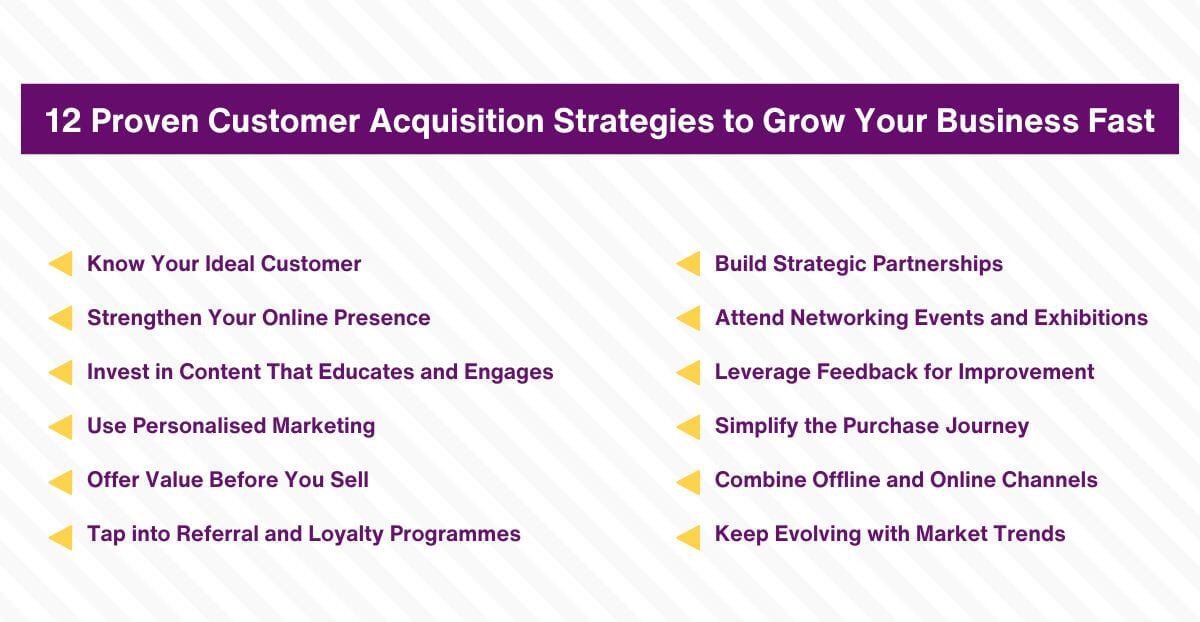
To achieve that, you need to look beyond short-term tactics. A well-thought-out approach, focused on relationship-building, market understanding, and meaningful engagement, is what will set you apart. In this blog, we’ll explore proven tips for customer acquisition strategy that can work across industries and adapt as your business grows.
To understand this better, you can also explore this deAsra blog, which offers insights for entrepreneurs building resilient businesses.
1. Know Your Ideal Customer
Start with understanding who your ideal customer is. This is the foundation of every strong customer acquisition strategy. Study your existing customers – what are their pain points, buying behaviour, and decision-making triggers? Use this data to build customer profiles or personas.
When you know who you’re targeting, you can tailor your messaging and choose the right platforms to reach them. Without this clarity, even the best marketing efforts can fall flat.
2. Strengthen Your Online Presence
Digital presence matters. From your website to your social media profiles, every touchpoint should clearly communicate your value proposition. Make sure your brand messaging is consistent, your website is easy to navigate, and your call-to-action is visible and clear.
Today, many customers research online before buying. Your digital presence plays a key role in shaping their first impression, making it a vital part of your customer acquisition strategy.
3. Invest in Content That Educates and Engages
Educational content builds trust. Blogs, videos, tutorials, and case studies help customers understand how your product or service fits their needs. When they see that you understand their problems and offer useful insights, they are more likely to engage.
Content also boosts your SEO rankings, making it easier for new audiences to discover you. This is a long-term play, but one that delivers consistent returns.
4. Use Personalised Marketing
Generic marketing is outdated. People expect brands to understand their needs and offer relevant solutions. Segment your audience and customise your emails, offers, and communication based on their behaviour or preferences.
Personalisation creates an emotional connection. It shows customers that you value them as individuals, which is key in both new customer acquisition and long-term engagement.
5. Offer Value Before You Sell
One of the best tips for customer acquisition strategy is to create value before asking for a sale. This can be in the form of free resources, product trials, workshops, or even consultations.
When customers feel supported and educated, they are more likely to trust your brand and make a purchase. This value-first approach builds credibility and makes your offer more appealing.
6. Tap into Referral and Loyalty Programmes
Encourage your existing customers to refer others. Referral programmes, when structured well, bring in warm leads who are more likely to convert. Offer small incentives to both referrer and referee.
Additionally, loyalty programmes help with customer acquisition and retention. When customers know they will benefit from staying with you, they are more likely to recommend your business and stay loyal over time.
7. Build Strategic Partnerships
Partnering with complementary businesses is a smart customer acquisition strategy. You tap into a new audience that already trusts the other brand. For example, a nutritionist and a fitness studio working together can benefit both businesses.
This strategy requires mutual value-sharing and good communication, but when done right, it can significantly expand your reach without high marketing costs.
8. Attend Networking Events and Exhibitions
Face-to-face connections still work. Business exhibitions, trade shows, and networking events offer the chance to meet prospects, demonstrate your product, and build relationships.
If planned with clear goals, these events can support both new customer acquisition and deeper engagement with existing clients. Always follow up with the contacts you make.
9. Leverage Feedback for Improvement
Listen to your customers. Feedback – positive or negative – is a valuable source of information. It helps you improve your product, fix weak points, and understand what truly matters to your audience.
Using feedback to refine your approach shows customers that you care, which adds to both customer acquisition and retention.
10. Simplify the Purchase Journey
Even interested buyers will walk away if the process is too complex. Make sure your sales process is smooth, from discovery to checkout. Reduce friction, eliminate unnecessary steps, and provide support if needed.
A simple and intuitive experience makes customers more likely to complete their purchase and return in the future.
11. Combine Offline and Online Channels
Don’t rely on just one channel. Combine digital tools like email and social media with offline methods like community events, workshops, and local marketing. The blend depends on your industry and customer base.
This balanced approach strengthens your customer acquisition strategy and creates multiple touchpoints to connect with your audience.
12. Keep Evolving with Market Trends
Customer expectations are changing. What worked last year may not work now. Regularly review your customer acquisition strategy and update it based on trends, competitor activity, and feedback.
Staying agile helps you stay ahead of the curve. A flexible plan ensures you’re not caught off guard by market shifts.
To explore this topic further, this sales growth podcast by deAsra shares actionable insights on evolving sales models and how small businesses can stay competitive.
Conclusion
Building a successful customer acquisition strategy isn’t a one-time task – it’s an ongoing commitment to understanding your audience, adapting to their needs, and delivering consistent value. Whether you’re fine-tuning your messaging, leveraging your network, or embracing personalisation, each step contributes to building stronger relationships.
Combining techniques like new customer acquisition with smart customer acquisition and retention practices helps ensure your business doesn’t just attract customers – it keeps them. As markets evolve and competition grows, staying agile, responsive, and customer-focused will always give you an edge.
FAQs
1. What is a customer acquisition strategy?
A customer acquisition strategy is a structured plan used by businesses to attract and convert new customers through various methods like digital marketing, referrals, or partnerships.
2. How can I improve customer acquisition and retention?
Focus on personalisation, feedback, loyalty programmes, and consistent engagement. These strategies help in both customer acquisition and retention.
3. What are low-cost ways to gain new customers?
Leverage social media, content marketing, referral programmes, and local networking. These methods support new customer acquisition without heavy investment.
4. How does content help in customer acquisition?
Good content educates your audience, builds trust, and improves search visibility. It’s a long-term strategy that supports consistent new customer acquisition.
5. Why is personalisation important in a customer acquisition strategy?
Personalisation builds a stronger connection with the customer, increasing the likelihood of conversion and long-term loyalty.