Bulk Selling in India: Top 10 Profitable Products for Wholesale Business
Bulk selling in India offers a great way to grow your business, letting you sell large quantities to reach a wider audience. Wholesale can be especially profitable if you choose the right products and understand the market demand. For those aiming to expand into bulk sales, we’ve compiled a list of ten high-demand products in India that are perfect for bulk selling and attracting bulk buyers.
1. Fast-Moving Consumer Goods (FMCG)
Products that people use daily, like soap, toothpaste, and snacks, are popular for bulk selling. FMCG items are always in demand, making them ideal for wholesale. Common bulk buyers for FMCG include grocery stores, supermarkets, and online platforms. Deciding on which category—personal care, food, or home essentials—depends on what you can supply reliably.
2. Textiles and Fabrics
India is known for its textiles, and selling fabrics in bulk is a profitable option. Materials like cotton, silk, and polyester are always in demand among bulk buyers such as garment manufacturers, retail shops, and exporters. Focusing on a niche—like eco-friendly or organic fabrics—can help your brand stand out in this competitive market.
3. Organic Foods and Produce
The demand for organic grains, pulses, and spices is rising as more people focus on health. Many bulk buyers, such as health food stores and wellness markets, are interested in stocking organic options. To get started in this area, join local trade events or farmers’ markets, where you can connect directly with wholesale buyers looking for high-quality organic products.
4. Herbal and Ayurvedic Products
Traditional herbal products like oils, supplements, and skincare items have steady demand in India. Bulk buyers often include wellness stores, health clinics, and online health shops. Make sure to have authentic, high-quality products to build trust with your customers. Proper registration and following regulatory standards are essential in this category.
5. Office Supplies and Stationery
Supplies like notebooks, pens, and binders are always needed in schools, offices, and government organisations. Bulk selling of stationery items is a good opportunity since they have consistent demand. Consider creating a product catalogue with attractive deals for bulk orders to make it easier for bulk buyers to choose.
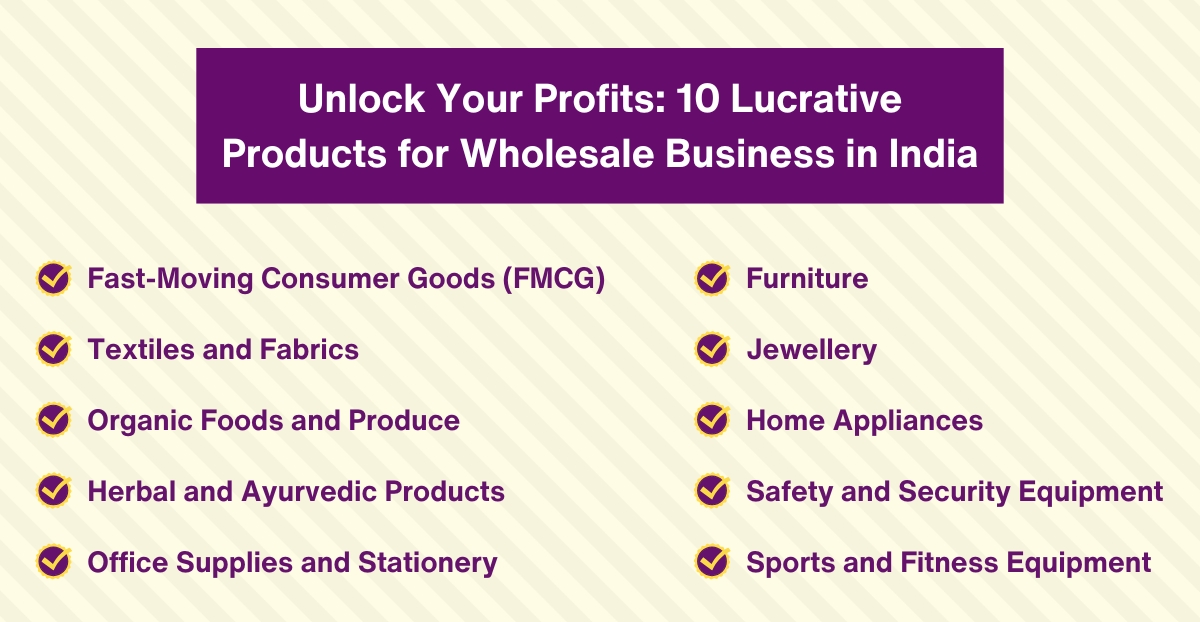
6. Furniture
Bulk furniture sales cover items like tables, chairs, and cabinets for homes, offices, and hotels. With more people moving to cities, there’s an increased demand for furniture. Bulk buyers here can include showrooms, hotels, and coworking spaces. Starting a wholesale furniture business may require investment in inventory and storage space.
7. Jewellery
Bulk selling jewellery, especially costumes or traditional pieces, can be profitable. The demand for jewellery is strong, and you can target bulk buyers like retailers, event planners, or export businesses. Focusing on a specific style, such as traditional or minimalist, will help you attract a specific buyer segment.
8. Home Appliances
Small kitchen and home appliances, like mixers, kettles, and heaters, have steady demand among bulk buyers in the hospitality industry and for rentals. Building good supplier relationships and having reliable transport for delivery are essential in this sector.
9. Safety and Security Equipment
With security concerns growing, there’s rising demand for items like CCTV cameras, alarms, and door locks. Selling these products in bulk can be profitable, as bulk buyers include schools, offices, and real estate developers. Make sure your products meet required safety standards and offer warranties to attract more buyers.
10. Sports and Fitness Equipment
Selling fitness items like yoga mats, dumbbells, and sports equipment in bulk is a great option as more people focus on health. Bulk buyers include gyms, wellness centres, and sports clubs. To make your brand visible, try partnerships with fitness centres or participating in health expos.
Tips for Success in Bulk Selling
- Know Your Market: Choose products that are in demand and align with what bulk buyers are seeking. Researching customer needs can help you make the right choices. To better understand how to sell products in bulk, check out this resource on market linkages which provides insights into connecting with bulk buyers.
- Focus on Quality: Wholesale customers appreciate quality as much as quantity. By providing high-quality products, you build trust and retain clients.
- Build Relationships with Bulk Buyers: Good relationships are key in wholesale. Stay in touch with your buyers, offer regular updates, and give discounts for repeat orders. You can also keep them engaged with promotions. Learn how to attract and retain bulk buyers through effective strategies here.
- Efficient Supply Chain: A smooth supply chain is essential for handling large orders. Work with reliable suppliers and transport networks to keep things running smoothly.
- Offer Competitive Pricing: Wholesale customers look for value deals. Offer competitive prices and bulk purchase discounts to make your business attractive.
- Promote Your Products: Showcasing your products on online platforms, business exhibitions, and trade marketplaces can help attract more bulk buyers. A strong social media presence can also make it easier for buyers to find you.
- Keep Up with Trends: Staying informed about industry trends can help you adapt quickly. For example, if sustainable products are gaining popularity, think about adding eco-friendly items to your product range.
Conclusion
In conclusion, bulk selling presents an excellent opportunity for entrepreneurs in India to tap into profitable markets and expand their reach. By focusing on high-demand products like FMCG, textiles, and organic goods, you can attract a diverse range of bulk buyers and build a successful wholesale business. Remember, understanding your market, prioritising quality, and maintaining strong relationships with your customers are key to thriving in this competitive landscape.
FAQs
1. What is bulk selling?
Bulk selling refers to the practice of selling products in large quantities, typically at a discounted rate compared to retail prices. This approach is commonly used by wholesalers who supply goods to retailers, businesses, and other entities looking to purchase large amounts of a product. Bulk selling benefits both the seller, who can move inventory quickly, and the buyer, who saves money on bulk purchases.
2. What are the benefits of bulk selling?
The benefits of bulk selling include higher profit margins due to volume sales, reduced marketing costs, and the ability to establish long-term relationships with customers. Additionally, wholesalers can clear out excess inventory more efficiently, reducing storage costs. This model also allows businesses to streamline their operations and focus on a specific target market, which can lead to greater customer loyalty.
3. How can I find bulk buyers for my products?
To attract bulk buyers, you can employ various strategies, such as networking at trade shows, joining wholesale directories, and utilising online marketplaces. Additionally, building an effective online presence through social media and your website can showcase your products and reach potential customers. Offering promotions or discounts for bulk purchases can also incentivise buyers to choose your products over competitors.
4. What types of products are best for bulk selling?
The best products for bulk selling often include fast-moving consumer goods (FMCG), textiles, electronics, and health and beauty products. These categories tend to have consistent demand and appeal to a wide range of bulk buyers. Additionally, items like organic foods and home essentials are becoming increasingly popular as consumers seek quality and sustainability in their purchases.
5. How do I manage inventory for a bulk-selling business?
Effective inventory management for a bulk-selling business involves tracking stock levels, predicting demand, and implementing a robust inventory control system. Using software can help streamline this process, allowing you to monitor sales trends and adjust your purchasing accordingly. It’s also essential to maintain strong relationships with suppliers to ensure timely restocking and to minimise disruptions in your supply chain.