Creating a Sustainable Business Model: 6 Tips for Women Entrepreneurs
Women entrepreneurs in India are making remarkable strides. According to a report by IBEF, approximately 20.37% of Indian women are MSME owners, contributing to over 23.3% of the labour force. Despite these achievements, women entrepreneurs face challenges like access to capital, limited networks, and balancing responsibilities.
However, creating a sustainable business model can help address these issues and lead to long-term success. Many women entrepreneurs encounter significant barriers in their entrepreneurial journey. In this blog, we will explore practical tips for women entrepreneurs to build a sustainable, thriving business by focusing on financial stability, eco-friendly practices, and ethical growth.
1. Understand the Core of a Sustainable Business Model
At the heart of a sustainable business model is the idea of balancing growth with long-term stability. It requires planning, innovation, and a focus on both the business’s environmental and financial impact. A sustainable business model is not just about profits but creating a system that works harmoniously with the planet and society.
For women entrepreneurs, sustainability means being able to grow their businesses while considering the needs of the community, the environment, and the economy. A good start is validating your business idea. Business planning is essential to ensure that your model is viable and realistic in the long run. You can explore services like business planning and idea validation to get expert insights.
2. Focus on Eco-Friendly Practices
In today’s world, customers and investors are increasingly drawn to businesses that prioritise eco-friendly practices. Building a sustainable business model means incorporating environmentally conscious methods into daily operations. Here are a few simple strategies:
- Reduce Waste: Minimising waste by adopting efficient practices like recycling or using biodegradable packaging can significantly lower your business’s environmental footprint.
- Energy Efficiency: Opting for energy-efficient technologies and renewable energy sources like solar power reduces costs and demonstrates your commitment to the environment.
- Sustainable Supply Chain: Ensure that the suppliers and partners you work with also follow eco-friendly practices. This can strengthen your reputation as an environmentally conscious business.
For women entrepreneurs, incorporating these practices builds a brand that appeals to the growing market of eco-conscious consumers. It can also attract investors who are looking to support sustainable ventures.
3. Embrace Financial Sustainability
Building a sustainable business model involves careful financial planning. Women entrepreneurs often face challenges in securing funding, but there are ways to overcome this:
- Crowdfunding and Grants: Alternative funding sources like crowdfunding or grants can be beneficial, especially when traditional funding is not available. Many organisations specifically support women entrepreneurs, providing opportunities to access capital without having to rely on loans.
- Business Budgeting: Develop a robust budgeting plan that accounts for all expenses, expected income, and potential financial risks. Regularly reviewing and adjusting your budget will help ensure long-term financial health.
- Lean Operations: Running a lean business means being efficient with your resources. Focus on reducing unnecessary expenses, and avoid expanding too quickly, which can lead to financial strain.
Using financial planning tools and services can help you stay on track and build a business that thrives sustainably.
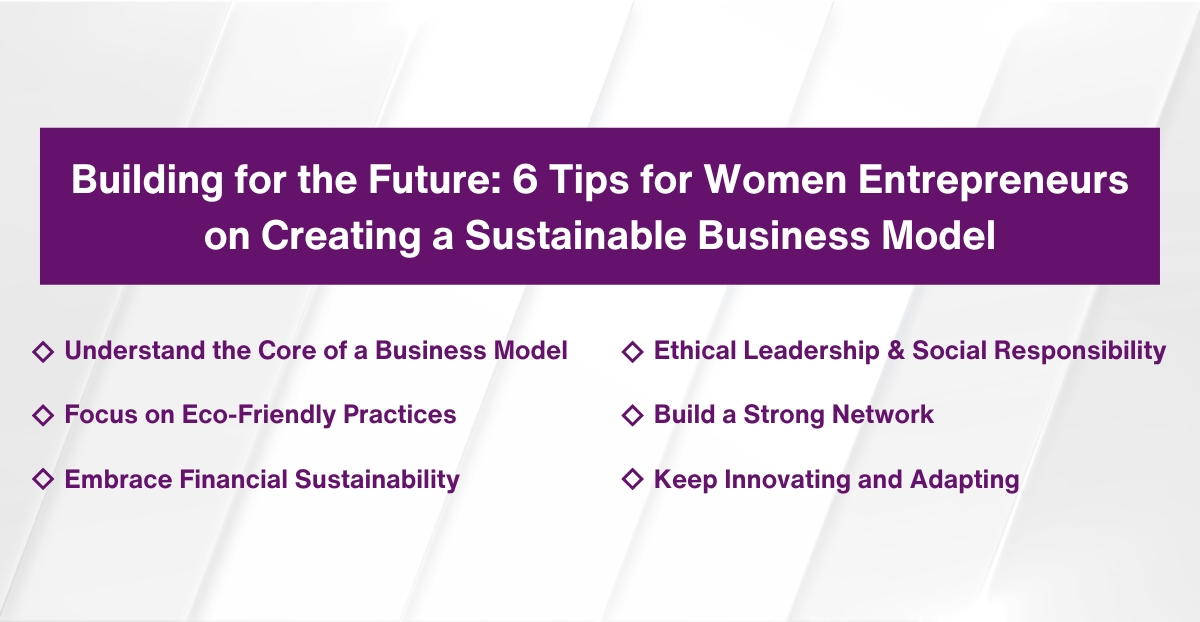
4. Ethical Leadership and Social Responsibility
An important aspect of a sustainable business model is focusing on social responsibility. As women entrepreneurs, your leadership can set an example of ethical practices and community support. Being socially responsible does not just mean giving back; it also means running a business that operates fairly and treats all stakeholders with respect.
Here are some ways to embed ethics and social responsibility into your business:
- Fair Wages and Employment Practices: Ensure that your employees are paid fairly and have safe working conditions. This builds loyalty and enhances your business’s reputation.
- Community Engagement: Supporting local causes or providing services that benefit the community strengthens your business’s social impact.
- Transparent Communication: Be open and transparent with your customers, investors, and employees. Building trust through honest communication can lead to long-term success.
For additional tips on how to create a strong personal brand as a woman entrepreneur, check out this guide on building a personal brand.
5. Build a Strong Network
A solid support system is crucial for the success of women entrepreneurs. Building a network of like-minded individuals can provide support, guidance, and opportunities for collaboration. Here’s how networking can strengthen your sustainable business model:
- Mentorship: Connect with other experienced entrepreneurs who can provide valuable advice and mentorship. Learning from others’ experiences can help you avoid common pitfalls.
- Collaborations: Collaborating with other businesses can open new markets and opportunities. Look for partnerships that align with your business values and long-term goals.
- Business Associations: Join local or online business associations that focus on supporting women entrepreneurs. These organisations often offer resources, workshops, and networking events that can help you grow your business.
The strength of your network can be a key factor in your business’s long-term success and sustainability.
6. Keep Innovating and Adapting
The business landscape constantly changes, and a sustainable business model requires adaptability and innovation. For women entrepreneurs, staying updated on industry trends, consumer behaviour, and new technologies is critical to staying competitive.
- Continuous Learning: Invest time in learning new skills, attending workshops, or following industry news. This will help you stay ahead of the curve and innovate where necessary.
- Customer Feedback: Listening to your customers can provide insights into what works and what doesn’t. Use feedback to improve your products or services, keeping your business relevant and customer-focused.
- Technology: Embrace digital tools that can make your business more efficient. Whether adopting an e-commerce platform or using digital marketing strategies, technology can drive growth and sustainability.
By continually improving and adapting, women entrepreneurs can create a sustainable business model that can withstand market changes and challenges.
Conclusion
Creating a sustainable business model is an achievable goal for women entrepreneurs who focus on eco-friendly practices, financial stability, ethical leadership, and adaptability. By following these tips and embracing continuous learning, you can build a business that thrives in the long run, benefits the community, and sets a standard for others to follow.
If you are ready to take the next step, explore resources like business planning and idea validation for professional support. Sustainable growth requires planning, but with the right strategies, your business can flourish while making a positive impact.
FAQs
1. What is a sustainable business model and why is it important?
A sustainable business model is one that integrates long-term financial stability with ethical practices and eco-friendly operations. It ensures that your business can grow while minimising negative environmental and social impacts. This is crucial for women entrepreneurs aiming for steady growth without compromising values, as it allows for balancing profitability with responsibility.
2. How can women entrepreneurs ensure financial sustainability?
To ensure financial sustainability, women entrepreneurs should focus on efficient resource management, budgeting, and seeking multiple revenue streams. Bootstrapping, grants, and low-interest loans can also help sustain the business during its early stages. Regularly reviewing financial health and planning for the long term is key to maintaining a stable sustainable business model.
3. How can a business incorporate eco-friendly practices?
Incorporating eco-friendly practices into a sustainable business model involves reducing waste, using sustainable materials, and promoting energy efficiency. For women entrepreneurs, partnering with suppliers that follow ethical standards and adopting green practices in day-to-day operations will benefit the environment and appeal to socially conscious consumers.
4. What role does social responsibility play in a sustainable business model?
Social responsibility is a key aspect of a sustainable business model. It involves operating your business in a way that positively impacts society. For women entrepreneurs, this could mean fair wages, community involvement, or supporting local causes. Building a socially responsible brand can also create stronger customer loyalty.
5. How can women entrepreneurs overcome common challenges in building a sustainable business?
Women entrepreneurs can overcome challenges such as limited access to capital and balancing family responsibilities by leveraging support networks, seeking mentorship, and utilising creative financing options like crowdfunding or grants. Developing a clear mission and a strong sustainable business model will help them stay resilient and focused on their goals.