
Your First 90 Days: A Strategic Action Plan After You Start Your Business
When you start your business, the initial momentum decides whether you build lasting value or struggle with scattered efforts. Industry leaders across sectors know that the early phase demands sharp focus on validation, customer acquisition, and disciplined execution. Many founders who successfully start their own business treat the first 90 days as a structured sprint rather than a vague exploration period. This approach helps convert ideas into revenue-generating operations while minimising common setbacks.
A clear new business checklist becomes essential during this window. It covers everything from daily customer outreach to basic financial tracking and process setup. Entrepreneurs who follow a timeline gain confidence through early traction and adjust based on real market signals. deAsra supports and engages founders by offering practical resources that simplify these early decisions.

Days 1–30: Validate Demand and Secure Your Runway
The opening month centres on confirming that real customers need your offering. Speak directly with at least 30–50 potential buyers through calls, meetings, or quick surveys. Ask specific questions about their pain points and willingness to pay. This step prevents investing time and money into features nobody wants. Track responses in a simple spreadsheet to spot patterns early.
At the same time, protect your personal finances. Set aside funds to cover living expenses for six to eighteen months, assuming limited or zero revenue initially. Many who start their own business underestimate this buffer and face unnecessary pressure. Review every expense category and create a bare-bones budget for both personal and operational needs. Tools like basic spreadsheets or free accounting apps help maintain clarity without complexity.
During this period, begin building light systems. Document your daily routine, customer conversation templates, and follow-up process. Even simple habits, such as logging interactions or reviewing weekly progress, create discipline from the founder level. Health routines matter here too—regular exercise or short meditation sessions keep energy steady amid uncertainty. These foundations make later scaling smoother.
New business checklist items for Month 1 include: defining your core customer profile, mapping competitor offerings, drafting a one-page business summary, and initiating lead generation through your existing network. Prioritise organic outreach, such as sharing samples or demos with contacts. Aim for your first handful of meaningful conversations rather than perfect materials.
Days 31–60: Acquire First Customers and Gather Feedback
The second month shifts toward action and revenue. Use insights from initial talks to refine your pitch and offering. Reach out aggressively to leads generated earlier. For those with limited budgets, act as your own salesperson—send personalised messages, offer trial services, or demonstrate value directly. Consistent follow-ups turn interest into commitments.
Feedback collection forms a vital loop. After every interaction or early sale, ask targeted questions: What worked well? What felt missing? How does this compare to alternatives? Record responses systematically and look for recurring themes. This data guides quick iterations, such as adjusting pricing, features, or delivery methods. Founders who start their business with this habit avoid costly pivots later.
Consider basic formalisation once you see initial traction. Many begin as a simple proprietorship and move to structures like LLP or a private limited company after proof of concept. Check compliance needs relevant to your sector, such as GST if turnover thresholds apply or specific licences for food or retail activities. deAsra supports and engages entrepreneurs with assessment tools that clarify these requirements efficiently.
New business checklist priorities here involve setting weekly sales targets, documenting feedback themes, testing two to three pricing options, and tracking cash flow daily. Measure progress through actual conversations or small wins rather than vanity metrics. Even modest revenue builds confidence and validates direction.
Days 61–90: Iterate, Systematise, and Plan for Momentum
By the final month, emphasis moves to refinement and sustainability. Analyse all collected feedback and implement meaningful changes. Update your offering based on what customers value most. This iteration cycle—test, learn, adjust—helps move toward product-market fit without waiting for perfection.
Strengthen internal processes. Create repeatable workflows for sales follow-up, order fulfilment, and expense recording. These systems reduce errors and free mental space for strategic thinking. Review your financial runway regularly and adjust spending to extend sustainability. Strong cash flow management separates businesses that survive from those that stall.
Expand customer acquisition channels thoughtfully. Build on organic efforts by exploring low-cost platforms or partnerships. Continue direct engagement to deepen understanding of buyer needs. For service-oriented ventures, develop packaged offerings that increase perceived value. Product businesses focus on volume potential and scalability signals.
Leadership habits gain importance. Maintain personal discipline in health and mindset to handle leadership demands. Build emotional connections with early supporters or team members. Identify individuals who advance your goals and address any misalignments promptly. A positive culture starts small but influences long-term retention.
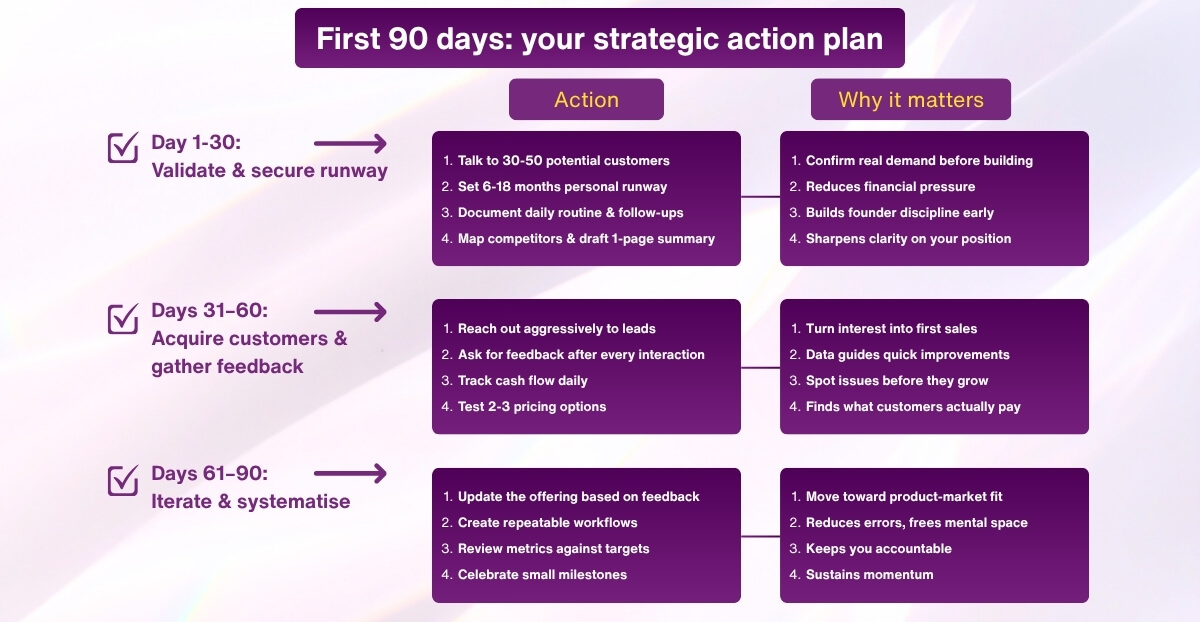
New business checklist elements for this phase include: reviewing 90-day metrics against targets, documenting core processes, planning next funding steps if needed, and scheduling a mentor review session. Celebrate small milestones, such as first paying customers or validated assumptions, to sustain motivation.
Dr. Vikrant Bhujbalrao notes the importance of risk-taking as a foundational entrepreneurial quality that evolves through real-world application. Another insight from experienced voices highlights that successful ventures solve genuine problems while allowing time for family and societal contribution.
Access detailed guidance on initial planning and compliance through this resource from deAsra: Start a Business with deAsra and dreamBIG. For practical advice on avoiding early pitfalls, explore this insightful post: Start Your Business Right.
Conclusion
Mastering your first 90 days requires blending validation, customer focus, financial prudence, and disciplined systems. Industry leaders succeed by acting decisively while remaining open to feedback. deAsra supports and engages founders at every stage with tools, checklists, and ecosystem connections that simplify the journey. Commit to the timeline, execute the new business checklist consistently, and iterate based on real signals. Those who start their own business with this strategic mindset position themselves for sustainable success and meaningful impact.

FAQs
1. What should be the top priority in the first 30 days after you start your business?
Focus on validating demand through direct customer conversations and securing a personal financial runway for six to eighteen months. This foundation prevents premature spending and builds confidence through early market insights. Use a simple new business checklist to track profiles, outreach, and basic budgeting.
2. How can solo founders manage team aspects during the first 90 days?
Begin by seeking a mentor for guidance and consider one or two freelancers for targeted support. Avoid full solo operation if possible, as shared responsibilities prevent burnout. Identify complementary skills early and build light accountability structures to maintain progress.
3. When is the right time to handle formal registrations in the first three months?
Delay major formalisation until after initial validation and early customer traction. Start simple and move to appropriate structures once proof of concept emerges. Consult professionals to align compliance with your specific sector and growth plans.
4. How do you measure progress without immediate profits in the early days?
Track customer conversations, feedback quality, sales targets met, and cash flow discipline. Set realistic weekly goals for outreach and iterations. These metrics provide clear signals of momentum even before full profitability appears.
5. What role does feedback play across all 90 days when you start your business?
Feedback drives continuous iteration and ensures alignment with actual needs. Collect it systematically after every interaction and use patterns to refine offerings, pricing, or processes. This habit accelerates learning and strengthens market fit over the critical first quarter.
6. Why follow a structured timeline in the first 90 days?
A timeline brings discipline and focus amid uncertainty. It helps balance validation, customer acquisition, systems building, and personal sustainability. Entrepreneurs who start their own business with clear phases achieve faster traction and avoid common resource drains.