
5 Types of Women Entrepreneurs: A Guide to Different Business Approaches
In today’s dynamic business landscape, women are leading the charge, shaping industries and breaking new ground. However, women entrepreneurs aren’t a homogenous group. They come from various backgrounds, possess different skill sets, and operate with diverse motivations. By understanding the types of women entrepreneurs, aspiring businesswomen can better identify their own entrepreneurial style and choose the path that best aligns with their strengths and passions.
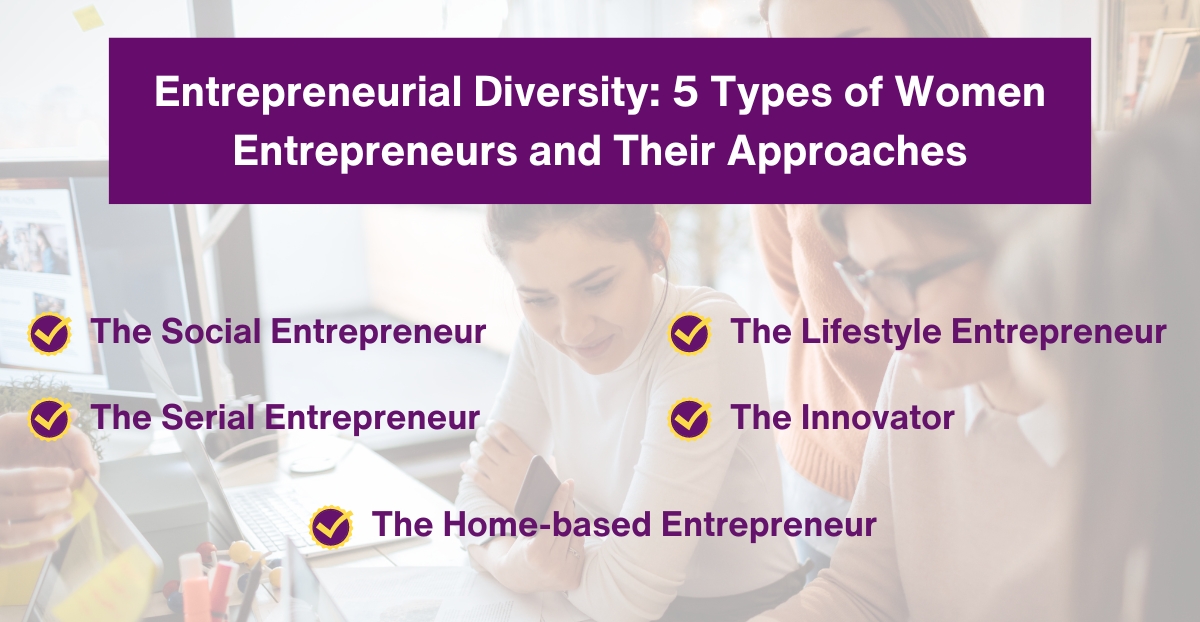
In this guide, we’ll delve into the five different types of women entrepreneurs, highlighting their unique approaches to business, examples of successful ventures, and practical advice for women looking to start or grow their own enterprises.
1. The Social Entrepreneur
A social entrepreneur focuses primarily on creating a positive impact on society, the environment, or the community. The driving force behind this type of entrepreneur is not just profit but also a deep-seated desire to bring about meaningful change. Social entrepreneurs often reinvest profits into their causes, ensuring that their business continually contributes to solving the issues they’re passionate about.
Characteristics:
- Mission-driven: The primary goal is societal impact, not just financial gain.
- Long-term vision: Focuses on creating sustainable solutions to address social or environmental issues.
Example:
Consider women leading sustainable fashion businesses in India. These types of women entrepreneurs use eco-friendly materials and ethical production methods to reduce the carbon footprint of the fashion industry. By doing so, they are not only generating revenue but also promoting environmentally responsible consumer habits.
Advice for Aspiring Social Entrepreneurs:
- Identify a cause you’re passionate about: Whether it’s environmental sustainability, women’s health, or education, aligning your business with a meaningful cause can fuel your motivation.
- Create a sustainable model: Balance your desire for social change with a strong financial plan. A sustainable business ensures long-term impact.
- Leverage partnerships: Collaborate with NGOs, government bodies, or like-minded organisations to enhance your reach and effectiveness. You can also access resources and services through platforms like deAsra Foundation.
2. The Serial Entrepreneur
A serial entrepreneur is someone who thrives on launching new ventures. These women are not content with just one business; instead, they repeatedly build, grow, and often sell companies. They learn from every business venture, applying their experience and lessons to the next one. For many, the excitement lies in the process of starting and scaling a business, not just in its day-to-day management.
Characteristics:
- Thrives on innovation: Constantly looking for new opportunities and challenges.
- Risk-taker: Serial entrepreneurs are willing to take risks and aren’t afraid of failure.
Example:
In India, many women who start successful businesses in sectors like e-commerce or education move on to other ventures after seeing their initial success. These types of women entrepreneurs might begin with a clothing boutique and later dive into consulting or product manufacturing, using their accumulated expertise to diversify.
Advice for Aspiring Serial Entrepreneurs:
- Be ready to pivot: The ability to change direction quickly is vital. Be flexible and open to new opportunities.
- Learn from each venture: Whether it’s a success or failure, take valuable lessons from each experience and apply them to your next venture.
- Keep building your network: Relationships with investors, mentors, and other entrepreneurs can open doors for your future businesses.
3. The Lifestyle Entrepreneur
A lifestyle entrepreneur builds a business that supports their interests and lifestyle. The main aim for these different types of women entrepreneurs is not to create an empire but to maintain a balance between work and life. Their businesses allow them to pursue their passions while enjoying flexibility. Whether it’s running an online store or offering freelance services, these entrepreneurs value the ability to work on their terms.
Characteristics:
- Passion-driven: The business reflects personal interests or hobbies.
- Work-life balance: These entrepreneurs prioritise time for family, travel, or leisure while maintaining a steady income.
Example:
A woman running a boutique or an online store from home that sells handmade products is a classic example of a lifestyle entrepreneur. Many women in India have embraced this model to balance family life and entrepreneurship.
Advice for Aspiring Lifestyle Entrepreneurs:
- Start with your passion: Whether it’s fashion, art, or fitness, choose something you enjoy doing and can sustain over the long term.
- Focus on flexibility: Use technology and online platforms to manage your business from anywhere, giving you the freedom to maintain a work-life balance.
- Consider automation: Implement systems that can streamline your business processes, allowing you more personal time without sacrificing growth.
4. The Innovator
Innovator entrepreneurs bring fresh ideas to the table, often in high-tech industries like science, engineering, or digital platforms. They develop new products or services that revolutionise the market. These types of women entrepreneurs are found at the cutting edge of industries, developing innovations that solve modern problems or improve existing processes.
Characteristics:
- Visionary: Innovators see opportunities where others see challenges and are often pioneers in their industries.
- Highly skilled: They often possess deep technical knowledge and use it to create groundbreaking products or services.
Example:
Women in India developing new fintech solutions or using artificial intelligence to solve problems in healthcare or agriculture are perfect examples of innovators. These different types of women entrepreneurs are shaping the future by creating technology that serves society’s evolving needs.
Advice for Aspiring Innovator Entrepreneurs:
- Stay ahead of trends: Keep yourself updated on industry developments and technological advances that can give you a competitive edge.
- Invest in skills: If you want to bring innovative products to life, consider improving your technical skills or partnering with experts in the field.
- Test your ideas: Run pilot projects or prototypes to refine your concept before fully launching into the market.
5. The Home-based Entrepreneur
Home-based entrepreneurs run their businesses from home, often managing everything from product creation to customer service from the comfort of their own space. These types of women entrepreneurs often start small but can grow significantly through e-commerce platforms, consulting services, or freelancing. Many women, especially in India, choose this route to balance their professional aspirations with family responsibilities.
Characteristics:
- Low overheads: Home-based businesses typically require minimal startup costs and ongoing expenses.
- Family-oriented: These entrepreneurs often choose this model to stay close to home while managing their businesses.
Example:
Women running successful online consulting services or selling homemade products on platforms like Etsy or Shopify are classic examples of home-based entrepreneurs.
Advice for Aspiring Home-based Entrepreneurs:
- Start small and scale: Begin with a business idea that requires little capital, like freelancing or digital services, and grow it as demand increases.
- Leverage e-commerce platforms: Utilise platforms like Shopify or Amazon to reach customers without needing a physical storefront.
- Create a productive workspace: Even if you’re working from home, ensure you have a dedicated space that allows you to focus and maintain productivity.
Conclusion
There’s no one-size-fits-all approach to entrepreneurship, and the different types of women entrepreneurs prove that every path is unique. Whether driven by a passion for social change, the thrill of innovation, or the desire for work-life balance, women today are reshaping industries and setting their own rules. By understanding the types of women entrepreneurs, aspiring businesswomen can identify the path that best suits their ambitions and strengths.
For further guidance on navigating the entrepreneurial journey, consider exploring deAsra’s success strategies, which offer practical advice for women ready to embark on or grow their businesses.
By choosing the entrepreneurial type that aligns with your skills and motivations, you’ll be better equipped to thrive and make your mark in the business world.
FAQs
1. What is the difference between a social entrepreneur and a lifestyle entrepreneur?
A social entrepreneur focuses on creating a positive social or environmental impact through their business, often reinvesting profits into their cause. A lifestyle entrepreneur, on the other hand, aims to build a business that supports their personal interests and desired work-life balance. While both types seek fulfilment beyond profit, social entrepreneurs prioritise societal change, whereas lifestyle entrepreneurs focus on personal satisfaction.
2. Can a woman be more than one type of entrepreneur?
Yes, many women embody characteristics of more than one type of entrepreneur. For instance, a serial entrepreneur could also be a social entrepreneur, launching multiple ventures that address social challenges. Similarly, an innovator entrepreneur could run a home-based business if their innovation is delivered digitally or on a smaller scale.
3. Which type of entrepreneur is best suited for working from home?
The home-based entrepreneur is ideal for those wanting to manage a business from home, especially when balancing family and professional life. However, lifestyle entrepreneurs and innovators can also work from home, especially if their businesses are digital or online-based, providing flexibility and control over their schedules.
4. How can I identify my entrepreneurial style?
Start by assessing your motivations. If you’re driven by societal impact, you might be a social entrepreneur. If flexibility and personal passion are your priorities, you could be a lifestyle entrepreneur. Those who love launching new ventures might align more with the serial entrepreneur style. Understanding what excites and drives you can help clarify which of the different types of women entrepreneurs you might be.
5. Are there resources available for women entrepreneurs in India?
Yes, numerous organisations and platforms, such as deAsra Foundation, offer resources and guidance for women entrepreneurs in India. These include business advisory services, workshops, and tools to help women start, grow, and manage their businesses effectively.