
What is Team Management? The Essential Skills Every Leader Needs
“Effective team management starts with clarity of thought. Entrepreneurs must acknowledge their weaknesses and identify tasks they can’t or shouldn’t do.” – Mr. Adwait Kurlekar
For small business owners in India, mastering team management is crucial for turning dreams into reality. Whether managing a kirana shop, a creative studio, or a small manufacturing unit, entrepreneurs often juggle multiple roles—salesperson, strategist, and manager. Team management involves coordinating tasks, motivating employees, and achieving business goals collaboratively. It’s about aligning a small team—often just 3 to 15 people—towards a shared vision.
As Mr. Adwait Kurlekar, an expert with over 30 years of experience, shared in deAsra Foundation’s Dream Big series, effective team management relies on trust, clear communication, and a human touch in small setups with minimal formal structures. This blog explores team management, its importance for small businesses, and the essential skills every leader needs to succeed. For more insights, visit deAsra’s team management strategies.

Why Team Management is Vital for Small Businesses
In small businesses, team management is the backbone of success because the owner is the central figure. Unlike large corporations with HR departments and rigid processes, small enterprises thrive on personal relationships. The owner directly manages the team, making decisions that shape the business’s future.
Effective team management ensures tasks are delegated properly, employees feel valued, and operations run smoothly even when the owner is absent, such as during a family event. Without it, owners risk burnout from handling too many tasks or face disruptions due to poor coordination. For example, a kirana shop owner who can’t trust an employee to manage the cash counter may struggle to scale or take a break. Team management lays the foundation for growth, enabling businesses to thrive in India’s competitive market.
Essential Skills for Effective Team Management
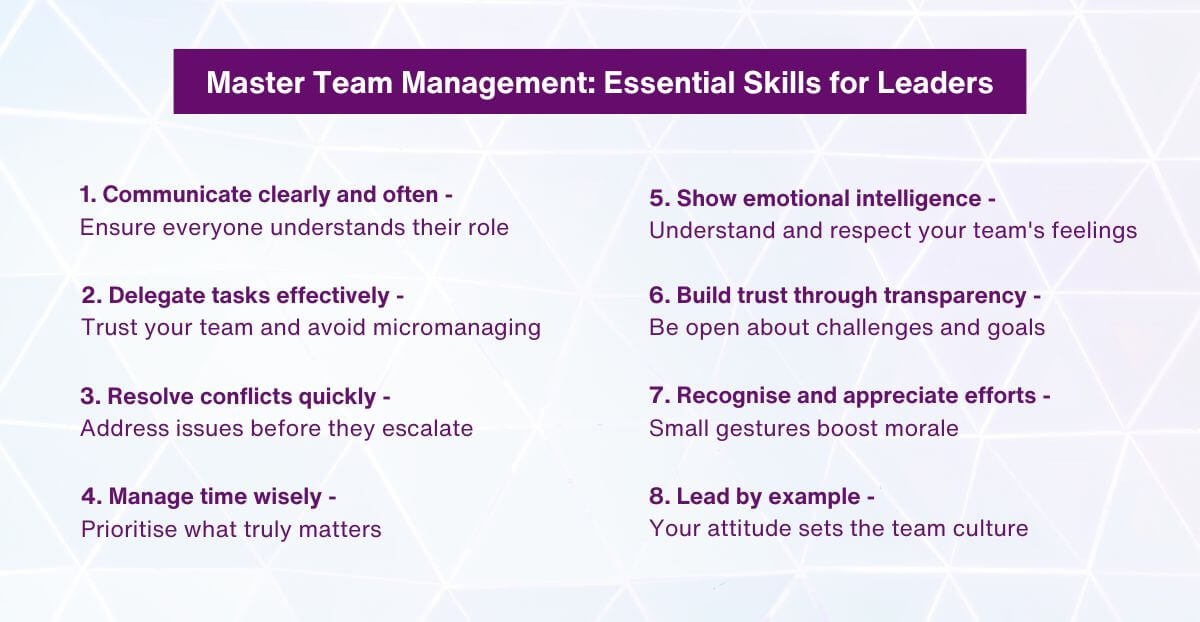
To lead a small team successfully, entrepreneurs must develop key skills tailored to their unique challenges. Below are the essential skills, illustrated with practical examples from Indian small business contexts.
1. Communication: The Heart of Team Management
Clear communication is the cornerstone of effective team management. Mr. Kurlekar emphasises, “Communication isn’t just about words; body language is equally important.” In small teams, face-to-face interaction allows leaders to gauge reactions and ensure tasks are understood. For instance, a restaurant owner in Mumbai might explain a new menu rollout to staff in person, observing their body language to confirm they understand the urgency. Relying solely on WhatsApp or video calls, where non-verbal cues are limited, can lead to misunderstandings. Two-way communication—where employees feel heard—builds trust and engagement, reducing errors and boosting morale.
2. Delegation: Trusting Others to Succeed
Delegation is often the toughest skill for small business owners to master. As Mr. Kurlekar notes, “The biggest challenge is understanding that delegation isn’t abdication.” Owners must trust employees to handle tasks while retaining overall responsibility. For example, a boutique owner in Pune might delegate inventory management to a staff member skilled in organisation, freeing themselves to focus on customer engagement.
Using the Eisenhower Matrix, owners can prioritise tasks: delegate non-urgent, non-important tasks first, assign urgent but less critical tasks to reliable employees, and keep high-priority tasks themselves. Effective team management hinges on trusting employees without micromanaging, accepting that they may not perform tasks exactly as the owner would.
3. Conflict Resolution: Fostering Team Harmony
Conflicts, such as ego clashes or competition for the owner’s favour, are common in small teams. Team management requires addressing these issues promptly and fairly. For example, in a small tailoring unit, two employees might argue over who handles premium orders. The owner can use clear role definitions, like the RACI framework (Responsible, Accountable, Consulted, Informed), to prevent ambiguity.
Mr. Kurlekar advises, “Focus on why conflicts occur, not just the noise of ‘he said, she said.’” Transparent communication about responsibilities reduces finger-pointing and fosters a collaborative environment, ensuring effective team management.
4. Time Management: Maximising Efficiency
Small business owners juggle multiple roles, making time management essential for team management. The Eisenhower Matrix, as Mr. Kurlekar suggests, helps prioritise tasks by urgency and importance. For example, a bakery owner in Delhi might delegate routine tasks like packaging to staff while focusing on urgent tasks like fulfilling a large order. Regular sync-ups—daily or weekly—ensure alignment without overwhelming the team.
Effective team management involves setting clear deadlines and using simple tools like WhatsApp groups for updates, avoiding complex software that may burden a small team.
5. Emotional Intelligence: Creating a Positive Culture
Emotional intelligence (EI) is the ability to understand and manage emotions—both your own and your team’s. In small businesses, where formal rewards are limited, EI fosters a family-like culture. For example, a small electronics shop owner in Chennai might support an employee during a medical crisis, building loyalty that salaries alone can’t achieve.
Team management thrives when leaders show empathy, communicate transparently about business progress, and align employee growth with the company’s. This creates a workplace where employees feel valued, even if pay isn’t the highest.
6 Practical Tips for Effective Team Management
To implement effective team management, small business owners can adopt these practical strategies, inspired by Mr. Kurlekar’s insights and resources like deAsra’s blog on team management for small businesses:
- Build Trust Through Transparency: Be open about business challenges and progress. Employees in small teams often know more than owners think due to informal communication, so honesty prevents mistrust.
- Hire for Practical Needs: Focus on immediate needs, like hiring an accountant if numbers aren’t your strength. Look for adaptable hires who can build processes, not just follow them.
- Use Simple Documentation: Implement frameworks like RACI to clarify roles. Keep documentation clear and tailored to your team’s needs to avoid confusion.
- Recognise Contributions: While monetary rewards matter, small gestures—like acknowledging a salesperson’s extra effort or pooling tips in a restaurant—build loyalty.
- Leverage Technology Wisely: Use front-end tools like POS systems to enhance customer experience, but avoid complex back-end tools for small teams. WhatsApp can suffice for communication if used purposefully.
- Seek Mentorship and Networking: Connect with mentors through platforms like deAsra or peer networks to learn from others’ experiences, even outside your industry.
Conclusion
Team management is the foundation of success for small businesses in India’s dynamic market. By mastering communication, delegation, conflict resolution, time management, and emotional intelligence, entrepreneurs can build cohesive teams that drive growth. Effective team management isn’t about copying corporate systems but fostering trust, clarity, and a family-like culture. As Mr. Kurlekar’s insights show, small businesses thrive when owners empower their teams to share the load, allowing them to focus on their core strengths. Start small—delegate one task, communicate openly, and invest in your team’s growth. With these skills, you’ll not only manage your team but also unlock your business’s full potential.

FAQs
1. What is the most important skill for team management?
Clear communication is the most critical skill for team management. It ensures tasks are understood, expectations are aligned, and conflicts are minimised. For example, a small business owner in India can utilise face-to-face discussions to clarify roles, ensuring employees feel engaged and valued, which in turn boosts productivity.
2. How can small business owners delegate effectively?
Effective team management requires delegating tasks based on employee strengths and business needs. Owners should use tools like the Eisenhower Matrix to prioritise tasks and communicate expectations clearly, avoiding micromanagement. For instance, a kirana shop owner might delegate inventory checks to a trusted employee to focus on customer service.
3. How do I handle conflicts in a small team?
Conflicts in small teams often stem from unclear roles or competition. Team management involves addressing the root cause through transparent communication and frameworks like RACI to define responsibilities. For example, in a small retail shop, clarifying who handles customer complaints can prevent ego clashes and maintain harmony.
4. What tools should small businesses use for team management?
Small businesses should focus on simple, impactful tools. Front-end tools like POS systems improve customer experience, while WhatsApp groups can handle team communication. Effective team management avoids complex software, ensuring technology serves the business without overwhelming a small team.
5. How can I build a positive team culture without high salaries?
Team management thrives on emotional intelligence and a supportive culture. Owners can build loyalty by supporting employees during crises, like medical emergencies, and being transparent about business progress. For example, a small café owner can foster a family-like environment by recognising staff contributions, even with modest pay.