
Top 8 Business Management Skills for Women Entrepreneurs
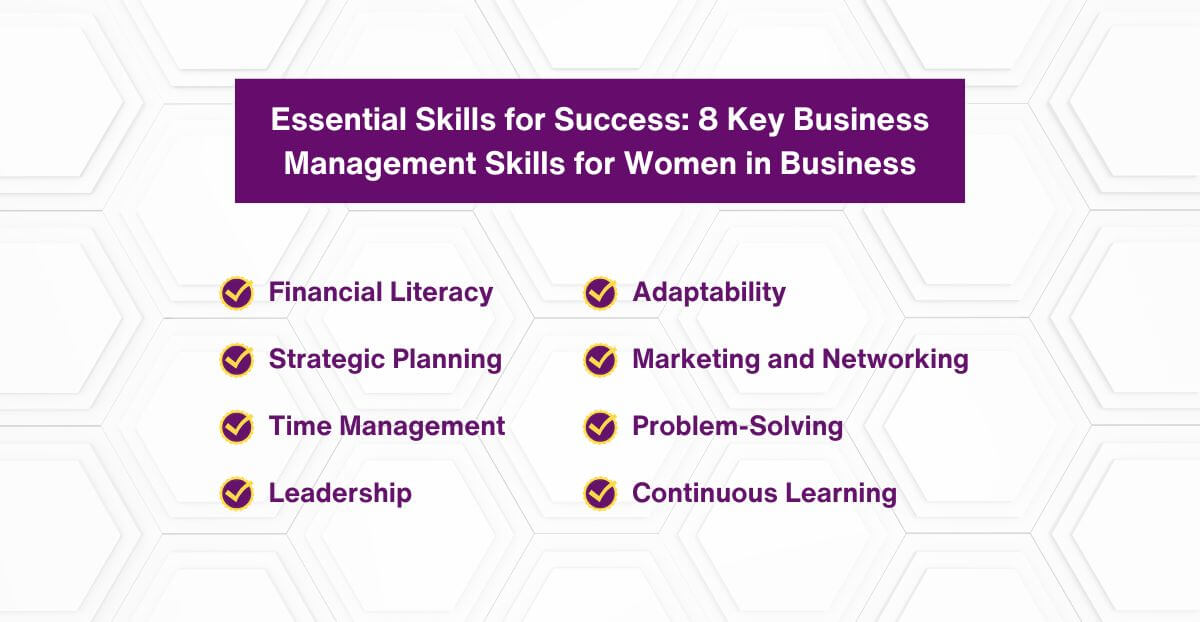
Women entrepreneurs are making remarkable strides in the business world, demonstrating creativity and resilience. However, running a business requires more than just passion. It calls for mastering essential business management skills, which are critical for growth and sustainability. Skills such as financial literacy, strategic planning, and team management can empower women entrepreneurs to confidently tackle challenges and achieve their goals.
This blog highlights the most important business management skills, explaining each one in simple terms and guiding you on how to incorporate them into your journey.
1. Financial Literacy
Financial literacy is the backbone of successful entrepreneurship. It refers to the ability to understand and manage your business’s financial health effectively. This includes budgeting, tracking expenses, and understanding cash flow. When women entrepreneurs master financial literacy, they can make informed decisions that ensure profitability and long-term stability.
To get started, learn to track your income and expenses meticulously. Use simple accounting software or even spreadsheets to monitor cash inflows and outflows. Additionally, create a budget for both short-term needs and long-term investments. Knowing how to allocate resources will help you avoid overspending and keep your business financially sound.
Seeking professional advice can also be valuable. Platforms like deAsra offer expert consultations to help entrepreneurs build a strong financial foundation.
2. Strategic Planning
Strategic planning is a crucial business management skill that helps entrepreneurs define their goals and create actionable steps to achieve them. Without a clear strategy, it’s easy to lose direction and waste time on activities that don’t contribute to growth.
A good plan begins with setting specific and measurable objectives. Break these down into smaller tasks to make them more manageable. Regularly evaluate your progress and make adjustments as necessary. Strategic planning also involves analysing market trends and understanding customer needs, enabling you to stay relevant in a competitive market.
The ability to think ahead and adapt your plans based on real-time feedback can make a significant difference in achieving your business milestones.
3. Time Management
Time management is vital for women entrepreneurs, who often juggle multiple responsibilities. Managing time effectively ensures you focus on high-priority tasks that contribute directly to your business’s success.
Start by organising your day with a clear schedule. Tools like digital calendars or to-do lists can help you allocate time for different activities. Prioritise tasks based on urgency and importance. For repetitive or less critical tasks, consider delegating them to team members or using automation tools.
Time management doesn’t just improve productivity—it also reduces stress. A well-managed schedule allows you to strike a balance between professional and personal commitments, which is essential for long-term success.
4. Leadership
Leadership is another essential business management skill that every entrepreneur should cultivate. It involves inspiring and guiding your team towards a common goal. Good leadership creates a positive work culture, enhances productivity, and builds trust among team members.
To lead effectively, communicate your vision clearly to your team. Transparency in your goals and expectations fosters trust and cooperation. Leadership also requires you to make decisions confidently and take responsibility for their outcomes.
Encourage feedback from your team and be open to new ideas. This collaborative approach not only boosts morale but also brings innovative solutions to the table. Building strong leadership skills is key to creating a motivated and efficient team.
5. Adaptability
The business landscape is constantly evolving, and adaptability is one of the most important basic business management skills for entrepreneurs. Being adaptable means being open to change and willing to explore new approaches when circumstances demand it.
Start by staying informed about industry trends and technological advancements. This knowledge allows you to identify opportunities and make timely adjustments to your strategies. Flexibility in your approach also helps you manage unexpected challenges more effectively.
Adaptability isn’t just about reacting to change; it’s about anticipating it. Entrepreneurs who embrace change as an opportunity for growth are more likely to succeed in dynamic markets.
6. Marketing and Networking
Marketing and networking are powerful tools for growing your business. Marketing helps you build your brand and attract customers, while networking opens doors to partnerships and collaborations.
In marketing, it’s important to know your target audience. Use platforms like social media to connect with potential customers and showcase your products or services. Consistency in your branding and messaging helps establish credibility and trust.
Networking involves building relationships with other entrepreneurs, industry professionals, and customers. Attend events, join online forums, and participate in industry discussions. These connections can lead to valuable insights, collaborations, and opportunities to expand your business reach.
7. Problem-Solving
Problem-solving is a key business management skill that enables entrepreneurs to address challenges confidently and find effective solutions. Businesses face various hurdles, such as operational issues, market competition, or resource limitations. Having the ability to think critically and resolve problems is crucial for maintaining stability and growth.
Approach problems methodically by identifying the root cause. Once you understand the issue, brainstorm potential solutions and evaluate their feasibility. Decision-making becomes more efficient when you rely on data and logic rather than emotion.
Problem-solving also involves learning from setbacks. Every challenge you overcome adds to your experience and equips you to handle future obstacles more effectively.
8. Continuous Learning
Continuous learning is an often-overlooked basic business management skill, but it’s vital for staying ahead in the business world. The market is constantly changing, and keeping yourself updated with new trends, tools, and techniques is essential.
Invest in your professional development by attending workshops, enrolling in online courses, or reading industry-specific books. Networking with other entrepreneurs can also provide valuable insights and knowledge.
Continuous learning ensures that you remain relevant and capable of addressing the ever-evolving needs of your business and customers.
Final Thoughts
Mastering these business management skills can significantly enhance your ability to run a successful business. From financial literacy and strategic planning to leadership and adaptability, each skill plays a unique role in your entrepreneurial journey. By focusing on these areas, you can build a sustainable business that grows consistently over time.
Remember, resources like deAsra Foundation are available to help you develop these skills and achieve your business goals. Start your journey today by identifying which skills you need to work on, and take action to strengthen them.
FAQs
1. What are the most important business management skills for women entrepreneurs?
The most essential skills include financial literacy, strategic planning, time management, leadership, adaptability, and marketing. These skills help women entrepreneurs make informed decisions, manage resources effectively, and lead their businesses confidently toward growth and success.
2. How can women entrepreneurs improve their financial literacy?
Women entrepreneurs can improve their financial literacy by learning to track income and expenses, creating budgets, and understanding cash flow. Using accounting tools and seeking expert advice from platforms like deAsra can further strengthen their financial management abilities.
3. Why is adaptability important for entrepreneurs?
Adaptability allows entrepreneurs to embrace change and adjust to evolving market trends. It helps them identify new opportunities, overcome unexpected challenges, and stay competitive in dynamic business environments.
4. How does continuous learning benefit entrepreneurs?
Continuous learning keeps entrepreneurs updated on industry trends, new technologies, and best practices. This enhances their ability to innovate, solve problems, and address the changing needs of their customers effectively.
5. What role does leadership play in business management?
Leadership is critical in inspiring and guiding a team toward shared goals. Good leadership fosters trust, encourages collaboration, and creates a positive work culture, which ultimately improves productivity and drives business success.