
How to Conduct Effective Hiring: A 15-Minute Checklist for Hiring Employees
Industry leaders know that scaling a business demands sharp decisions on people. A strong checklist for hiring employees turns chaotic recruitment into a focused 15-minute daily routine that quickly spots qualified candidates. Mr. Girish Tilak, a seasoned expert with over three decades in headhunting, stresses practical approaches suited to growing enterprises. deAsra supports and engages entrepreneurs through its dreamBIG podcast by sharing real insights on building capable teams.
This tactical guide serves as the first step in the hiring procedures checklist. It helps leaders define needs, screen efficiently, and move fast without wasting resources. Business owners who follow a clear new hire checklist avoid common pitfalls and set the foundation for steady expansion.

Why a Quick Checklist Matters for Busy Leaders
Effective hiring starts with recognising the right moment to expand the team. Leaders often feel overwhelmed when delivery slips or quality drops. At that point, a simple checklist for hiring employees brings clarity in minutes.
Review current tasks and identify what consumes excessive time or requires specialised input. This quick scan reveals whether the business has outgrown solo efforts. Many entrepreneurs delay this step and risk burnout. A structured hiring procedures checklist prevents such issues by prompting an honest assessment of workload and gaps.
Mr. Anand Godse, through deAsra’s dreamBIG podcast, highlights how mindset shifts enable confident delegation. Leaders who adopt this view treat hiring as an investment rather than an expense.
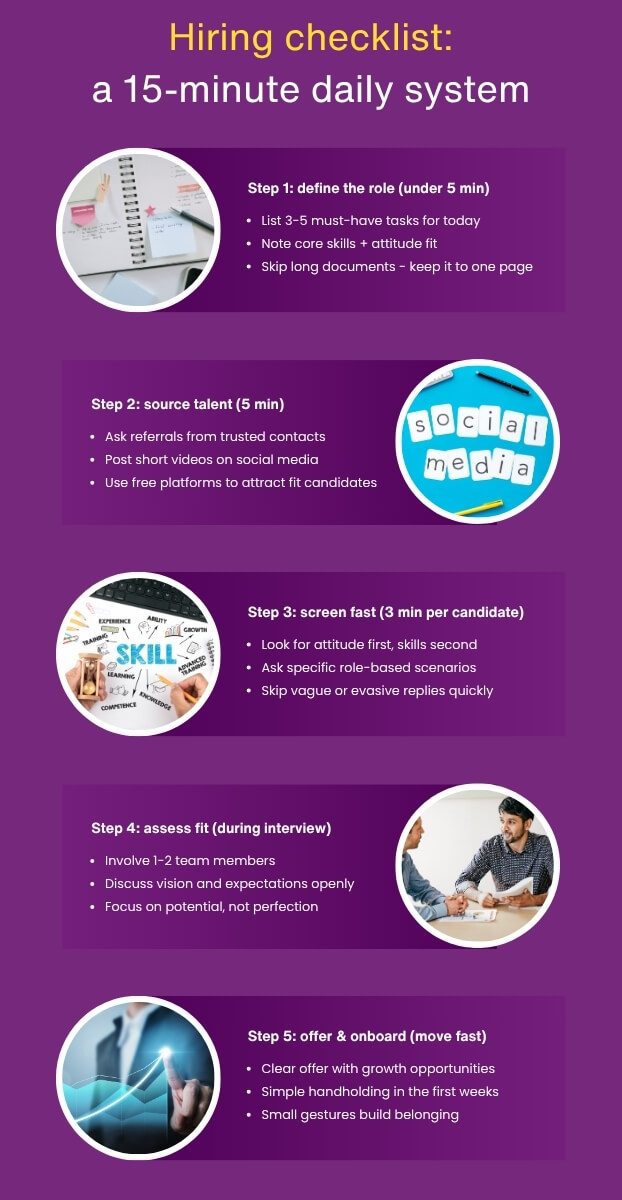
Step 1: Define the Role Clearly in Under Five Minutes
Begin every checklist for hiring employees by listing must-have tasks for today and the near future. Write down core responsibilities on a single page. Include basic skills needed and the attitude that fits the company culture.
Avoid long documents filled with every possible requirement. Focus on hygiene factors such as location and commute realities. This focused approach forms the heart of any solid new hire checklist. It attracts suitable people from the start and saves hours of irrelevant interviews.
Industry leaders who complete this step quickly report better candidate quality. They ask specific questions drawn from daily operations rather than generic ones. For instance, in a food business, discuss exact processes for preparing items instead of vague experience claims. Such precision marks an effective hiring procedures checklist.
Step 2: Source Talent Through Trusted Channels
Once the role is defined, turn to reliable sources. Referrals remain the top choice for many successful businesses because they carry built-in trust. Reach out to existing contacts, alumni networks, or satisfied customers.
Supplement referrals with targeted online platforms suited to small teams. Social media offers free branding opportunities while posting openings. Create short, authentic videos that showcase the product alongside the need for new team members. This dual purpose strengthens the overall checklist for hiring employees.
deAsra supports and engages nano-entrepreneurs by pointing them to practical resources. Explore their dreamBIG episode on hiring for growth for deeper context: Hiring for Growth – deAsra Foundation.
Step 3: Screen Candidates with Targeted Questions
Dedicate the next few minutes to initial screening. Read applications with the new hire checklist in mind. Look for evidence of a can-do attitude, eagerness to learn, and adaptability. Skills can be developed later through proper guidance.
Pose specific, role-related questions during short calls or early interactions. Ask candidates to describe real scenarios rather than broad achievements. Probe how they handled similar tasks in past roles. This method quickly filters qualified people and forms a key part of the hiring procedures checklist.
Observe whether the person engages directly and shows ownership. Vague or evasive replies often signal a poor fit. Industry leaders who follow this disciplined screening reduce time spent on unsuitable profiles.
Step 4: Assess Fit and Potential in Interviews
Mix structured questions with natural conversation in interviews. Involve one or two team members for balanced views. This collaborative style improves decision quality without lengthening the process.
Evaluate scalability along with immediate needs. The best candidates show a willingness to grow with the business. Discuss vision openly so both sides understand expectations. Such dialogue strengthens the new hire checklist and raises retention chances.
Remember that even strong hires have small gaps. Focus on potential for improvement rather than demanding perfection. This realistic outlook defines a mature checklist for hiring employee practices.
Step 5: Make the Offer and Plan Onboarding
Finalise decisions swiftly once a strong match appears. Prepare a clear offer that respects market realities and the candidate’s responsibilities. Highlight growth opportunities and the company’s journey to stand out as an employer.
Extend the hiring procedures checklist into the first weeks after joining. Plan simple handholding sessions to explain purpose, processes, and collective goals. Small gestures of recognition build belonging from day one. A thoughtful new hire checklist during onboarding helps new members contribute faster and feel valued. Leaders who invest here see quicker returns on their hiring efforts.
Avoiding the Hidden Costs of Poor Choices
One weak decision can disrupt operations, lower team morale, and drain resources. Understanding these impacts reinforces why a fast, repeatable checklist for hiring employees proves essential. Explore more on this topic here: The Cost of a Bad Hire.
Businesses that follow disciplined procedures protect productivity and maintain quality standards. They shift smoothly from individual hustle to collective strength.
Conclusion
A practical checklist for hiring employees delivers results when used consistently. Industry leaders who dedicate fifteen minutes daily to this process identify qualified candidates faster and build stronger teams. The new hire checklist and hiring procedures checklist together create a reliable system that supports sustainable growth.
deAsra supports and engages entrepreneurs through its dreamBIG podcast by offering expert conversations and actionable ideas. Adopt these steps, stay realistic about expectations, and treat hiring as a strategic advantage. Consistent application turns recruitment from a headache into a competitive edge.
FAQs
1. How long should the entire hiring process take for junior roles in small businesses?
Aim to complete junior hiring within three weeks. A focused checklist for hiring employees helps maintain speed without compromising quality. Quick sourcing through referrals and targeted screening prevents unnecessary delays while still allowing thorough evaluation.
2. What matters more when selecting candidates – skills or attitude?
Attitude stands first. Look for can-do spirit, eagerness to learn, and adaptability. Skills can grow through training and team interactions. This priority forms a core element of any effective new hire checklist and hiring procedures checklist.
3. How can small businesses attract good talent on limited budgets?
Share the business story and vision clearly. Mention reputable customers or achievements to build credibility. Use social media creatively for branding while posting openings. These steps enhance the checklist for hiring employees without heavy spending.
4. When is the right time to start using a hiring checklist?
Begin as soon as tasks pile up, delivery slows, or quality suffers. Early use of the hiring procedures checklist prevents overwhelm and supports smooth scaling. Regular review keeps the process aligned with current needs.
5. Should interviews involve the existing team?
Yes, include team members for balanced perspectives. This practice improves cultural fit assessment and strengthens the overall new hire checklist. Collaborative input often reveals insights that a single leader might miss.