
Fashion Business Management Mastery: 8 Steps to Grow Your Fashion Business
Embarking on a journey in the fashion industry isn’t just about having a keen eye for style; it’s also about mastering fashion business management. This comprehensive guide will delve deeper into what it takes to succeed in this dynamic field, offering strategic insights, practical advice, and inspiring case studies to help you turn your fashion business ideas into a thriving enterprise.
Exploring the Fashion Industry’s Complex Landscape:
Why Is Mastery of Fashion Business Management Crucial?
The fashion sector is notoriously competitive and fast-evolving, making it crucial for businesses to stay adaptable and forward-thinking. Effective management in fashion goes beyond creative designs; it involves strategic planning, keen market insight, and continuous innovation. Are you prepared to navigate the complexities of fashion trends, consumer behaviour, and economic shifts?
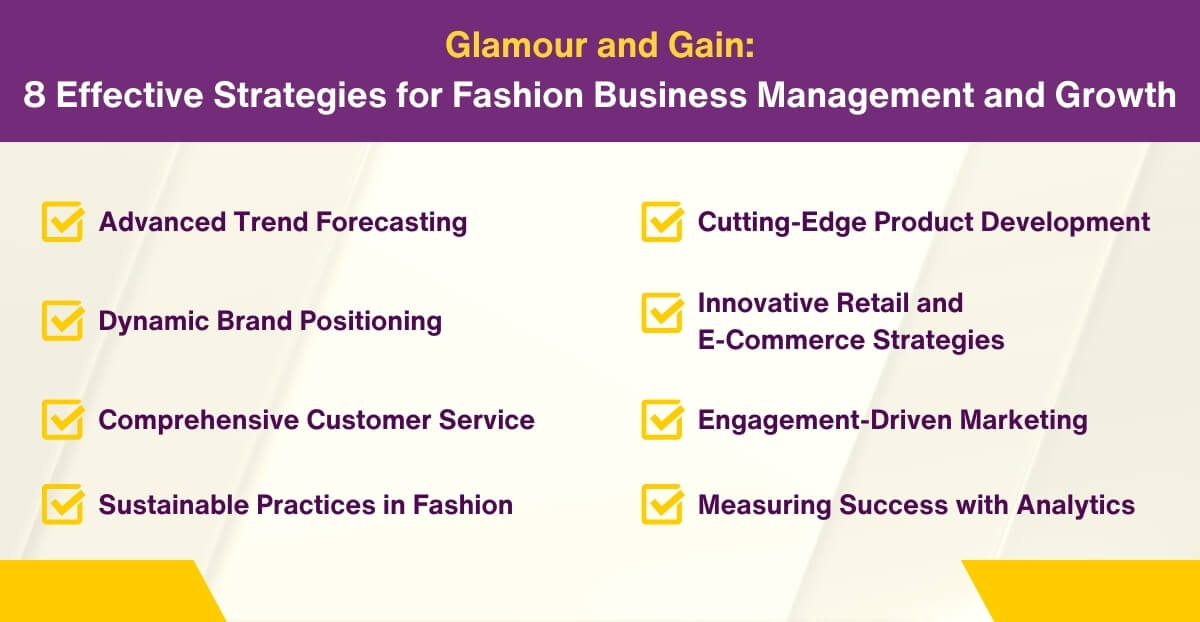
8 Comprehensive Strategies for Effective Fashion Business Management
1. Advanced Trend Forecasting
To stay relevant, fashion businesses must anticipate and react to changing trends swiftly. This involves not only understanding current fashion currents but also predicting future ones. How can you harness data analytics and consumer insight to stay ahead of the curve?
2. Cutting-Edge Product Development
Successful fashion lines are born from unique and appealing product offerings. What processes can you implement to streamline product development from concept to closet? Explore techniques for integrating customer feedback early in the design process to ensure market relevance.
3. Dynamic Brand Positioning
In a saturated market, a strong brand identity can distinguish your fashion business from competitors. Consider how your branding strategy can encapsulate your unique value propositions and communicate them effectively through every customer touchpoint.
4. Innovative Retail and E-Commerce Strategies
Whether through physical storefronts or digital platforms, your sales strategies need to be robust and flexible. Explore omnichannel retailing approaches that blend the digital and physical spaces to enhance customer experiences and increase sales.
5. Sustainable Practices in Fashion
Sustainability is no longer just a trend but a business imperative. Discuss how integrating sustainable practices into your business model can not only appeal to environmentally conscious consumers but also improve operational efficiencies and compliance with global standards.
6. Engagement-Driven Marketing
How can you create compelling marketing campaigns that resonate with your target audience? Explore the power of storytelling in marketing, utilising emotional and aspirational messaging to forge deeper connections with your customers.
7. Comprehensive Customer Service
Post-sale interactions are as crucial as the initial sale. Examine strategies for building loyalty through exceptional customer service, including personalised communications and hassle-free return policies.
8. Measuring Success with Analytics
Use data to drive your business decisions. What metrics are most important for tracking the success of your fashion business, and how can you use this data to refine your strategies continually?
Examine how leading fashion brands have successfully navigated challenges such as global expansion, digital transformation, and consumer shifts. What lessons can these industry giants teach aspiring fashion entrepreneurs?
Conclusion
The path to success in the fashion industry requires a blend of creativity, strategic thinking, and rigorous management. By adopting these comprehensive strategies, your fashion business can not only survive but thrive in this competitive landscape.
Are you ready to implement these insights and transform your business approach? For personalised guidance and advanced strategies tailored to your specific needs, consider connecting with industry experts like those at deAsra Foundation. Check out our services here for more detailed support on taking your fashion business to the next level.
Step Up Your Fashion Game: Master E-commerce with Our Expert Guide!
Are you ready to transform your passion for fashion into a thriving enterprise? Dive into the world of fashion business management with deAsra Foundation’s tailored expert services. Whether you’re just sketching out ideas or ready to redefine your business strategy, our team is here to guide you every step of the way. For a practical application of these strategies, don’t miss our insightful blog, “8 Expert Tips for Selling Clothes on E-commerce Platforms” packed with actionable advice to help you excel in online sales.
Unlock Expert Fashion Business Management Advice with deAsra
Explore How to Excel in E-commerce with Our Detailed Guide
FAQs
1. What foundational skills are essential for effective fashion business management?
Effective fashion business management demands a mix of creative vision and robust business acumen. Key skills include strategic planning, financial forecasting, marketing, customer relationship management, and a deep understanding of the fashion market dynamics. Mastery of these areas ensures that you can navigate the complexities of the fashion industry successfully.
2. How can I generate unique fashion business ideas?
Generating compelling fashion business ideas involves staying current with fashion trends, understanding consumer behaviour, and identifying gaps in the market. Regular attendance at fashion shows, reviewing fashion magazines, and participating in fashion forums online can provide inspiration and insight into potential business opportunities.
3. What are the initial steps to launch a fashion business?
To effectively start a fashion business, begin by defining your niche and target demographic, then create a solid business plan that outlines your vision, budget, marketing strategy, and operations. Following this, secure the necessary funding, source high-quality materials, and build a team that shares your vision and passion for fashion.
4. How crucial is digital marketing in the fashion industry today?
Digital marketing is vital for the fashion industry, particularly for reaching a broader, more engaged audience. Utilising platforms like Instagram, Pinterest, and Facebook allows fashion businesses to showcase their products visually and interact directly with customers, creating personalised experiences that can drive sales and enhance brand loyalty.
5. What common challenges might I face in fashion business management, and how can I address them?
Common challenges in fashion business management include rapidly changing consumer preferences, maintaining inventory balance, and effectively managing supply chains. To overcome these challenges, remain flexible in business operations, employ just-in-time manufacturing practices, and use advanced forecasting tools to better predict market trends and customer demands.