B2B vs. B2C Sales Strategy: Key Differences in Approach and Execution
Understanding the Core of B2B vs B2C Sales Strategy
Business leaders across industries constantly refine their sales strategy to drive sustainable growth. The choice between B2B and B2C models shapes every decision, from lead generation to deal closing. A well-crafted sales strategy aligns resources with customer expectations, whether targeting organisations or individuals.
B2B vs B2C sales differ fundamentally in complexity and focus. In B2B vs B2C sales, one model demands patience and deep relationships, while the other rewards speed and emotional connection. Industry leaders who master these distinctions gain a clear competitive edge through tailored execution.

Target Audience and Decision-Making Dynamics
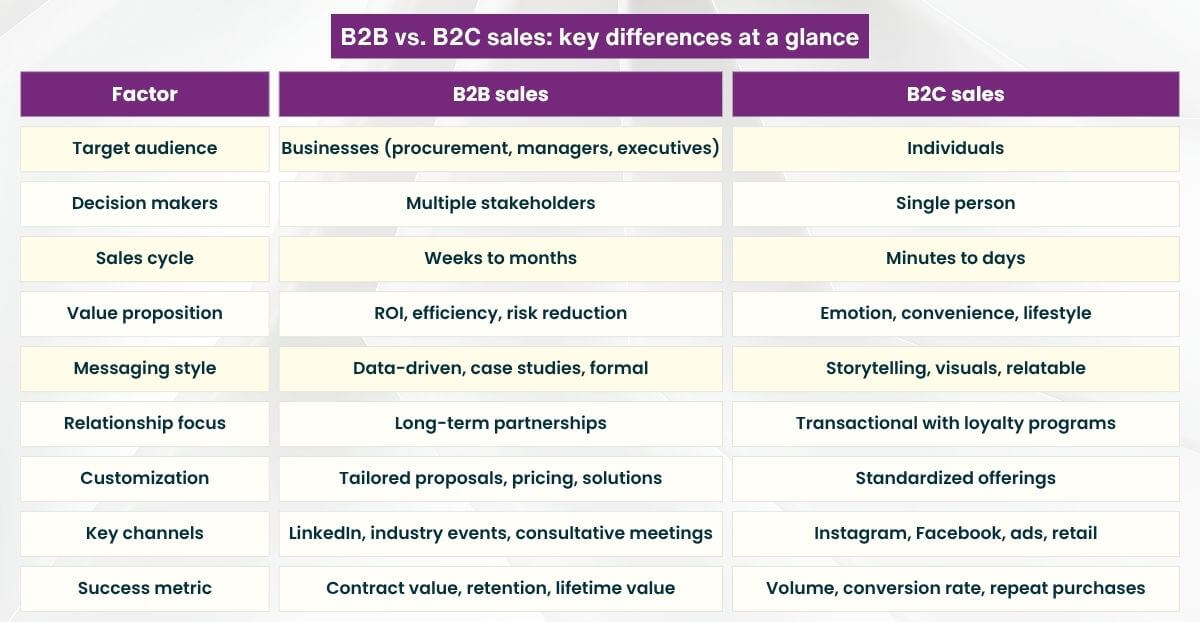
The audience defines the foundation of any sales strategy. B2B vs B2C sales target entirely different buyers. B2B efforts reach other businesses, often involving procurement teams, managers, and executives who evaluate options carefully. Multiple stakeholders review proposals, seeking proof of long-term value.
In contrast, B2B vs B2C sales in the consumer space speak directly to individuals. Purchases stem from personal needs, convenience, or immediate desires. Decisions happen faster when a single person holds the authority. This difference forces sales teams to adjust their entire sales strategy — formal presentations and data packs suit B2B, while relatable stories and quick benefits work better for B2C.
Sales Cycle Length and Process Complexity
Timeframes reveal another sharp contrast in B2B vs B2C sales. B2B cycles stretch over weeks or months due to evaluations, negotiations, and approvals. Teams invest effort in understanding business pain points and demonstrating measurable outcomes.
B2B vs B2C sales in the consumer realm move swiftly, sometimes completing within minutes. Shoppers compare options rapidly and act on impulse or simple triggers. A strong sales strategy in B2C, therefore, emphasises seamless experiences and instant gratification, whereas B2B requires structured follow-ups and consensus-building at every stage.
Value Proposition and Messaging Approaches
Value communication forms the heart of an effective sales strategy. In B2B settings, messages centre on return on investment, efficiency gains, and risk reduction. Case studies, ROI calculations, and detailed proposals help build confidence among cautious buyers.
B2B vs B2C sales adopt a different tone for consumers. Emotional appeal, lifestyle benefits, and storytelling create quick connections. Buyers respond to convenience, quality feel, or brand personality rather than spreadsheets. Adapting the sales strategy to these preferences ensures messages land with precision in each model.
Relationship Building and Customer Retention
Long-term partnerships distinguish B2B vs B2C sales. B2B success depends on trust developed over repeated interactions and customised solutions. Account management and ongoing support keep clients engaged for years.
Consumer transactions in B2B vs B2C sales often remain transactional, yet smart brands still nurture loyalty through memorable experiences. Loyalty programmes, personalised offers, and responsive service turn one-time buyers into repeat customers. Both models benefit when the sales strategy balances acquisition with retention efforts.
Role of Customisation and Stakeholder Engagement
Customisation separates sophisticated sales strategy execution. B2B deals frequently require tailored proposals, pricing adjustments, or product modifications to fit unique organisational needs. Sales professionals identify key decision-makers and address individual concerns within the buying group.
B2B vs B2C sales usually involve standardised offerings for efficiency and scale. Consumers expect consistency and ease rather than bespoke changes. Still, personalisation through data insights can enhance the experience without complicating operations.
Leveraging Technology and Data in Modern Sales Strategy
Technology elevates any sales strategy today. CRM analytics deliver powerful insights into customer behaviour, helping teams spot trends and remove bottlenecks in the sales funnel. deAsra supports and engages entrepreneurs by providing practical resources, including guidance on data-driven approaches.
Businesses that integrate analytics into their sales strategy make informed decisions instead of relying on guesswork. Regular reviews of interaction data, lead sources, and conversion patterns allow real-time adjustments across both B2B and B2C models.
For deeper insights into building evidence-based plans, explore this helpful resource on data-driven sales strategy using CRM analytics.
Customer Acquisition and Market Research Practices
Acquisition tactics vary significantly between B2B and B2C sales. B2B relies on consultative conversations, industry networking, and content that demonstrates expertise. Market research uncovers specific organisational challenges and validates solutions.
B2B vs B2C sales in consumer markets use social channels, promotions, and emotional campaigns to attract attention quickly. Continuous research remains vital in both cases to track shifting preferences and refine the overall sales strategy.
Adaptability During Uncertainty and Future Readiness
Economic shifts test every sales strategy. Successful leaders diversify revenue streams, pursue collaborations, and maintain calm scenario planning. They treat feedback as valuable input for refining offerings and rebuilding trust after setbacks.
B2B vs B2C sales both gain from adaptability. B2B teams strengthen partnerships during tough times, while B2C brands focus on delivering consistent value that keeps consumers returning. Ongoing research and flexible execution keep the sales strategies relevant.
White Labelling Versus Brand Building Decisions
Entrepreneurs often face the choice between white labelling and developing their own identity. A pragmatic sales strategy weighs cash flow needs against long-term vision. Early-stage businesses may use white labelling to test demand and generate resources before scaling their branded presence.
This decision influences whether the focus stays on volume transactions or deeper relationship-driven growth in B2B vs B2C sales.
Conclusion
Mastering B2B vs B2C sales requires a clear understanding of audience, cycle, value, and relationship dynamics. A thoughtful sales strategy aligns these elements with business goals and market realities. Industry leaders who customise their approach, embrace data, and stay adaptable position themselves for consistent growth.
deAsra supports and engages founders through valuable platforms like the DreamBIG podcast, where experts share actionable wisdom. By applying these principles, organisations can execute a stronger sales strategy across any model and achieve lasting success.

FAQs
1. What is the main difference between B2B and B2C sales?
B2B sales focus on selling to other businesses with longer processes and multiple decision-makers, while B2C sales target individual consumers with quicker, emotion-driven purchases. The sales strategy must reflect these realities to succeed in each environment.
2. Why does the sales cycle differ in B2B vs B2C sales?
B2B cycles take longer because of detailed evaluations and group approvals, whereas B2C decisions happen fast. A suitable sales strategy accounts for this by planning appropriate follow-up rhythms and resource allocation.
3. How should businesses choose between B2B and B2C models?
Consider product complexity, target market size, sales cycle, and marketing style. B2B suits customised, high-value solutions, while B2C fits standardised offerings sold in volume. Aligning the sales strategy with these factors prevents mismatched efforts.
4. What role does data play in modern sales strategy?
Data from CRM analytics reveals trends, optimises funnels, and improves conversion rates. Regular insights allow teams to refine their sales strategy and respond quickly to customer behaviour in both B2B and B2C contexts.
5. How can companies improve retention across B2B vs B2C sales?
Build trust through honest service, personalised communication, and proactive feedback handling. Loyalty initiatives and multiple engagement channels strengthen relationships, supporting a sustainable sales strategy regardless of the sales model.