B2B vs B2C Sales Explained: How to Choose the Right Model for Your Business
Choosing between B2B vs B2C sales models is a pivotal decision that shapes your business’s growth, marketing, and customer relationships. Whether you’re an industry leader in tech, retail, or manufacturing, understanding the differences between B2B vs B2C is essential for aligning your strategy with your goals.
This blog simplifies the complexities of B2B vs B2C sales, offering clear insights to help you decide the right path for your business. Drawing from expert advice, including tips from deAsra’s podcast on sales growth strategies for business, we’ll explore how these models impact your operations and share practical B2C sales tips to boost success.
What Are B2B and B2C Sales?
B2B vs B2C sales refers to two distinct approaches to selling products or services. B2B vs B2C includes B2B (business-to-business), which involves selling to other businesses, such as a software company providing tools to a retailer. B2C (business-to-consumer) focuses on selling directly to individual customers, like a clothing brand selling to shoppers. Each model has unique characteristics that affect how you position your product, engage customers, and drive growth.
Key Differences Between B2B and B2C Sales
To choose the right model, you need to understand the core differences between B2B vs B2C. Let’s break them down:
1. Product or Service Type
In B2B vs B2C sales, the type of product or service varies significantly. B2B offerings are often complex and customised, such as enterprise software or industrial equipment tailored to a company’s needs. These solutions solve specific business problems, like improving efficiency. Conversely, B2C products are typically standardised, such as groceries, clothing, or streaming subscriptions, designed for mass appeal and quick purchases. For example, a B2B firm might sell a custom CRM system, while a B2C brand offers ready-to-wear apparel.
2. Target Market
The audience in B2B vs B2C differs in size and focus. B2B targets smaller, niche markets with high-value deals. A company selling cloud services might focus on a few large corporations. B2C aims for larger, diverse markets with high-volume, low-value sales. Think of a coffee brand selling to millions of individual consumers. Understanding your target market is crucial for tailoring your B2B vs B2C sales approach.
3. Sales Cycle
The time it takes to close a sale is another key difference in B2B vs B2C sales. B2B sales cycles are longer, often involving multiple decision-makers, negotiations, and approvals. Selling a machine to a factory could take months. B2C sales are quicker, with consumers making fast decisions, like buying a phone online in minutes. This impacts how you plan your B2B vs B2C strategy, from lead generation to closing deals.
4. Marketing Approach
Marketing in B2B vs B2C varies in tone and strategy. B2B marketing is content-driven, focusing on building trust through detailed case studies, whitepapers, or demos. It appeals to logic and ROI. B2C marketing leverages emotional branding, using vibrant ads or slogans to create desire, like a sports shoe claiming to boost confidence. Your B2B vs B2C sales model will dictate whether you prioritise trust or emotional connection.
Factors to Consider When Choosing B2B or B2C
Selecting between B2B vs B2C depends on your business’s goals, resources, and market. Here are four factors to guide your decision:
- Your Product or Service
Evaluate whether your offering suits B2B vs B2C sales. Complex, high-value products like ERP systems are better for B2B, where businesses need tailored solutions. Simple, mass-market products like cosmetics thrive in B2C, where accessibility drives sales. Consider what problem your product solves and who it serves. - Market Size and Demand
Assess the demand in B2B vs B2C markets. B2B suits businesses targeting a smaller, specialised audience with high budgets, like tech startups selling to enterprises. B2C is ideal for reaching a broad consumer base, such as a food brand on platforms like Zomato. Research your market to ensure demand aligns with your B2B vs B2C sales model. - Sales Expertise
Your team’s skills influence your B2B vs B2C choice. B2B sales require expertise in relationship-building and navigating long sales cycles with multiple stakeholders. B2C demands agility in responding to consumer trends and creating engaging campaigns. Ensure your team is equipped for the chosen B2B vs B2C sales approach. - Scalability and Goals
Consider your long-term vision in B2B vs B2C. B2B offers stable, high-value contracts but slower growth due to niche markets. B2C enables faster scaling through high-volume sales but faces intense competition. Align your B2B vs B2C sales model with your growth ambitions.
Pros and Cons of B2B Sales
Pros
- High-Value Deals: B2B contracts often involve large sums, providing significant revenue per client.
- Long-Term Relationships: B2B fosters ongoing partnerships, ensuring steady income.
- Predictable Revenue: Contracts and subscriptions create a reliable cash flow.
Cons
- Long Sales Cycles: Closing deals in B2B vs B2C sales takes time, delaying revenue.
- Complex Decision-Making: Multiple stakeholders slow down the process.
- High Expectations: B2B clients demand customisation and premium support.
Pros and Cons of B2C Sales
Pros
- Large Market Reach: B2C reaches millions of consumers, boosting sales volume.
- Quick Sales Cycles: Fast purchases in B2B vs B2C sales mean rapid revenue.
- Brand Visibility: B2C campaigns create widespread recognition.
Cons
- High Competition: B2C markets are crowded, requiring constant innovation.
- Lower Margins: Smaller transaction values in B2B vs B2C sales reduce per-sale profit.
- Customer Retention Challenges: B2C consumers switch brands easily.
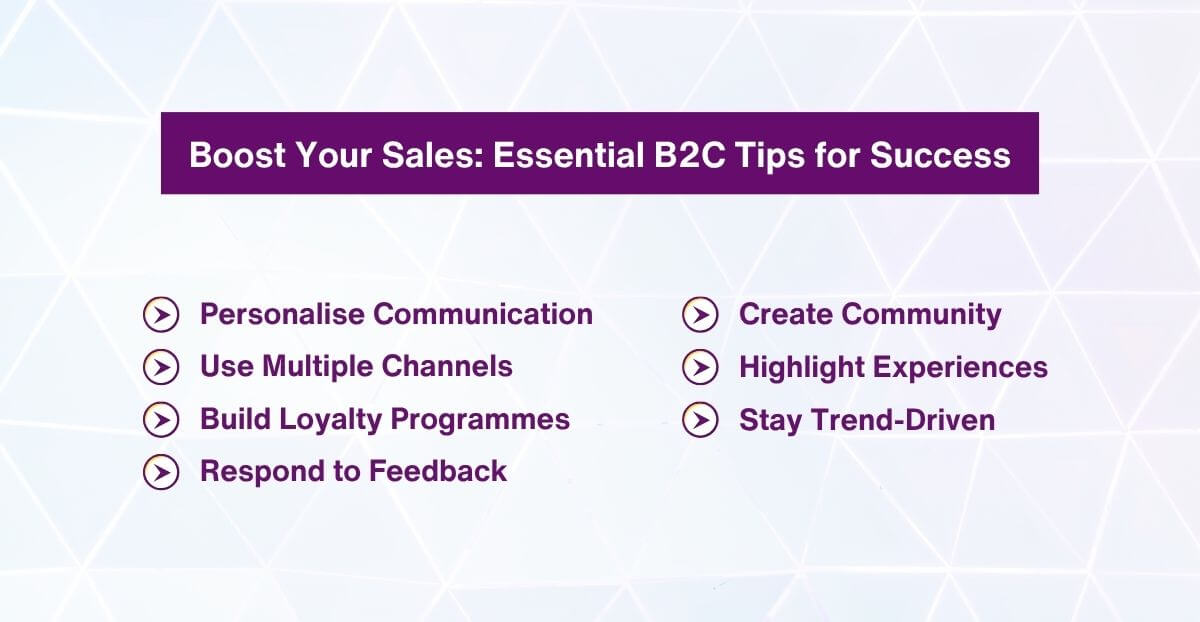
B2C Sales Tips for Success
To thrive in B2C, you need strategies that capture and retain customers. Here are eight B2C sales tips inspired by expert insights, including advice from deAsra’s blog:
- Personalise Communication: Tailor messaging to customer preferences. For example, position a product as premium for high-end buyers or budget-friendly for others.
- Leverage Emotional Branding: Create ads that evoke feelings, like a coffee brand emphasising comfort and warmth.
- Use Multiple Channels: Ensure accessibility via platforms like Instagram, Amazon, or Swiggy to meet customers where they are.
- Build Loyalty Programmes: Offer rewards to encourage repeat purchases, fostering long-term connections.
- Respond to Feedback: Address complaints quickly, like inviting a dissatisfied customer for a better experience, to build trust.
- Create Community: Engage customers through events or social media groups to strengthen loyalty.
- Highlight Experiences: Focus on the lifestyle your product enables, like Apple showcasing creativity over specs.
- Stay Trend-Driven: Monitor consumer preferences through polls or AI to adapt offerings, such as trendy clothing designs.
These B2C sales tips help you stand out in competitive markets and build lasting customer relationships.
Can You Combine B2B vs B2C?
Some businesses blend B2B vs B2C sales for flexibility. For instance, a software company might sell enterprise solutions to businesses (B2B) while offering a consumer app (B2C). However, this requires distinct strategies for each model, as their sales cycles, marketing, and customer expectations differ. Evaluate your resources before pursuing both to avoid overstretching.
Making the Decision
To choose between B2B vs B2C sales, ask:
- Does my product suit businesses or consumers?
- Can I handle long sales cycles (B2B) or high competition (B2C)?
- Do I have content-driven (B2B) or emotional (B2C) marketing resources?
- What are my growth goals – steady contracts (B2B) or rapid scaling (B2C)?
Test your market with small campaigns or pilots. For B2B, approach potential clients with demos. For B2C, launch a product on e-commerce platforms to gauge demand. Use data from these tests to refine your B2B vs B2C strategy.
Conclusion
Deciding between B2B vs B2C sales shapes your business’s future. B2B offers high-value, stable deals but demands patience and expertise. B2C provides scale and speed but requires constant innovation. By understanding the differences in product type, target market, sales cycle, and marketing, you can align your B2B vs B2C model with your vision.
Apply B2C sales tips like personalisation and emotional branding to excel in consumer markets. Stay adaptable, leverage data, and test your approach to ensure long-term success
FAQs
1. What is the main difference between B2B and B2C sales?
The key difference lies in the target audience. B2B vs B2C sales means selling to businesses (B2B) versus selling to individual consumers (B2C). B2B involves longer sales cycles, multiple decision-makers, and customised solutions. B2C is more transactional, faster-paced, and relies on emotional marketing and broad appeal.
2. Which is more profitable – B2B or B2C?
Profitability depends on your product, pricing strategy, and market. B2B often yields higher-value sales with fewer clients, while B2C relies on volume and repeat customers. In terms of margin, B2B tends to have more stable profits, but B2C can scale faster with strong B2C sales tips like loyalty programmes and trend-based marketing.
3. Can a business operate both B2B and B2C models?
Yes, many businesses successfully use a hybrid B2B vs B2C model. For example, a skincare brand might sell in bulk to salons (B2B) while also selling individual products online (B2C). However, it requires tailored marketing, pricing, and customer service for each model, so it’s important to have separate strategies in place.
4. What are some good B2C sales tips for new entrepreneurs?
Focus on personalisation, emotional connection, and multichannel presence. Use simple language, highlight customer benefits, and offer discounts or referral programmes. One of the most effective B2C sales tips is to build a loyal community through engaging content and consistent follow-up.
5. How do I decide whether to choose B2B or B2C for my startup?
Start by analysing your product’s complexity, the buying behaviour of your target audience, and your team’s expertise. If your product solves a niche business problem, B2B might be better. If it appeals to everyday consumers, B2C could be the right fit. Use market testing and customer feedback to validate your B2B vs B2C sales direction.