Which Social Media Platforms Are Right for Your Small Business? A Breakdown
In the fast-paced digital world, social media platforms for business have become essential tools for growth, especially for nano and small enterprises. Choosing the right social media platforms for business can transform visibility, build credibility, and open new opportunities.
As Mr. Sagar Babar, a seasoned entrepreneur and CEO of Comsense Technology, shared in the inaugural episode of deAsra Foundation’s dreamBIG podcast, understanding where your customers scroll is key to effective marketing. This engaging discussion dives deep into which social media platforms you should use for your business, offering practical insights for industry leaders across sectors.
deAsra supports and engages small business owners through initiatives like the dreamBIG podcast series, bringing expert voices to the forefront. Listen to the full episode on social media marketing strategies for more inspiration.
Why Social Media Matters for Small Businesses
Today, nearly everyone carries a smartphone and spends time scrolling through feeds. Your potential customers are there, making social media platforms for business a direct pathway to reach them. Mr. Sagar Babar emphasises this point: “Wherever your customer is scrolling, you should be there.”
Planning forms the foundation—80% of success lies in understanding customer behaviour, demographics, and preferences, while execution accounts for just 20%. For small business owners juggling multiple roles, focusing on the right top social media platforms for business saves time and resources. Social media builds visibility, establishes credibility, and creates opportunities that traditional methods often miss.
Industry leaders in retail, services, education, or manufacturing can leverage these platforms to humanise their brands. People connect with individuals, not faceless companies. As Mr. Sagar Babar notes, iconic brands like Apple evoke Steve Jobs, or Tata brings to mind Ratan Tata. Founders sharing authentic stories give their business a relatable face.

Choosing the Top Social Media Platforms for Business
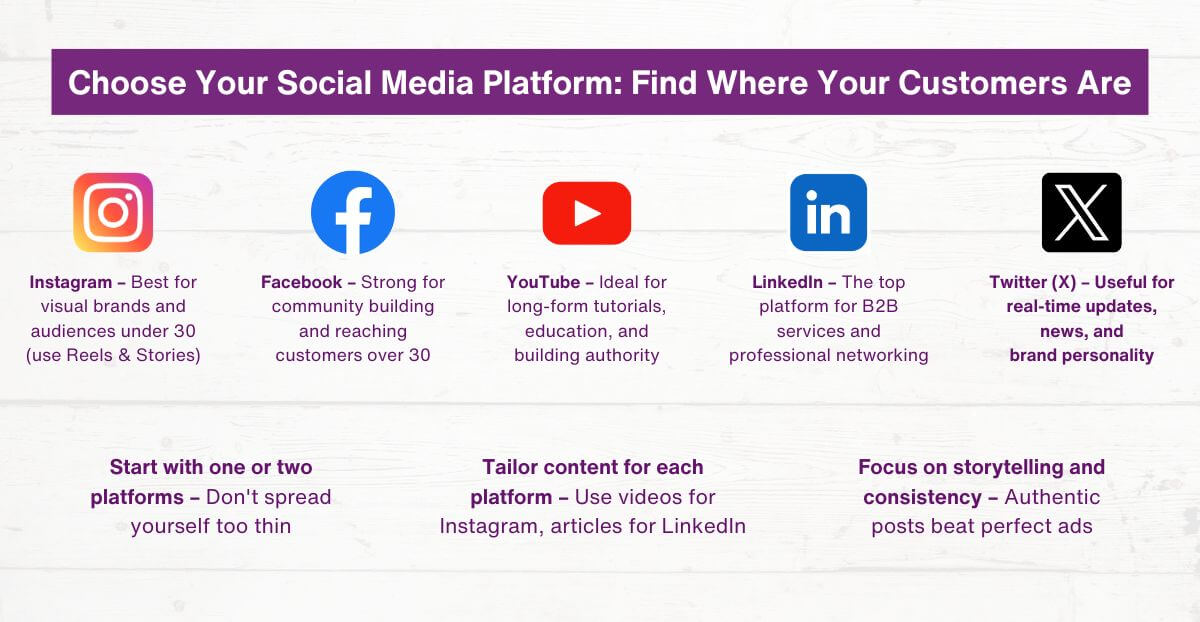
With numerous options available, selecting which social media platforms you use for your business depends on your target audience and industry. Mr. Sagar Babar breaks down the top five: Instagram, Facebook, YouTube, LinkedIn, and Twitter (now X).
- Instagram: Ideal for younger audiences under 30. Visual content, especially videos and Reels, dominates here. Perfect for consumer-facing businesses like fashion, food, or lifestyle brands in urban areas.
- Facebook: Suited for audiences aged 30 and above, particularly strong in tier 2 and tier 3 cities. It excels at building communities through groups and events, making it great for local services or family-oriented products.
- YouTube: Best for mature audiences seeking in-depth content. Start with Shorts for quick reach, then move to long-form videos for nurturing leads. Educational or tutorial-based industries thrive here.
- LinkedIn: The go-to for B2B interactions. Professionals network here, so it’s essential for services targeting other businesses, such as IT, consulting, or manufacturing supplies.
- Twitter (X): A mixed platform focused more on branding and real-time updates rather than direct sales. Useful for thought leadership and quick engagement.
Start simple: If you’re new, prioritise Facebook or Instagram based on demographics. Expand to YouTube once you have an established audience. Tailor content to each platform—Gen Z on Instagram prefers trendy videos, while LinkedIn users favour professional written posts with emerging video elements.
For small businesses, using social media platforms for business effectively means aligning with customer habits. Geo-targeting through paid ads helps local enterprises reach nearby audiences precisely.
Content Strategy: The Heart of Social Media Platforms for Business
Content drives everything on top social media platforms for business. Mr. Sagar Babar declares, “Content is king,” as it creates visibility, credibility, and opportunities.
Begin with genuine storytelling—share your daily journey, product usage, tips, or even failures. Consistency is crucial; prepare two months of content in advance and maintain a one-month buffer. Batch creation, weekly or monthly, works better for most than daily posting. Every small business needs content to generate leads. Founders must be visible to build trust. Engagement follows posting—respond to comments and nurture relationships, even if growth starts slow.
Stand out by sharing your unique story. Whether running a boutique in a small town or a tech startup, your purpose and experiences resonate. Credibility stems from excellent products backed by knowledgeable content, like specific industry tips. Analytics play a vital role. Review insights weekly for engagement time, audience location, and patterns. Discipline separates successful users from the rest—consistency trumps creativity every time.
If managing feels overwhelming, learn the basics through courses or hire agencies while retaining strategic control. Experiment, analyse data, and refine.
For a step-by-step approach to planning in the coming year, check this guide on creating a social media marketing plan.
Rapid Tips for Success on Which Social Media Platforms Should You Use for Your Business
- Post every 2 days on Instagram and Facebook; every 3 days on LinkedIn.
- Develop a niche style for growth.
- Stay genuine for reputation management.
- Avoid the biggest mistake: lacking storytelling.
- Use tools like ChatGPT for ideas.
Prioritise consistency to stay ahead through analytics.
Conclusion
Selecting the right social media platforms for business can propel your small enterprise forward in today’s competitive landscape. By focusing on where your customers are, creating authentic content, and maintaining discipline, you build lasting connections and growth.
As Mr. Sagar Babar advises, educate yourself, commit to consistency, and embrace these platforms fully—there’s no opting out in modern business. deAsra supports and engages entrepreneurs through resources like the dreamBIG podcast, empowering you to dream big and achieve more.

FAQs
1. How do I decide which social media platforms to use for my business if my audience is mixed?
Start by researching your customer demographics. Use tools like Platform Insights to see age groups and locations. For mixed audiences, begin with Facebook for a broader reach and Instagram for younger segments. Test content on the two top social media platforms for business first, then expand based on engagement data.
2. Is it necessary to be on all top social media platforms for business?
No, spreading too thin dilutes efforts. Focus on 1-2 social media platforms for business where your ideal customers spend time. Quality and consistency on fewer platforms yield better results than sporadic presence everywhere.
3. Which social media platforms should you use for your business if it’s B2B?
LinkedIn stands out as the primary choice for B2B. Share professional insights, network with decision-makers, and use written posts or videos to demonstrate expertise. Supplement with Twitter for industry updates if needed.
4. How often should I post on social media platforms for business?
Aim for every 2 days on Instagram and Facebook, and every 3 days on LinkedIn. Consistency matters more than volume—prepare content in batches to maintain this schedule without burnout.
5. Can small businesses succeed on social media platforms for business without paid ads?
Yes, organic growth through authentic storytelling and engagement works well initially. Build visibility and credibility first, then incorporate paid ads for targeted reach, especially geo-specific campaigns.