What Is a Franchise Business? A Beginner’s Guide for Small Entrepreneurs
“Instead of growing your business, focus on the franchisee’s growth. When their outlets thrive, your brand grows naturally.” – Mr. Aniket More
Introduction: Scaling Smart in India’s Bustling Markets
Imagine a cake shop owner in Pune who bakes fresh treats, handles deliveries, and creates social media reels, all while dreaming of expanding to outlets in Mumbai and Delhi without depleting their personal savings. This is where the franchise business steps in as a clever solution. Someone else invests the money, runs the daily operations, and spreads the brand, while the original owner collects royalties.
As Mr Aniket More, founder of Quantum Biz Learning, explained in a recent podcast, the real power lies in building strong systems first. Small entrepreneurs throughout India are learning that a franchise business in India can transform individual efforts into widespread success. For practical strategies and real examples, visit deAsra’s Franchise Growth Hub and start planning today.
What Exactly Is a Franchise Business?
A franchise business involves the original owner granting permission to use the brand name, proven methods, and operational secrets. The person who creates the model is the franchisor, and the individual who pays to use it becomes the franchisee, opening new locations under the same identity. This approach works for huge chains like Domino’s, but it equally serves tiny operations with just one successful outlet.
Put simply, suppose someone has perfected a special cake recipe, a friendly greeting for every customer, and a tight inventory system. In a franchise business, the franchisee copies everything precisely, pays an initial fee, and shares a portion of earnings. The franchise business then expands to new cities without the franchisor spending extra money.
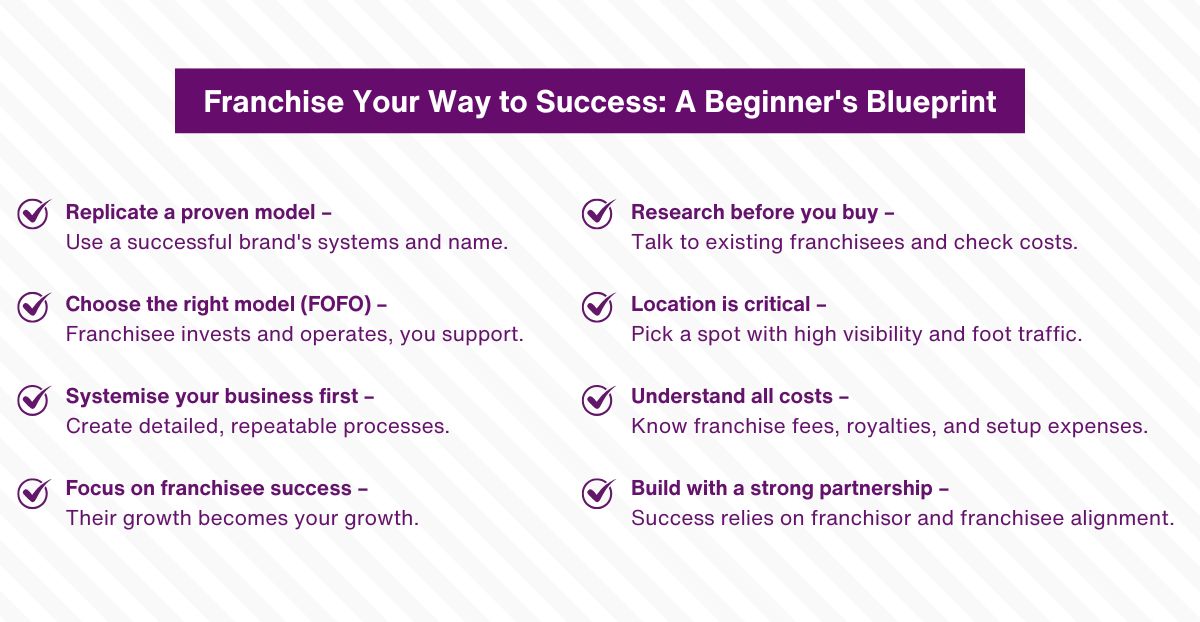
Mr. Aniket More puts it clearly: “Franchising is about replicating your successful business model. It allows others who want to start a business – but don’t know where or how – to adopt your proven system.”
Franchisor vs. Franchisee: Who Does What?
Every franchise business runs smoothly when roles stay distinct. The franchisor designs the complete roadmap, writes down every Standard Operating Procedure, conducts training sessions, supplies materials when required, and carries out regular quality checks. Instead of handling daily tasks, the focus shifts to guiding others and protecting the brand.
The franchisee, on the other hand, puts up the capital, recruits local staff, manages the outlet day to day, and sticks to the guidelines. They often handle neighbourhood promotions while staying within the overall brand rules. In a franchise business in India, franchisees contribute valuable local insights, and franchisors deliver battle-tested processes. Mutual trust and open communication keep the partnership strong.
Types of Franchise Models: Pick the Best Fit
India features three primary structures within a franchise business. The COCO model means the company owns and operates every new unit, providing maximum control yet requiring large amounts of money and constant attention from the owner.
The FOCO model lets the franchisee cover the investment while the company runs the operations, which still demands a capable management team to oversee everything. The FOFO model stands out as the favourite for smaller players because the franchisee handles both the money and the daily running, leaving the franchisor free to concentrate on product supply and brand standards.
Mr. Aniket More strongly suggests FOFO for nano-entrepreneurs: “For small businesses, I recommend the FOFO model. Franchisees take on the investment and operations, while you focus on supplying products and maintaining brand standards.” This structure accelerates expansion in a franchise business in India and often becomes the best franchise business choice for those with limited funds.
Why Choose a Franchise Business? Key Benefits
Entering a franchise business carries far less danger than launching an independent venture. Statistics show that around eighty per cent of standalone startups close within five years, whereas franchises enjoy much higher survival rates because the model has already succeeded elsewhere.
Customers walk in from the first day because they recognise and trust the name, eliminating the slow build-up of reputation. Franchisors supply comprehensive training, marketing materials, and reliable supply chains, removing many guesswork elements for newcomers.
Return on investment arrives quicker, often within twelve to eighteen months, thanks to established procedures. In the crowded Indian market, these advantages position a franchise business in India as the best franchise business route for anyone stepping into ownership for the first time.
Is Your Business Ready to Franchise?
Before offering a franchise business to others, four clear signs must appear. Brand reputation grows when customers return regularly and speak positively about their experiences, creating a base of loyalty that attracts potential partners.
Systemisation reaches the required level when detailed SOPs allow the outlet to function for an entire week without the owner’s direct involvement. Consistent footfall demonstrates genuine demand, with steady daily visitors proving the concept works in real life.
A replicable model exists once every process can be taught to a stranger who then achieves similar results. Owners should operate their single unit as if it were already part of a chain, recording every detail from opening routines to closing counts. This preparation draws serious franchisees to what can become the best franchise business.
Evaluating Franchise Opportunities: Practical Tips
Finding the best franchise business starts with hands-on investigation. Visit several outlets without announcing yourself, order the product, time the service, and inspect cleanliness to experience the reality behind the brochure.
Study the Franchise Disclosure Document carefully, noting all fees, past legal issues, and any earnings projections provided. Speak directly with at least five current franchisees to learn actual profit levels, the quality of ongoing help, and any unexpected challenges they faced.
Ensure the opportunity matches personal strengths; someone who loves cooking thrives in a food-related franchise business, while a natural salesperson excels in retail. In a franchise business in India, give priority to brands that have operated multiple units profitably for at least two years.
Understanding Costs and Royalties
Every franchise business demands full financial clarity from the start. The initial franchise fee typically ranges from two to ten lakh rupees and covers rights, initial training, and setup assistance.
Monthly royalties usually fall between five and eight percent of revenue, rewarding the franchisor for continued support and brand usage. Many systems add a marketing contribution of one to three percent to fund nationwide campaigns.
Additional setup expenses, including rent, interior work, and starting stock, often total ten to fifty lakh rupees. Work out the breakeven point: if royalties reach fifty thousand rupees at ten lakh monthly turnover, target twenty percent profit margins. Select a franchise business in India where the expected return clearly outperforms safe bank deposits.
Location, Location, Location
Success in a franchise business hinges heavily on the chosen site. Prioritise areas with at least five hundred potential customers passing daily, such as busy malls, main streets, or dense residential zones.
Study nearby competitors to avoid overcrowding, but welcome complementary businesses like cafés near fitness centres that draw similar crowds. Analyse local demographics to confirm the offer fits the audience; quick-service concepts appeal to young office workers, while family-oriented outlets suit suburban neighbourhoods.
Negotiate lease agreements for a minimum of five years with favourable lock-in periods to protect the investment. Tools like Google Maps heat overlays or local broker reports help pinpoint prime spots. In energetic cities like Pune, the right address can launch the best franchise business within months.
Technology and Training: Modern Essentials
Leading franchises integrate digital tools to stay ahead. Point-of-sale systems provide real-time sales data across all units, enabling quick decisions.
Customer relationship management software stores contact details for personalised messages and loyalty programmes. Mobile apps deliver training videos and quizzes, making onboarding faster and more consistent.
Franchisors conduct intensive sessions lasting seven to fourteen days at the original pilot location, where franchisees shadow every role. Franchisees then replicate the training for their own teams. This thorough approach maintains uniform standards throughout the entire franchise business.
Overcoming Common Fears
Control concerns stop many owners from pursuing a franchise business. Detailed SOPs solve this by spelling out exactly how every task must be performed.
Regular mystery shopper visits and scheduled audits catch deviations early. Legal agreements include clear termination rights if performance drops below agreed levels.
Well-drafted contracts safeguard the brand while giving franchisees room to succeed. Confidence grows once these protections are in place, turning hesitation into action in a franchise business in India.
Conclusion: Take the First Step Today
A franchise business delivers Indian entrepreneurs a reliable roadmap to growth, security, and pride in ownership. Begin by organising the current outlet, writing down every process, and exploring available opportunities. For deeper insights and expert templates, browse deAsra’s Blog. Whether creating or joining a franchise business in India, the moment to move forward is now—build the network that turns local success into nationwide impact.
FAQs
1. What makes a franchise business different from opening my own branch?
A franchise business lets another person invest the capital and handle daily operations under the established brand while following exact systems. The original owner avoids spending personal funds or managing every detail. Opening a personal branch requires full financing, staff recruitment, and ongoing supervision from the owner, which slows down expansion in a franchise business in India.
2. How do I know if a franchise business in India suits me?
Evaluate personal interests, available funds, and preferred locations. Anyone comfortable leading teams and able to arrange ten to fifty lakh rupees for setup can consider this path. The best franchise business matches individual strengths—cooking enthusiasts excel in quick-service restaurants, while teachers shine in education-focused setups.
3. What are the ongoing costs in a best franchise business?
Expect monthly royalties of five to eight percent of revenue, plus marketing contributions of one to three percent, alongside supply purchases at set prices. Typical outgoings range from fifty thousand to two lakh rupees after reaching breakeven. Reliable support from the franchisor makes these expenses worthwhile in a best franchise business.
4. Can a home-based business turn into a franchise business?
Absolutely, provided every process is fully documented. Record recipes, packaging methods, and delivery schedules in detail. Numerous cloud kitchens have scaled nationwide using the FOFO structure, demonstrating that home origins pose no barrier in a franchise business in India.
5. How do I avoid bad franchise deals in India?
Confirm the brand has run multiple profitable units for over two years, interview at least five existing partners, and engage a lawyer to review contracts. Watch for unclear fees or absent training programmes. Thorough checks ensure the selection of the best franchise business.