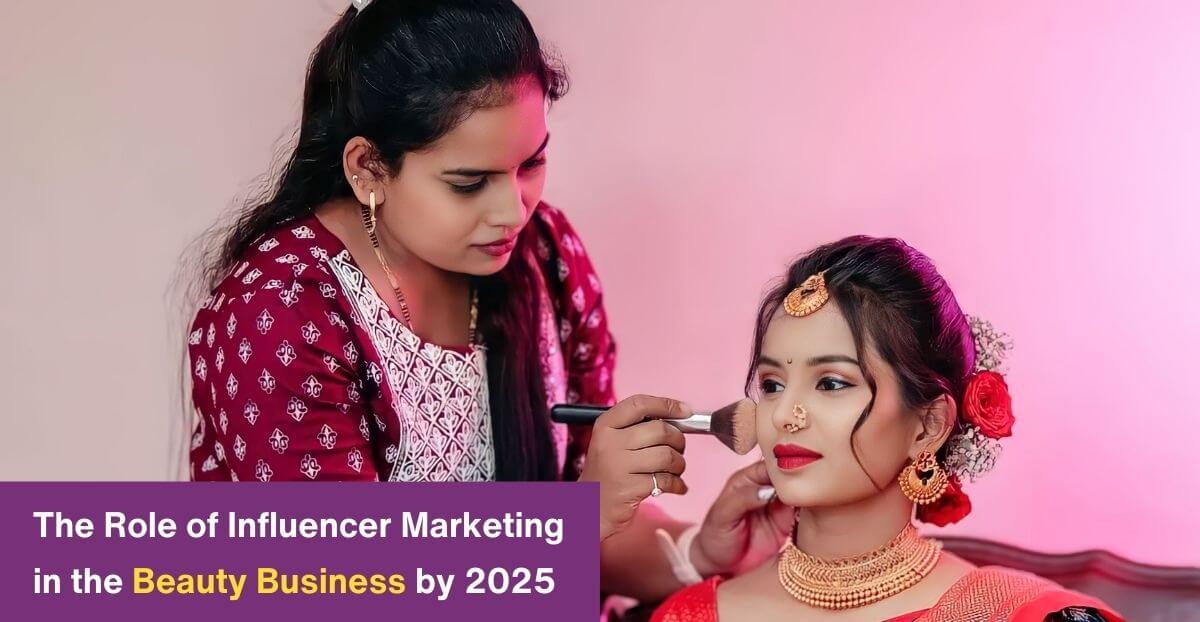
The Role of Influencer Marketing in the Beauty Business by 2025
In 2025, influencer marketing will have an even more significant role in the beauty business, with the global influencer marketing market projected to reach ₹2.70 lakh crores, growing from ₹1.98 lakh crores in 2024. This growth mirrors the increasing reliance of beauty brands on influencers and social media to reach their target audiences. The Indian beauty business is not far behind, as more beauty brands in India continue to recognise the power of influencers in driving product discovery and purchase decisions.
How Influencer Marketing Is Shaping the Beauty Business
Influencer marketing has completely revolutionised the way beauty products are marketed. With the rise of platforms like Instagram, YouTube, and Pinterest, beauty influencers are driving conversations, sharing reviews, and endorsing products to millions of followers. Their personal touch and authenticity are what set them apart from traditional advertising methods.
Why Influencer Marketing is Crucial for Beauty Brands
For beauty brands, influencer marketing is not just a trend but a necessity. Below are some key reasons why it is so effective:
- Trust and Authenticity: Influencers build trust with their followers over time. Unlike traditional ads, influencer marketing feels organic and personal. When an influencer shares their opinion about a product, their followers trust their recommendations.
- Targeted Reach: The beauty industry thrives on highly targeted marketing. By working with influencers whose audiences match their target demographic, beauty brands can ensure they are reaching the right people. For example, working with regional influencers helps brands tap into different cultural and regional preferences in the Indian beauty business.
- Cost-Effective: Compared to traditional advertising, influencer marketing offers a more budget-friendly way for brands to reach a large audience. Working with micro and nano-influencers allows smaller brands to stretch their marketing budgets further while still reaching highly engaged communities.
- Increased Engagement: Influencer content generates higher engagement compared to traditional ads. Followers are more likely to comment, like, and share content that features a product they trust, leading to greater brand visibility and increased conversions.
Trends Shaping the Future of Influencer Marketing in the Beauty Business
As the beauty industry continues to evolve, influencer marketing will adapt and grow. Here are some of the key trends to watch for in the beauty business by 2025:
1. Rise of Micro and Nano-Influencers
- More Personalised Connections: Micro and nano-influencers, with followings ranging from 1,000 to 100,000, are gaining momentum. These influencers have smaller but highly engaged audiences, making their endorsements feel more authentic and trustworthy.
- Greater Affordability: Micro and nano-influencers are often more affordable for brands, allowing smaller beauty businesses to engage in influencer marketing without breaking the bank.
2. The Power of Video Content
- Short-Form Videos: Platforms like TikTok, Instagram Reels, and YouTube Shorts are dominating the social media landscape. Beauty brands will increasingly use video content for influencer collaborations, as it provides a more dynamic way to showcase product benefits and results.
- Tutorials and Product Demos: Influencers will continue to create tutorials and product demonstrations in video format, helping brands show their products in action and educating consumers on their benefits.
3. Hyper-Local Influencer Collaborations
- Regional Influencers in India: The Indian beauty business is incredibly diverse, and so are the preferences of beauty consumers across the country. Working with influencers who have a deep understanding of regional beauty trends will be crucial for brands. For example, an influencer from South India might promote specific products tailored to regional beauty routines or skin tones.
- Cultural Relevance: As India is a land of varied beauty traditions, working with local influencers ensures brands can connect with consumers on a cultural level, making their marketing campaigns feel more authentic.
4. Sustainability and Ethical Influencers
- Green Beauty Movement: Consumers are increasingly choosing eco-friendly, cruelty-free, and sustainable beauty products. Influencers who advocate for ethical beauty products will continue to play a significant role in shaping consumer choices.
- Brand Transparency: Influencers will collaborate with brands that focus on transparency, ethical sourcing, and sustainability, reinforcing consumer trust and loyalty.
5. Long-Term Influencer Partnerships
- Building Ongoing Relationships: In 2025, beauty brands will focus on forming long-term relationships with influencers rather than one-off collaborations. Long-term partnerships enable influencers to develop a deeper understanding of the brand, resulting in more authentic, consistent content.
- Brand Ambassadorships: We will see more beauty influencers being signed as brand ambassadors for ongoing campaigns, helping brands maintain a consistent voice and build long-lasting brand loyalty.
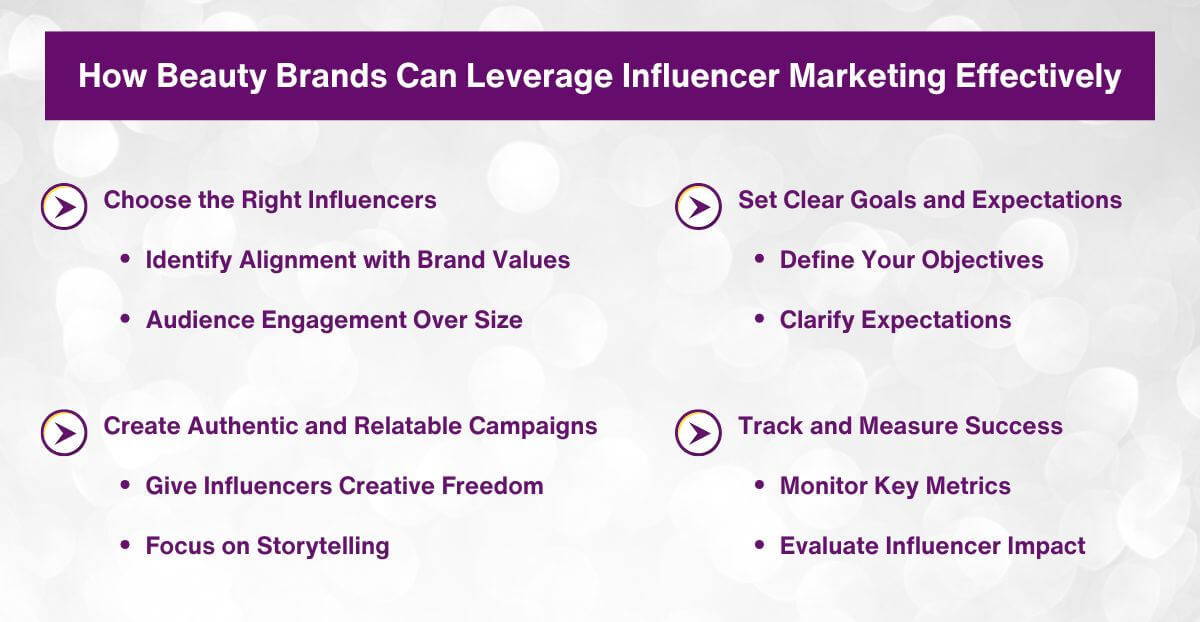
How Beauty Brands Can Leverage Influencer Marketing Effectively
To harness the full potential of influencer marketing, beauty brands need to adopt a well-planned approach. Here are some actionable steps that brands can take to ensure success:
1. Choose the Right Influencers
- Identify Alignment with Brand Values: The first step is selecting influencers whose values align with the brand’s. For example, if the brand focuses on cruelty-free products, influencers who promote ethical beauty will be a good fit.
- Audience Engagement Over Size: Rather than solely focusing on influencer follower count, brands should look for influencers who have highly engaged audiences. Engagement rate, not just the follower count, should be a key criterion in selecting an influencer.
2. Set Clear Goals and Expectations
- Define Your Objectives: Whether it’s building brand awareness, promoting a product launch, or increasing sales, setting clear goals will help measure the effectiveness of the campaign.
- Clarify Expectations: From the type of content (videos, blog posts, photos) to the frequency of posts and the specific products to promote, make sure expectations are clearly communicated.
3. Create Authentic and Relatable Campaigns
- Give Influencers Creative Freedom: Successful influencer campaigns feel natural. Brands should trust their influencers and allow them to create content that resonates with their followers.
- Focus on Storytelling: Influencers are storytellers, and their content should focus on telling a story about the product, not just showcasing its features. This helps create a connection with the audience.
4. Track and Measure Success
- Monitor Key Metrics: Using tools to track the performance of campaigns is essential. Brands should monitor engagement rates, click-through rates, and sales conversions to evaluate the ROI of influencer partnerships.
- Evaluate Influencer Impact: Assessing the influencer’s impact on brand sentiment and consumer behaviour helps brands understand whether the collaboration was successful.
Examples of Successful Influencer Marketing Campaigns in the Indian Beauty Business
The Indian beauty business has seen remarkable growth in influencer marketing. Here are some examples of how beauty brands are successfully using influencers:
- Nykaa: One of the leading beauty brands in India, Nykaa has collaborated with top Indian influencers, including actresses and beauty bloggers, to promote their beauty products. Their campaigns often feature influencers sharing beauty tips and tutorials, which has significantly boosted Nykaa’s visibility.
- Mamaearth: Mamaearth, an organic beauty brand, has embraced influencer marketing by partnering with eco-conscious influencers. Their campaign highlighting the use of natural ingredients and the brand’s commitment to sustainability has resonated well with their target audience.
By following in the footsteps of these successful campaigns, smaller beauty businesses can harness the power of influencer marketing to grow their brand presence and sales.
Conclusion
Influencer marketing will continue to be a dominant force in the beauty business in 2025. As beauty brands adapt to new trends, including the rise of micro-influencers, video content, and sustainability, the Indian beauty business will experience a significant shift in how beauty products are marketed and sold. Influencer collaborations offer an effective way for brands to authentically connect with their audience, increase brand awareness, and drive sales.
Ready to turn your passion for beauty into profit? Check out our blog on 10 Profitable Beauty Business Ideas for Women. Whether you want a home-based venture or a brick-and-mortar salon, we have the insights you need to succeed. Start your journey to beauty entrepreneurship today – click the link to explore your ideal business opportunity! For more insights into successful business strategies, check out our marketing services and resources.
FAQs
1. Why is influencer marketing important for beauty brands in 2025?
Influencer marketing builds trust and authenticity, which are key factors in the beauty industry. Influencers help brands connect with targeted audiences through relatable content, making it easier for consumers to discover and trust beauty products.
2. What types of influencers should beauty brands work with?
Micro and nano-influencers are gaining popularity for their strong engagement rates and personal connections with followers. Collaborating with these influencers allows brands to target niche markets and establish authentic relationships with consumers.
3. How has video content transformed influencer marketing for beauty brands?
Short-form videos on platforms like Instagram Reels and YouTube Shorts have become essential for showcasing product demos and tutorials. These videos offer an engaging way to demonstrate product benefits and educate consumers in a dynamic format.
4. How can beauty brands in India benefit from regional influencers?
Regional influencers understand local beauty trends and cultural preferences, making their content more relatable to diverse Indian audiences. Partnering with them helps brands build a strong presence in regional markets.
5. What should beauty brands consider when planning influencer campaigns?
Brands should set clear objectives, choose influencers with aligned values, and give them creative freedom to create authentic content. Tracking key metrics like engagement and sales conversions is essential to measure campaign success.