
The Cost of a Bad Hire: How to Avoid Making a Costly Mistake
In the fast-paced world of business, a single bad hire can drain resources and disrupt progress significantly. The cost of a bad hire goes well beyond the initial salary, including reduced output, lowered team spirit, and potential damage to reputation. Leaders recognise that avoiding a bad hire demands careful planning.
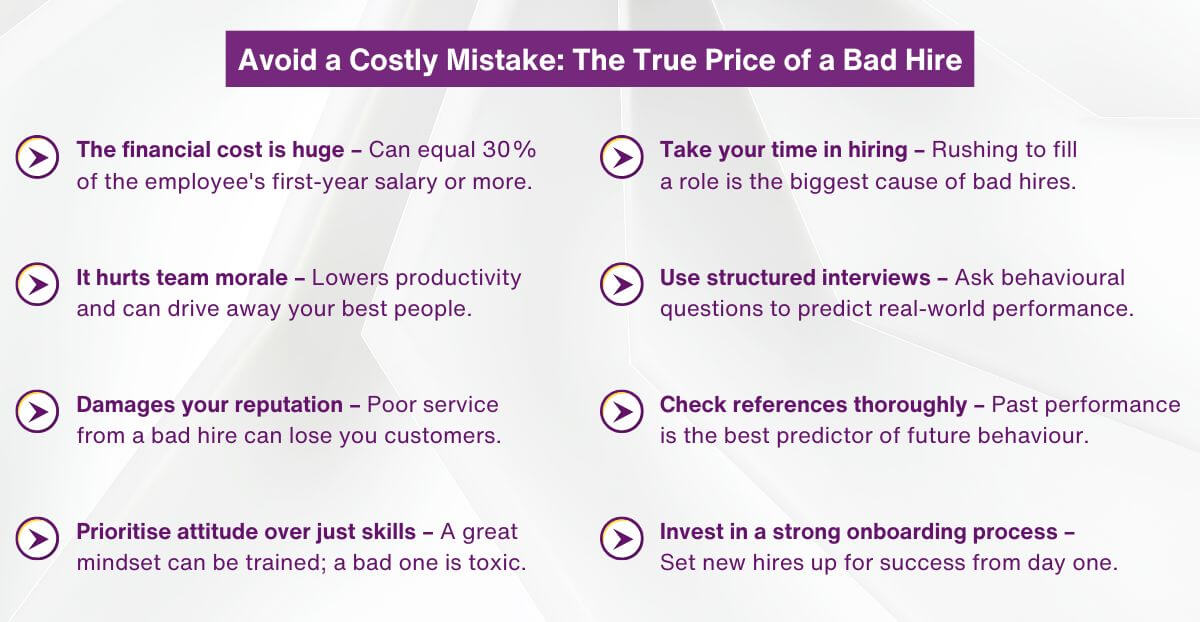
Recent figures indicate the cost of a bad hire often equates to 30% of the employee’s first-year earnings. Drawing from expert discussions in the deAsra Foundation’s dreamBIG podcast episode on Hiring for Growth, this exploration reveals financial burdens, cultural effects, and practical vetting improvements.
Understanding the Financial Impact
Recruitment involves substantial investment, yet a bad hire amplifies expenses dramatically. Direct costs cover agency fees, advertising, onboarding, and wages paid to an underperformer. When replacement becomes necessary, these outlays double quickly.
Indirect financial strain emerges through lost productivity. A mismatched individual contributes little while others compensate, delaying deliverables and opportunities. Industry reports highlight that the cost of a bad hire can reach thousands of pounds, sometimes exceeding £17,000, including rehiring. Mr. Girish Tilak, an experienced professional in human resources, notes in the dreamBIG podcast: “Attitude comes first.” This emphasis reminds leaders that prioritising the right mindset prevents escalating the cost of a bad hire from preventable errors.

The Cultural and Operational Consequences
The repercussions of a bad hire extend deeply into organisational culture. Underperformers often breed dissatisfaction, as capable staff grow frustrated covering gaps. Morale suffers, engagement wanes, and turnover among top talent increases, creating a vicious cycle.
Operationally, service quality declines, risking client relationships and brand reputation. Internal workflows disrupt, stalling innovation and growth initiatives. In small enterprises, these effects prove particularly acute, where each member influences outcomes profoundly. Recognising subtle indicators during selection—such as inconsistent enthusiasm or vague responses—helps avert these pitfalls. By addressing cultural fit proactively, leaders substantially reduce the cost of a bad hire in these vital yet harder-to-quantify domains.
Common Pitfalls in the Hiring Process
Many leaders encounter recurring obstacles leading to a bad hire. Urgency to occupy vacant positions prompts hasty judgments, bypassing thorough evaluations. Overemphasising credentials while neglecting personal attributes represents another prevalent misstep.
Limited interview formats fail to reveal true capabilities, and inadequate reference verification leaves blind spots. These oversights transform apparent solutions into enduring problems, amplifying the cost of a bad hire through repetitive recruitment cycles. Structured approaches, patience, and diverse input mitigate such risks effectively.
Strategies to Improve Vetting and Selection
Preventing a bad hire hinges on robust frameworks. Craft detailed job specifications highlighting essential skills, behaviours, and values. Employ layered assessments, including practical tasks and behavioural queries.
Verify backgrounds meticulously and pursue insightful references. Forward-thinking evaluation considers long-term potential. Mr. Girish Tilak highlights scalability: “Can they grow with the business?” This perspective ensures enduring alignment, minimising the cost of a bad hire. deAsra supports and engages entrepreneurs in refining these techniques through practical resources and expert dialogues.
Leveraging Platforms and Technology
Modern tools enhance candidate sourcing dramatically. Strategic job postings on appropriate channels attract qualified applicants efficiently. Emerging platforms in 2026 offer advanced targeting, reducing mismatches.
Integrate assessments early to filter effectively. deAsra engages businesses with guidance on evolving trends, empowering informed choices that lower risks of a bad hire.
Building and Sustaining Growth-Oriented Teams
For scaling operations, prioritise adaptability and learning agility in selections. Cultivate environments offering development opportunities to retain excellence.
Monitor integration closely post-onboarding, providing timely feedback. Swift resolution of persistent mismatches preserves momentum. deAsra supports and engages small businesses in nurturing such dynamic cultures via the dreamBIG podcast and allied programmes.
Real-World Examples and Lessons
Consider scenarios where rushed hires led to substantial setbacks. A mid-level appointment gone awry might incur over £100,000 in combined losses, from disrupted projects to elevated staff exits.
Conversely, deliberate processes yield loyal, high-performing contributors. These contrasts underscore the value of investment in quality recruitment, directly impacting the cost of a bad hire.
Conclusion
In an era of intense competition, safeguarding against a bad hire remains paramount for sustained success. The cost of a bad hire threatens profitability and cohesion, yet proven strategies—rooted in attitude focus and thorough vetting—offer reliable defence. Insights from Mr. Girish Tilak illuminate pathways to excellence. deAsra supports and engages enterprises through the dreamBIG podcast and beyond, equipping leaders to forge capable teams. Commit to excellence in hiring; the rewards far outweigh the effort.

FAQs
1. What precisely defines a bad hire?
A bad hire arises when an individual fails to deliver expected results or integrate with organisational values. This manifests in low productivity, interpersonal conflicts, or swift departure. The fallout intensifies the cost of a bad hire via operational inefficiencies and diminished team spirit.
2. How can leaders accurately assess the cost of a bad hire?
Compile direct costs including recruitment, onboarding, and remuneration. Incorporate indirect elements like productivity shortfalls and compensatory efforts. Standard estimates position the cost of a bad hire at 30% of first-year salary, with real figures varying by role and sector.
3. Why does attitude take precedence in preventing a bad hire?
Attitude determines resilience, collaboration, and growth potential. Technical abilities develop over time, but mismatched mindsets perpetuate challenges. Emphasising this reduces prospects of a bad hire considerably.
4. What benefits do thorough reference checks provide against a bad hire?
They expose historical performance trends and validate presented qualifications. Neglecting this invites unforeseen issues, heightening the cost of a bad hire. Diligent pursuit yields clearer, safer decisions.
5. How does deAsra engage with businesses facing hiring dilemmas?
deAsra supports and engages entrepreneurs via the dreamBIG podcast, delivering expert viewpoints on strategic recruitment. These initiatives equip owners to navigate complexities and evade pitfalls linked to a bad hire.