Small Business Accounting: Essential Tips and Tools for Success in India
Keeping your finances in order is key to making a small business thrive. In India, where over 63 million small businesses fuel the economy, good small business accounting can set you up for success. This blog shares easy tips and tools to help you manage money, follow tax rules, and track your progress.
From recording daily sales to filing GST, we’ll show you how to stay on top of your finances and make smart choices. Check this accounting checklist for simple steps to keep your small business accounting strong and growing in 2025.
Why Small Business Accounting Matters in India
In India, small businesses create jobs and add about 30% to the country’s wealth. However, many owners struggle with money tasks like tracking cash or paying taxes. Good small business accounting helps you avoid mistakes, save time, and know how your business is doing. It keeps you ready for GST rules and lets you plan ahead. Without it, you might lose money or face fines. Using the right habits and tools makes small business accounting simple and powerful.
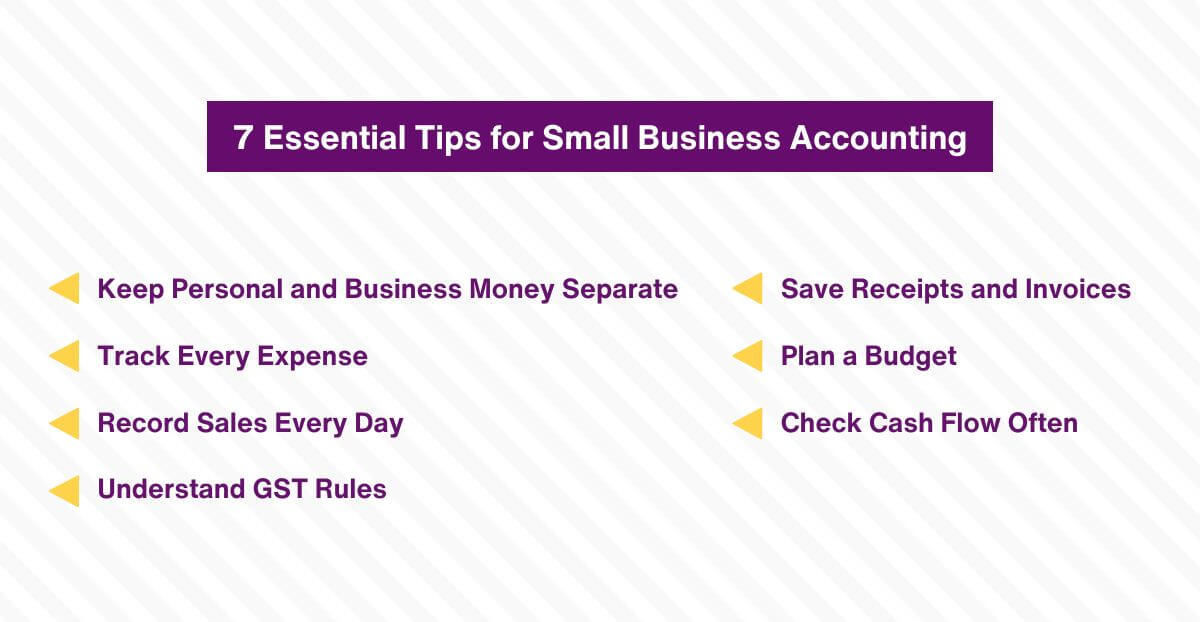
7 Essential Tips for Small Business Accounting
Here are some easy tips to improve your small business accounting:
- Keep Personal and Business Money Separate
Open a bank account just for your business. Use it for all sales and expenses. This keeps your records clear and makes tax time easier. Mixing personal and business cash can confuse your accounting checklist for small businesses. - Track Every Expense
Write down every cost—big or small—like rent, supplies, or travel. Use a notebook or an app to stay organised. Checking this daily or weekly is part of your accounting checklist for small businesses to spot savings. - Record Sales Every Day
Not every sale as it happens. This helps you see how much money comes in. A simple habit like this builds a strong base for small business accounting and stops errors. - Understand GST Rules
India’s GST tax needs careful tracking. Record what you buy and sell to claim credits. File returns on time to avoid trouble. Add this to your accounting checklist for small businesses monthly. - Save Receipts and Invoices
Keep all bills and payment proofs safe. Scan them into your phone or computer. This step in your accounting checklist for small businesses helps during tax checks or audits. - Plan a Budget
Set a money plan for each month. Guess your sales and list your costs—like rent or stock. A budget keeps your small business accounting on track and stops overspending. - Check Cash Flow Often
Look at the money coming in and going out weekly. This shows if you can pay bills or need to chase late payments. It’s a key task in your accounting checklist for small businesses.
Top 5 Tools for Small Business Accounting
Using tools makes small business accounting easier. Here are some great ones for India:
- TallyPrime
TallyPrime is popular with Indian businesses. It handles GST, invoices, and expense tracking. It’s simple to learn and keeps your small business accounting legal and tidy. - Vyapar
Vyapar is a free app for small shops. It creates GST invoices, tracks stock, and shows profits. It’s one of the best tools for small business owners to manage daily money tasks. - Zoho Books
Zoho Books works online and fits Indian taxes like GST. It sends invoices and tracks cash flow. It’s a handy tool for your accounting checklist for small businesses to stay updated. - QuickBooks
QuickBooks is easy and powerful. It tracks sales, expenses, and taxes. Small businesses in India use it to make small business accounting smooth and fast. - Razorpay
Razorpay helps you take payments—UPI, cards, or online. It links to your accounts and speeds up money collection. It’s a top pick among tools for small business owners.
How to Use These Tips and Tools
Start with these steps to make small business accounting work for you:
- Set Up a Routine: Pick times each day, week, or month to check money tasks. Use an accounting checklist for small businesses to stay on top – like daily sales logs or monthly GST filings.
- Pick One Tool: Choose a tool like Vyapar or TallyPrime that fits your needs. Start with free versions if you’re new to small business accounting.
- Learn the Basics: Spend a little time understanding GST or invoicing. Many tools have guides to help tools for small business owners get started.
- Ask for Help: If taxes or accounts get hard, talk to an accountant. They can check your accounting checklist for small businesses and fix problems.
Why These Tips Work in India
India’s small businesses face unique needs. Over 900 million people use the internet, and mobile payments like UPI are growing fast – 83% of transactions in 2024 use them. Tools like Razorpay match this trend.
GST rules need constant care, so TallyPrime or Zoho Books keep you safe. Social media is big too – 470 million users—so good invoices from Vyapar help you look professional. These tips and tools for small business owners fit India’s busy, digital world in 2025.
Daily, Weekly, and Monthly Tasks
Break your small business accounting into small jobs:
- Daily: Log sales and expenses. Use Vyapar or QuickBooks to keep it quick.
- Weekly: Check cash flow and chase late payments. Add this to your accounting checklist for small businesses.
- Monthly: File GST returns and review your budget. Tools like Zoho Books make this simple.
Growing with Accounting
Good small business accounting grows with you. Start small—track sales with Vyapar. As you sell more, use QuickBooks for bigger reports. In India, online shopping might hit ₹12 trillion by 2025. Tools like Razorpay keep payments easy. A solid accounting checklist for small businesses helps you plan and expand.
Final Thoughts
Small businesses in India can shine with strong small business accounting. These tips—tracking cash, following GST, using budgets – and tools like TallyPrime or Vyapar make money tasks easy. Start small, stay steady, and watch your business grow. With the right habits and tools for small business owners, you’ll keep your finances healthy and ready for success in 2025 and beyond.
FAQs
1. What is small business accounting?
Small business accounting is keeping track of your money – sales, expenses, and taxes. In India, it means recording daily cash and following GST rules. It helps you know if your business is growing.
2. Why do I need an accounting checklist for a small business?
An accounting checklist for small businesses makes sure you don’t miss important tasks. It reminds you to log sales, check cash flow, or file GST on time. This keeps your finances clear and safe.
3. Which tools are best for small business accounting in India?
Tools like TallyPrime and Vyapar are great for small business accounting. TallyPrime handles GST and invoices, while Vyapar is free and easy for small shops to track money daily.
4. How do I start a small business accounting?
Begin small business accounting by opening a business bank account and tracking every sale or cost. Use a tool like Zoho Books and add it to your accounting checklist for small businesses to stay organised.
5. Do I need to know GST for small business accounting?
Yes, GST is a big part of small business accounting in India. You must track what you buy and sell to file taxes right. Tools like QuickBooks help you do this without confusion.
6. Can small business accounting save me money?
Good small business accounting saves money by spotting extra costs and avoiding tax fines. Using an accounting checklist for small businesses and tools like Razorpay keeps your cash flow strong.