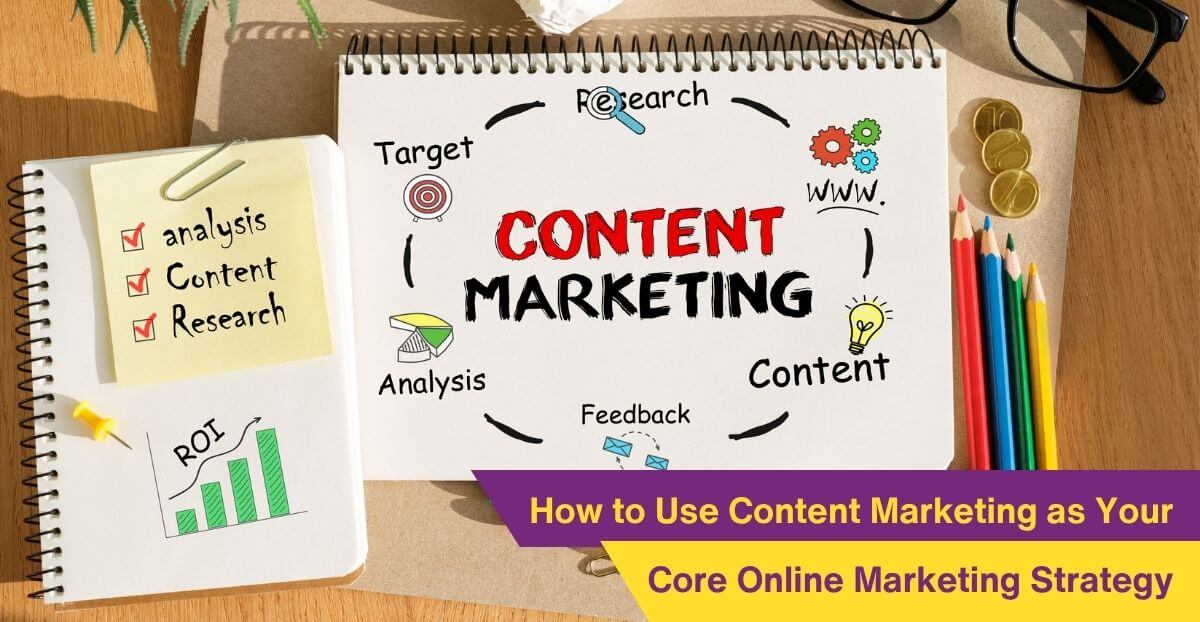
How to Use Content Marketing as Your Core Online Marketing Strategy
“Marketing is the right message to the right people through the right channel,” says Kunal Bajaj, a digital marketing expert with over 12 years of experience, on the dreamBIG Podcast by deAsra Foundation. With 850 million Indians active online, businesses cannot afford to be invisible.
Content marketing, when executed strategically, is a powerful online marketing strategy that builds authority, engages audiences, and drives organic traffic without requiring a hefty budget. This blog offers industry leaders a deep dive into crafting a digital marketing strategy centred on content, providing practical steps to stand out in a competitive digital landscape.
Why Content Marketing is the Heart of Your Online Marketing Strategy
Content marketing goes beyond social media posts or paid ads. It’s about creating valuable, relevant content that resonates with your audience. As Bajaj states, “Content is everything.” It serves as the backbone of a digital marketing strategy by achieving three core objectives: visibility, credibility, and lead generation. Unlike paid ads, which can be expensive and short-lived, content marketing delivers long-term benefits by attracting organic traffic and fostering trust.
For small and medium businesses (SMBs), content marketing is a game-changer. Only 30% of India’s 6.3 crore MSMEs have a noticeable digital footprint, leaving ample opportunity to differentiate. A well-crafted online marketing strategy focused on content can help you reach your target audience, establish expertise, and drive conversions without relying solely on paid channels. By leveraging insights from deAsra’s blog, businesses can unlock practical growth strategies.
The 4-5-6-7 Framework: Your Content Blueprint
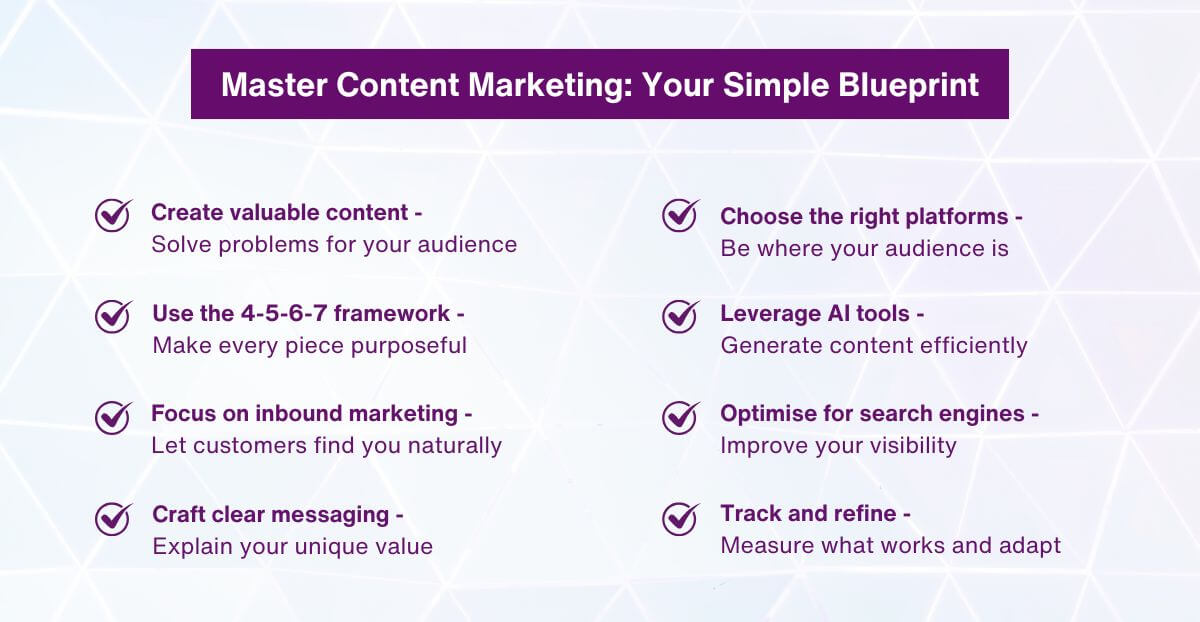
Bajaj’s 4-5-6-7 framework ensures your content aligns with your online marketing strategy. Here’s a concise breakdown:
- Four Intents: Define the purpose—attract (grab attention), interest (spark curiosity), engage (encourage interaction), or convert (drive actions like sign-ups).
- Five Themes: Choose a theme—educational (builds authority), proof (testimonials for credibility), promotional (drives action), inspirational (motivates desire), or behind-the-scenes (shows authenticity).
- Six Angles: Address emotional triggers—pain (e.g., “Struggling with pests?”), need (reliable service), fear (e.g., “Worried about security?”), desire (e.g., “Want a dream home?”), greed (value-driven), or pride (shareable content).
- Seven Formats: Use videos, audio, text, images, infographics, podcasts, or live streams based on audience preferences.
This framework makes your content purposeful and effective for your digital marketing strategy.
Step-by-Step Guide to Building a Content-Driven Digital Marketing Strategy
Step 1: Identify Your Method
Bajaj identifies four ways to reach customers: inbound, outbound, paid, and partnerships. Content marketing primarily falls under inbound, where customers find you through search engines or social media. For instance, optimising your Google My Business profile can attract local customers searching for “near me” services. A pest control business ranking in the top three for relevant searches can generate 25–30 leads monthly without ad spend, as Bajaj highlights.
Step 2: Craft Your Message Stack
A strong digital marketing strategy requires a clear message stack:
- Clarity: Define the problem you solve and the transformation you offer. For example, a software company might state, “We simplify payroll for SMBs.”
- Problem-Solution: List five problems your product addresses and how it solves them.
- Feature-Benefit Metrics: Highlight five features and their benefits, e.g., a CRM tool offering “automated follow-ups” (feature) to “save time” (benefit).
- Unique Value Proposition (UVP): Create a compelling UVP focusing on problem-solution, benefits, or proof.
This message stack ensures your content stands out, avoiding the pitfall of generic ads that fail to engage, as Bajaj warns about ineffective dental clinic ads.
Step 3: Choose the Right Channels
Select channels based on your audience and resources. For local businesses, Google My Business and Instagram are ideal for inbound strategies. For B2B firms, LinkedIn or WhatsApp may be more effective. Bajaj advises, “Identification of channel depends on resources and budget.” Focus on one or two platforms initially to avoid spreading resources too thin.
Step 4: Leverage AI Tools
AI tools like ChatGPT can revolutionise your online marketing strategy. Train ChatGPT with your business details (products, audience, location) to generate tailored content. For example, request “10 UGC-style photo ideas for my Indian bakery in Pune.” This saves time and money compared to hiring designers, enabling you to create a robust digital marketing strategy efficiently.
Step 5: Optimise for Search and Visibility
To drive organic traffic, optimise content for search engines. For Google My Business, choose the correct category (e.g., “physiotherapist” not “hospital”), encourage frequent reviews, and ensure relevance and proximity. High-quality reviews boost prominence, helping you rank in the top three for local searches, a critical component of an effective online marketing strategy.
Step 6: Measure and Refine
Track your digital marketing strategy using three metrics:
- ROAS (Return on Ad Spend): Measures ad performance.
- ROMS (Return on Marketing Spend): Includes personnel costs.
- ROBS (Return on Business Spend): Accounts for all costs (taxes, GST, etc.).
Evaluate within three months to identify what’s working. If a blog drives traffic but not conversions, refine the call-to-action. Consistency in successful tactics is vital for sustaining momentum in your online marketing strategy.
Engaging Your Audience with Content
Engaging content keeps audiences returning. Use the 4-5-6-7 framework to create emotionally resonant content. For example, a travel agency could share an educational blog on “Top 5 Budget Destinations” (attract, educational, need) and a testimonial video of a satisfied customer (convert, proof, pride). Mix formats like Instagram Reels or LinkedIn infographics to suit different platforms.
Authenticity is key. Behind-the-scenes content, like a café showing baristas crafting coffee, builds trust. Inspirational content, such as a fitness brand sharing client transformations, drives action. Always align content with your message stack to avoid generic posts that fail to convert.
Driving Organic Traffic
Organic traffic comes from content that ranks well on search engines or spreads through social shares. Optimise blogs with relevant keywords, like “best bakery in Pune,” and ensure fast-loading websites. Bajaj’s story of a business failing despite Instagram posts underscores the need for the right platform—Google My Business could have targeted search intent effectively, boosting organic traffic.
Building Authority
Authority stems from educational content and proof. Publish in-depth guides, webinars, or podcasts to showcase expertise. For instance, a tech company could release a whitepaper on cybersecurity trends. Testimonials and case studies, like client success stories, reinforce credibility. Regular content updates keep your brand authoritative and relevant, strengthening your online marketing strategy.
Conclusion
Content marketing is the cornerstone of a successful online marketing strategy. By leveraging the 4-5-6-7 framework, using AI tools like ChatGPT, and optimising for search, businesses can build authority, engage audiences, and drive organic traffic. Whether you’re a local shop or a B2B firm, a strategic digital marketing strategy focused on content can transform your online presence. Start with clarity, choose the right channels, and maintain consistency to achieve long-term growth.
FAQs
1. What makes content marketing a powerful online marketing strategy for small businesses?
Content marketing is powerful because it builds visibility, credibility, and lead generation without requiring large budgets. By creating valuable content tailored to your audience’s needs, small businesses can attract organic traffic and establish authority. For example, optimising a Google My Business profile, as Bajaj suggests, can generate 25–30 leads monthly for local businesses at no cost.
2. How do I choose the right content for my digital marketing strategy?
Use Bajaj’s 4-5-6-7 framework to align content with your goals. Identify the intent (attract, interest, engage, or convert), select a theme (e.g., educational or proof), address emotional triggers like pain or desire, and choose a format like video or blog. This ensures your content resonates and supports your online marketing strategy.
3. Can AI tools like ChatGPT enhance my digital marketing strategy?
Yes, AI tools like ChatGPT can transform your online marketing strategy by generating tailored content quickly. Train ChatGPT with your business details to create unique posts, images, or ideas, like UGC-style photos for your brand. Bajaj notes, “ChatGPT knows everything, but whatever you input, you get the output,” making it cost-effective for SMBs.
4. How do I measure the success of my content-driven online marketing strategy?
Evaluate your digital marketing strategy within three months using ROAS (Return on Ad Spend), ROMS (Return on Marketing Spend), and ROBS (Return on Business Spend). These metrics track ad performance, marketing costs, and overall business expenses. Consistent review ensures your content delivers a positive ROI, as Bajaj advises.
5. Should I outsource content marketing for my digital marketing strategy?
Outsourcing can save time, but provide clear business clarity and strategy to freelancers or agencies. Define deliverables, KPIs, a task checklist, and expect weekly updates, as Bajaj recommends. Spend four hours monthly overseeing efforts to ensure your online marketing strategy delivers value and aligns with your goals.