How to Start a Successful Home-Based Skincare Product Business
The Beauty & Personal Care market in India is booming, with projections indicating a revenue of US$31.51 billion in 2024. This vibrant sector is expected to grow at an annual rate of 3.00% from 2024 to 2028. If you’re considering entering this lucrative market, starting a home-based skincare business could be your gateway to success. With the rising demand for natural and organic products, there’s a significant opportunity for aspiring entrepreneurs to make their mark.
This guide provides a step-by-step approach to launching a thriving home-based skincare business, focusing on product formulation, sourcing ingredients, legal requirements, branding, and marketing strategies. Let’s explore how you can transform your passion for skincare into a successful venture.
1. Research and Planning
Before diving into the practical aspects of starting a skincare product business from home, thorough research is essential.
Understand Your Market:
- Identify Your Niche: With the surge in demand for natural skincare products, determine what sets your brand apart. This could be a specific skin concern you address or unique natural ingredients you use.
- Analyse Competitors: Look at existing home-based skincare businesses and note their strengths and weaknesses. This will help you identify gaps in the market that your business can fill.
Create a Business Plan:
- Outline Your Goals: Define your mission, vision, and business objectives. A clear plan will guide your decisions and keep you focused.
- Financial Planning: Estimate startup costs, including ingredients, packaging, marketing, and legal fees. Plan your budget and explore funding options if needed.
2. Product Formulation
The heart of your home-based skincare business is your product. Developing effective and safe skincare products requires careful formulation and testing.
Formulate Your Products:
- Choose Your Ingredients: Opt for high-quality, natural ingredients that align with the ethos of your natural skincare business. Research each ingredient’s benefits and potential side effects.
- Develop Formulas: Experiment with different formulations and keep detailed records of your processes. Consider creating a range of products to cater to various skin types and concerns.
Testing and Refinement:
- Conduct Test Runs: Test your products on a small scale to gauge their effectiveness and safety. Gather feedback from friends, family, or potential customers.
- Adjust Formulas: Based on feedback and results, make necessary adjustments to improve your products.
3. Sourcing Ingredients
Sourcing quality ingredients is crucial for the success of your home-based skincare business.
Find Reliable Suppliers:
- Research Suppliers: Look for suppliers that offer high-quality natural ingredients. Check reviews, certifications, and product samples before committing.
- Build Relationships: Establish strong relationships with your suppliers to ensure consistent quality and timely deliveries.
Consider Sustainability:
- Eco-Friendly Options: Choose suppliers who prioritise sustainability and ethical practices. This aligns with the values of many consumers who are interested in natural skincare products.
4. Legal Requirements
Complying with legal regulations is essential for operating a successful and legitimate home-based skincare business.
Register Your Business:
- Choose a Business Structure: Decide on the legal structure for your business, such as a sole proprietorship or limited liability partnership. Each has different implications for liability and taxes.
- Register Your Business Name: Ensure your business name is unique and register it accordingly. Check for trademark availability to protect your brand.
Compliance and Documentation:
- Understand Regulations: Familiarize yourself with local regulations regarding skincare products. This includes ingredient restrictions, labelling requirements, and health claims.
- Seek Professional Help: Consult with legal professionals or business service providers for guidance on compliance. deasra’s legal compliance services can offer valuable assistance in this area.
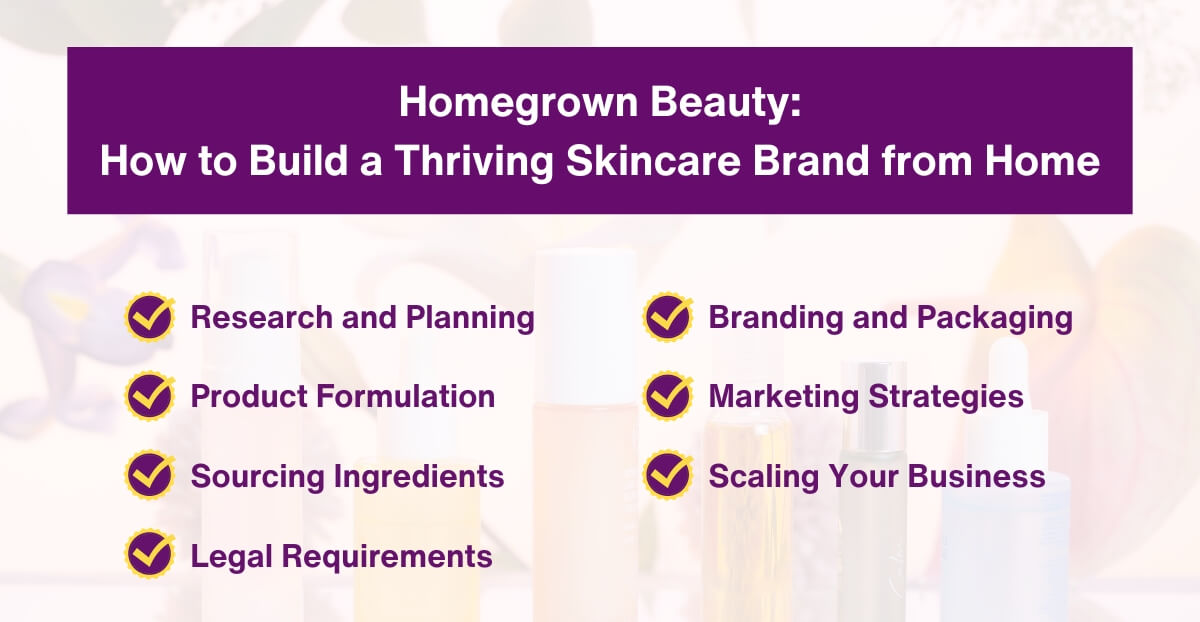
5. Branding and Packaging
Creating a strong brand identity and appealing packaging is vital for standing out in the competitive skincare market.
Develop Your Brand:
- Design a Logo: Your logo should reflect the essence of your home-based skincare business and resonate with your target audience.
- Create a Brand Story: Share the story behind your brand and your commitment to natural skincare products. This helps build a connection with your customers.
Packaging and Labeling:
- Choose Sustainable Packaging: Opt for eco-friendly packaging materials that align with your brand’s values.
- Label Accurately: Ensure your product labels include all required information, such as ingredients, usage instructions, and expiration dates.
6. Marketing Strategies
Effective marketing is crucial for attracting customers and growing your home-based skincare business.
Build an Online Presence:
- Create a Website: Develop a professional website showcasing your products, brand story, and contact information. Make sure it’s user-friendly and optimised for search engines.
- Utilise Social Media: Leverage platforms like Instagram, Facebook, and Pinterest to promote your products, share content, and engage with your audience.
Explore Marketing Channels:
- Influencer Collaborations: Partner with influencers who align with your brand values to reach a wider audience and build credibility.
- Offer Promotions: Run special promotions, discounts, or giveaways to attract new customers and retain existing ones.
Local Marketing:
- Participate in Local Events: Consider showcasing your products at local markets or events to connect with potential customers in your area.
- Build Partnerships: Collaborate with local businesses or wellness centres to increase visibility and credibility.
7. Scaling Your Business
As your home-based skincare business grows, you may consider scaling up operations.
Expand Your Product Line:
- Introduce New Products: Based on customer feedback and market trends, develop and launch new products to diversify your offerings.
- Explore Retail Opportunities: Consider expanding to retail stores or online marketplaces to reach a broader audience.
Optimise Operations:
- Streamline Processes: Invest in efficient production and inventory management systems to handle increased demand.
- Hire Help: As your business grows, consider hiring additional staff to support various functions, such as production, customer service, or marketing.
Conclusion
Starting a home-based skincare business can be a fulfilling journey if approached with careful planning and dedication. By focusing on high-quality, natural skincare products, adhering to legal requirements, and implementing effective marketing strategies, you can build a successful brand that resonates with your target audience. For more inspiration and ideas, check out deasra’s blog on 10 profitable beauty business ideas for women.
With the right approach, your passion for skincare can transform into a thriving business that makes a positive impact on your customers and the environment.
FAQs
1. What are the initial steps to start a home-based skincare business?
Begin by researching your target market and identifying a niche for your products. Develop a business plan, including financial projections and product formulations. Secure quality ingredients, comply with legal regulations and focus on branding and marketing to attract customers.
2. How can I ensure the safety and effectiveness of my skincare products?
Conduct thorough research and testing for each ingredient and formulation. Use quality, natural ingredients and test your products on a small scale before launching. Gather feedback from testers and adjust your formulas as needed to ensure safety and effectiveness.
3. What are the legal requirements for starting a skincare business from home?
Register your business with the appropriate local authorities, choose a suitable business structure, and ensure compliance with skincare regulations, including labelling and ingredient restrictions. Consulting a legal expert can help you navigate these requirements effectively.
4. How should I price my skincare products?
Price your products based on the cost of ingredients, packaging, and marketing, while considering your target market’s budget. Research competitor pricing and ensure your prices reflect the value and quality of your products, balancing affordability with profitability.
5. What are effective marketing strategies for a home-based skincare business?
Build a strong online presence through a professional website and social media platforms. Utilise influencer partnerships, run promotions and engage with your audience to create brand awareness. Consider local marketing opportunities to reach customers in your area.