How to Start a Home Chef Business: A Step-by-Step Guide
Starting a home chef journey can be both exciting and rewarding. With the food delivery sector in India projected to reach ₹9 trillion by 2030, now is the perfect time to turn your cooking skills into a profitable venture. For those passionate about sharing their culinary creations, running a home chef business allows you to work from your kitchen while catering to diverse client needs. In this guide, we’ll explore the essential steps to kick-start your dream venture, including legal compliance, branding, menu creation, and effective marketing strategies.
Step 1: Understand Licensing and Legal Requirements
To establish a home chef business, you must comply with local food safety and legal regulations. Begin by obtaining an FSSAI registration or licence, which is mandatory for anyone running a food-related business in India. This ensures your kitchen meets health and safety standards.
Register your home chef services with the appropriate tax authorities and consider forming a sole proprietorship or Limited Liability Partnership (LLP) to protect your assets. If you plan to hire staff, you’ll also need labour compliance and insurance policies in place.
Visit the FSSAI Registration checklist for a streamlined process. This guide will help you meet regulatory requirements easily.
Step 2: Create a Business Plan
A clear business plan is crucial for turning your home chef business into a sustainable venture. Start by defining the type of cuisine you’ll focus on and identifying your target audience. Decide whether you want to offer personalised meals, cater small events, or provide subscription-based home chef services.
Your plan should include:
- Market research: Understand the preferences of your target demographic.
- Pricing strategy: Determine the cost of ingredients, preparation time, and packaging to set competitive prices.
- Financial goals: Estimate your monthly expenses and revenue expectations.
This structured approach helps you manage finances, streamline operations, and set realistic growth goals for your home chef business.
Step 3: Set Up Your Kitchen
Your kitchen is the heart of your home chef business. Ensure it meets health and safety standards by maintaining cleanliness, using proper storage facilities, and separating workspaces for raw and cooked food.
Invest in high-quality utensils, commercial-grade appliances, and food packaging materials that maintain freshness during delivery. If you plan to deliver food, ensure the packaging preserves temperature and prevents spillage. Regular inspections and staff hygiene training (if applicable) are key to building trust in your home chef services.
Step 4: Design a Winning Menu
Your menu is your brand’s signature. Develop a selection of dishes that highlight your culinary expertise while appealing to a variety of tastes. Include options for dietary preferences like vegan, gluten-free, or diabetic-friendly meals.
When pricing your menu, account for:
- Ingredient costs.
- Labour time.
- Packaging and delivery charges.
Offering seasonal or themed menus can also attract more customers to your home chef services. Ensure your menu is easy to read, visually appealing, and accessible online.
Step 5: Build Your Brand
Branding plays a vital role in establishing your home chef business. Start with a unique business name, logo, and tagline that reflects your style of cooking. Build an online presence through a professional website and active social media pages.
Share your story, display customer testimonials, and regularly post high-quality images of your dishes to engage with potential clients. Strong branding fosters recognition and sets you apart in the competitive food industry.
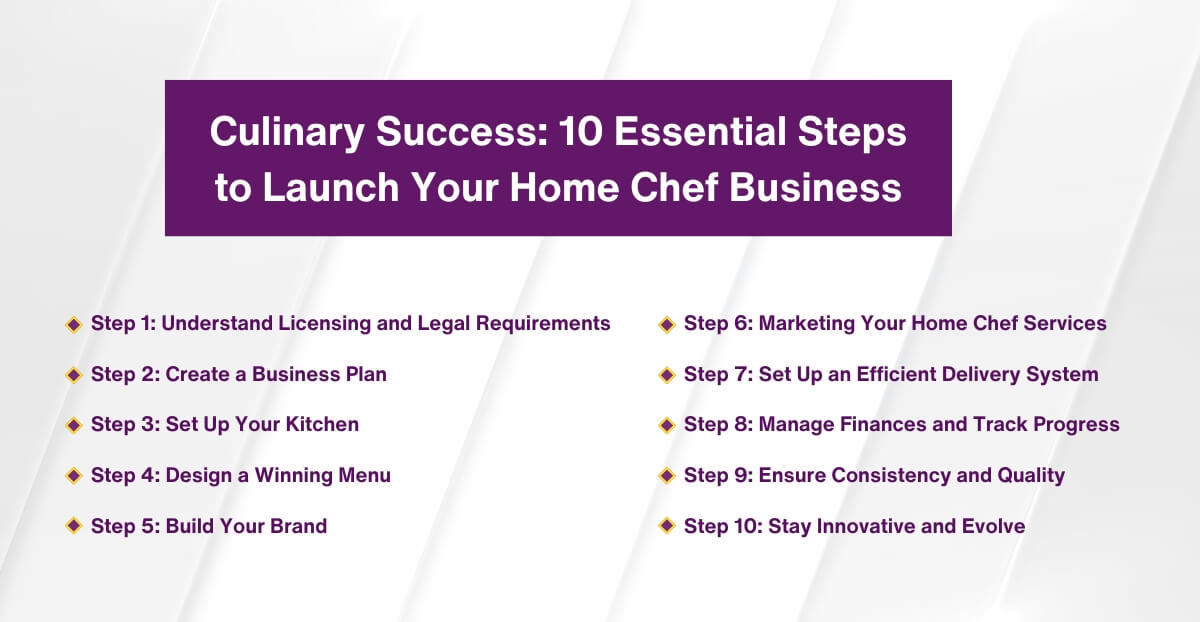
Step 6: Marketing Your Home Chef Services
Effective marketing is essential to attract and retain customers. Use a mix of online and offline strategies:
- Social Media Marketing: Share recipes, behind-the-scenes content, and food photographs on platforms like Instagram and Facebook.
- Collaborations: Partner with local businesses and event planners to reach new audiences.
- Local Advertising: Distribute flyers or advertise in community groups to promote your home chef services.
Encourage satisfied customers to leave positive reviews online, as word-of-mouth referrals significantly influence food-related businesses.
For unique promotion ideas, check out creative food business tips.
Step 7: Set Up an Efficient Delivery System
Whether you’re delivering meals locally or catering for events, an efficient delivery system ensures customer satisfaction. Start with simple solutions like phone or email orders, then upgrade to a dedicated app or online platform as your business grows.
Choose reliable delivery partners or invest in your own delivery setup. Make sure the food remains fresh, and maintain clear communication with customers about delivery timelines. A seamless experience can elevate your home chef services.
Step 8: Manage Finances and Track Progress
Use accounting software to keep track of your income, expenses, and profits. This simplifies tax preparation and ensures transparency. Maintaining separate bank accounts for your personal and business finances is highly recommended.
Monitor your progress regularly. Assess which dishes are popular, how your marketing campaigns are performing, and what improvements are needed in your services.
Step 9: Ensure Consistency and Quality
Quality is the backbone of any home chef business. Use fresh, high-quality ingredients and maintain consistency in flavours and portion sizes. Always prioritise hygiene and customer feedback.
Engage with your clients to understand their preferences and adapt your offerings accordingly. Satisfied customers are more likely to return and recommend your home chef services to others.
Step 10: Stay Innovative and Evolve
In the competitive food industry, staying innovative is essential. Keep experimenting with new recipes, stay updated on culinary trends, and incorporate customer suggestions into your menu.
Consider adding niche offerings, such as cooking classes or meal prep kits, to diversify your income streams. Regularly refine your skills through workshops or online courses to maintain your edge in the market.
Conclusion-
Starting a home chef business requires dedication, creativity, and careful planning. Following these steps, you can transform your passion for cooking into a thriving venture. Remember to prioritise quality, maintain hygiene, and build strong customer relationships for long-term success.
FAQs
1. What licences are required to start a home chef business in India?
To operate a home chef business legally in India, obtaining an FSSAI registration or licence is mandatory. This ensures your food meets safety standards. Additionally, depending on your business structure, you may need to register as a sole proprietorship or LLP and comply with tax regulations.
2. How can I promote my home chef services effectively?
Promote your home chef services by creating an active online presence through social media platforms like Instagram and Facebook. Share high-quality photos of your dishes, customer testimonials, and behind-the-scenes content. Local advertising and collaborations with event planners can also help expand your reach.
3. What kind of equipment do I need for a home chef business?
Invest in essential kitchen equipment such as commercial-grade appliances, proper storage units, and high-quality utensils. If you offer delivery, use reliable food packaging materials that maintain freshness and prevent leaks. Regular maintenance of equipment is vital for consistent quality.
4. How should I price my menu items?
To price your menu, calculate the cost of ingredients, preparation time, and packaging. Include a reasonable profit margin while ensuring the prices remain competitive. Offering packages or subscriptions for regular customers can also be a great way to attract and retain clients.
5. Can I run a home chef business without a delivery system?
Yes, you can start without a dedicated delivery system by catering to clients who prefer pick-up. However, adding delivery services can greatly expand your customer base. Collaborate with local delivery partners or set up your own logistics once your business grows.