How to Overcome Common Challenges at Your Stall During the Food Exhibition
Running a food stall at a food exhibition is an exciting venture, brimming with opportunities to showcase your culinary talents, attract new customers, and grow your business. However, the dynamic and competitive environment of such events comes with its own set of challenges. From managing overwhelming foot traffic to maintaining high standards of food quality, exhibitors must be prepared to tackle multiple hurdles to make their participation a success.
With the right strategies and preparation, you can turn these challenges into opportunities. For starters, you can check out this step-by-step guide on mastering your food stall setup, which provides valuable insights for exhibitors.
In this blog, we’ll discuss the common challenges faced during food exhibitions and explore actionable strategies to overcome them, ensuring a smooth and profitable experience.
3 Key Takeaways
- Learn to anticipate and effectively tackle food stall challenges.
- Discover strategies to handle logistical, operational, and customer-related issues.
- Maximise sales and ensure customer satisfaction at food exhibitions.
5 Common Challenges at Food Stalls During Exhibitions
Challenge 1: High Foot Traffic and Long Queues
Food exhibitions often attract large crowds, especially during peak hours. High demand can result in long queues, which may overwhelm your staff and resources. This affects service speed and the overall satisfaction of customers.
Solution:
- Simplify your menu by offering dishes that are quick to prepare and serve. Prioritise items that require minimal assembly to keep the queue moving.
- Implement queue management techniques such as token systems or digital ordering apps. These tools can streamline the process and reduce wait times significantly.
Challenge 2: Limited Space and Resources
At a food exhibition in India, stall spaces are often small and restrictive. This can make it challenging to manage equipment, ingredients, and inventory efficiently.
Solution:
- Invest in compact, modular equipment that fits easily within the available space while fulfilling operational needs.
- Pre-portion ingredients to save space and minimise preparation time. This reduces clutter and speeds up service during busy hours.
Challenge 3: Maintaining Food Quality and Hygiene
Ensuring food quality and hygiene under high-pressure conditions is one of the most critical aspects of running a stall at a food exhibition. Customers expect fresh, safe, and delicious food, no matter how busy you are.
Solution:
- Train your staff in food safety practices to maintain hygiene at all times. Regular handwashing, wearing gloves, and using clean utensils are a must.
- Use insulated containers and portable cooling systems to keep food at optimal temperatures, preserving its freshness and quality throughout the event.
Challenge 4: Power and Equipment Issues
Power outages and equipment malfunctions are common challenges at food exhibitions in India. These disruptions can delay service, resulting in lost sales and dissatisfied customers.
Solution:
- Bring backup power sources such as portable generators or high-capacity power banks to ensure uninterrupted operations.
- Keep a basic toolkit and spare parts handy to address minor equipment failures quickly. Being prepared for contingencies can save you from significant downtime.
Challenge 5: Managing Diverse Customer Preferences
Exhibitions draw a diverse audience with varying dietary preferences and restrictions. Catering to these needs is crucial for customer satisfaction.
Solution:
- Design a menu that includes a mix of vegetarian, vegan, gluten-free, and allergen-friendly options.
- Use clear and attractive signage to highlight dietary accommodations, making it easier for customers to choose dishes that suit their needs.
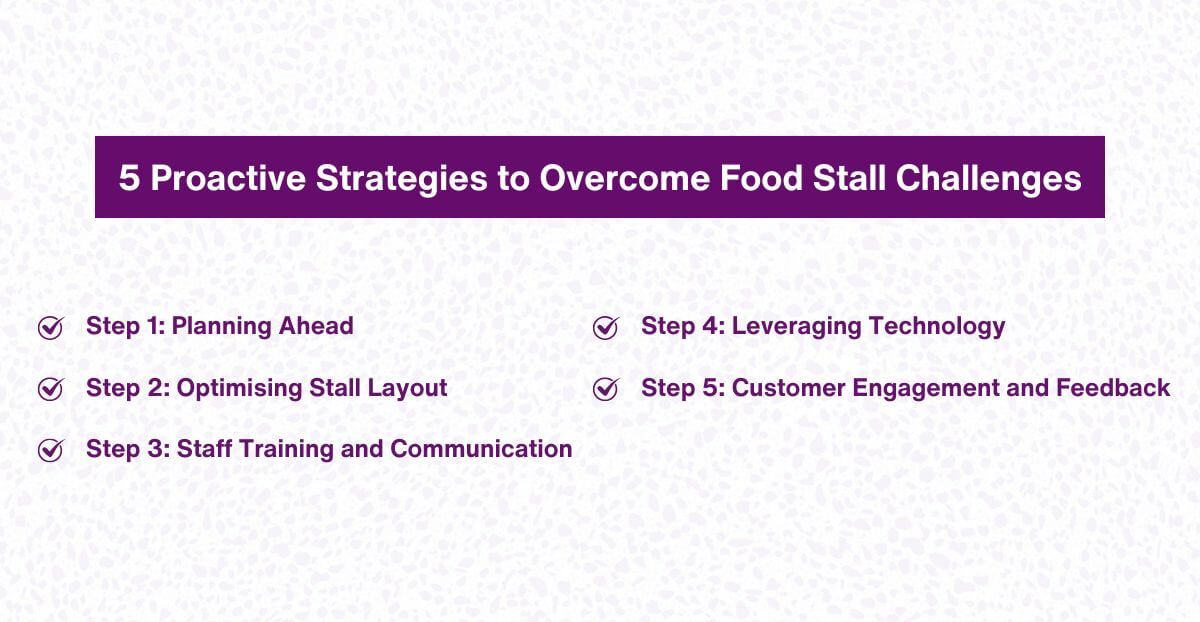
5 Proactive Strategies to Overcome Food Stall Challenges
Step 1: Planning Ahead
Successful participation in a food exhibition starts with thorough planning. Understanding the audience and anticipating challenges can save you from unnecessary hassles.
Actionable Tips:
- Research the demographics of the exhibition’s audience to tailor your menu accordingly.
- Create a detailed inventory checklist and pre-pack essentials to ensure nothing is left behind.
- Conduct a dry run of your setup and workflow to identify and resolve potential bottlenecks.
- Partner with market linkage platforms like deAsra to connect with the right audience and streamline your preparations.
Step 2: Optimising Stall Layout
An efficient stall layout can make a significant difference in managing customer flow and ensuring smooth operations.
Tips for Success:
- Arrange your stall to maximise visibility and functionality. Place high-demand items at the front to grab attention.
- Use professional signage and display boards to guide customers easily and promote your best-selling dishes.
Step 3: Staff Training and Communication
Your staff plays a pivotal role in ensuring the success of your stall at a food exhibition in India. Proper training and clear communication can help them handle busy periods effectively.
Training Essentials:
- Assign specific roles to each team member, such as cashier, server, or food preparer, to avoid confusion.
- Establish clear communication protocols, like using hand signals or walkie-talkies, to address issues without disrupting operations.
Step 4: Leveraging Technology
Technology can simplify operations and enhance customer experiences at a food exhibition.
Recommendations:
- Use POS (Point of Sale) systems for faster billing, inventory tracking, and financial management.
- Implement mobile apps for pre-orders and customer feedback collection to improve service efficiency.
Step 5: Customer Engagement and Feedback
Engaging with customers and collecting feedback is essential for building lasting impressions and improving future operations.
Engagement Strategies:
- Offer free samples or exclusive discounts to attract visitors and encourage them to try your offerings.
- Collect feedback through surveys or suggestion boxes to understand customer preferences and identify areas for improvement.
Conclusion
Participating in a food exhibition can be a rewarding experience if approached with the right mindset and preparation. By addressing common challenges such as high foot traffic, limited space, and diverse customer preferences, you can ensure smooth operations and maximise your sales.
Remember, careful planning, staff training, and leveraging technology are your keys to success. Exhibitions provide a unique platform to showcase your culinary creations and connect with a wide audience. With these strategies, you can overcome hurdles and also turn your food stall into the star attraction of the event.
FAQs
1. How can I prepare for unexpected power outages at a food exhibition?
Invest in portable generators or high-capacity power banks to keep your equipment running during outages. Test them before the event to ensure they’re functional. Additionally, keep spare extension cords and adaptors to address sudden electrical issues.
2. What’s the best way to handle customer complaints at a food exhibition?
Acknowledge complaints quickly and politely. Listen to the customer’s issue, offer a prompt solution, such as a replacement or refund, and use the feedback to improve your processes. Keeping a friendly attitude can turn a dissatisfied customer into a loyal one.
3. How do I maintain food freshness during a food exhibition?
Use insulated containers and portable refrigeration units to store perishables. Prepare food in small batches to keep it fresh and minimise wastage. Regularly monitor temperatures to ensure compliance with food safety standards.
4. What are some effective marketing tips for food exhibitions in India?
Leverage social media platforms to announce your participation and showcase menu highlights. Offer exclusive discounts or combo deals for exhibition attendees. Collaborate with influencers or bloggers who might visit the event to amplify your reach.
5. How can I cater to diverse dietary preferences at food exhibitions?
Include a mix of vegetarian, vegan, gluten-free, and allergen-friendly options on your menu. Use clear signage to highlight these dishes so customers can make informed choices. Engaging with customers to understand their preferences can also help tailor offerings effectively.