
How to Define Your Brand Voice and Personality to Connect with Your Audience
In competitive markets, a clear brand strategy starts with developing a distinctive brand voice that builds deep connections. Insights from deAsra’s dreamBIG podcast, featuring Mr. Dhruva Pakhnikar, show how branding has shifted from simple ownership marks to emotions owned by customers. Small businesses can turn everyday interactions into powerful bonds, just as a familiar shopkeeper remembers preferences and earns loyalty. For deeper ideas on growth through branding, see Branding for Business Growth.
A well-crafted brand voice adds human warmth across all channels. It reflects core values and adapts to different situations, much like choosing the right words for varied audiences. When matched to customer needs, this voice creates emotional ties, improves recall, and sets your business apart. deAsra supports and engages entrepreneurs with practical tools to shape these elements effectively.
Understanding Brand Voice and Personality
Brand voice covers the tone, style, and wording your business uses everywhere, acting as its spoken identity. It forms a vital part of any brand strategy, far beyond visuals. A young startup might choose an energetic, informal voice, while a traditional brand could use warm, genuine language that feels rooted in heritage. This approach makes customers see your business as approachable and worth returning to.
Personality links closely with brand voice, using psychological cues to shape views. Mr. Dhruva Pakhnikar shared in the dreamBIG podcast, “Brand is the soul of the organisation.” This means nurturing values guides every exchange, from posts to service calls. By considering cultural preferences and audience reactions, leaders craft a voice that feels authentic and sticks in minds.
Steps to Define Your Brand Voice
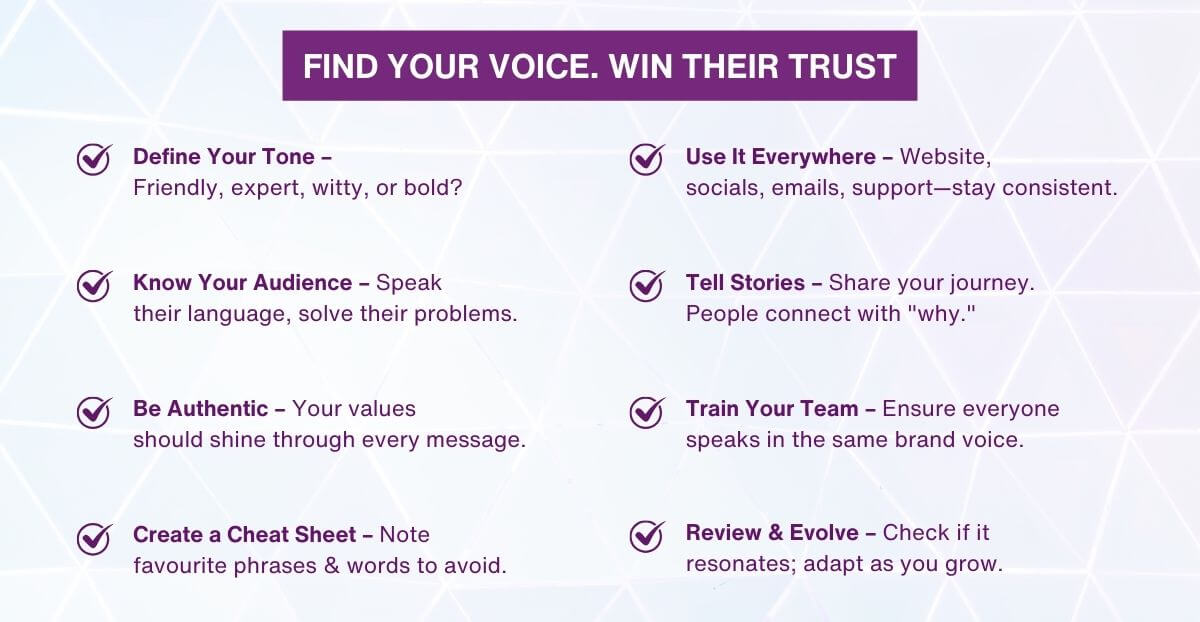
Start with your mission and long-term vision to build a strong brand strategy foundation. Bring your team together to note current practices and future goals, keeping these visible for reference. Then profile your audience by detailing real customers, their backgrounds, concerns, and aspirations to form clear personas. This step ensures your brand voice speaks straight to their interests.
Create a straightforward guide listing tone, favourite phrases, and terms to avoid, then trial it on sample messages. Add storytelling for realness, sharing background or principles that touch emotions. deAsra supports and engages businesses here with simple resources, making the process manageable. This definition stage prepares for steady use, turning ideas into a voice that truly engages.

Integrating Brand Voice into Your Strategy
Embed brand voice in all contacts as part of a unified brand strategy, from sites to packaging. Service firms benefit from standard procedures for a consistent tone, since experiences depend on words and delivery. Visuals like colours and layouts should support the voice, building a seamless feel that aids memory.
Steer clear of errors like uneven messaging or imitating rivals, which weaken uniqueness. Try a focused 30-day plan covering vision, audience insights, guidelines, and training. This blending strengthens your brand strategy and earns trust. As an expert on the matter, Mr. Dhruva Pakhnikar noted, “The perception is defined by the customer.” Aligning voice with psychology lets audiences embrace and promote your brand.
Maintaining Consistency in Brand Voice
Steadiness turns brand voice into a dependable strength within brand strategy. Check older communications for alignment, then train teams and use templates. On digital channels, apply the voice evenly in content and replies, aided by tools, while keeping oversight. Familiarity grows through regular exposure, fixing the personality firmly.
Assess impact via feedback, interaction data, and surveys on brand descriptions. Update every 18-24 months to suit changes, retaining essentials. deAsra supports and engages leaders with guidance, showing consistency builds value over time, supporting better pricing and recommendations. In busy markets, a reliable voice makes your business stand out.
Leveraging Brand Voice for Connection
Tailor brand voice to spark feelings like aspiration or reliability, based on audience understanding. Link personality to simple words or actions—innovation for tech or genuineness for crafts. This pairing, seen in brands like Boat’s youthful energy, encourages sharing and loyalty.
Include founder stories where leaders live the voice for added trust. Traditional business owners using cultural symbols reinforce realness. In your brand strategy, this personal touch deepens bonds. Resources like The Key Elements of a Successful Business Branding Strategy offer ways to merge voice with values for strong results.
Conclusion: Creating Enduring Audience Ties
Defining brand voice well lies at the heart of effective brand strategy, making your business feel alive and valued. Through vision clarity, audience focus, and steady application, you build a personality that lasts. As leaders, this guide equips you to nurture real connections for growth and loyalty. deAsra supports and engages you via the dreamBIG podcast and more—start refining your voice today.

FAQs
1. What is the difference between brand voice and brand personality?
Brand voice means the specific tone and wording in messages, while personality includes wider traits that give a human feel. They work together in brand strategy to create emotional links. A welcoming voice with creative traits, for example, makes brands inviting and builds confidence through steady use.
2. How can small businesses develop a brand voice affordably?
Begin with free guides or AI for drafts, emphasising team discussions over costly experts. deAsra supports and engages entrepreneurs via podcast wisdom from Mr. Dhruva Pakhnikar and tools. Focus on tone first, then grow step by step for solid outcomes.
3. Why does consistency matter for brand voice?
It keeps brand voice familiar across channels, fostering trust and memory. Regular contact reinforces bonds and avoids mix-ups. In brand strategy, this turns brief encounters into lasting ties, similar to long-standing brands.
4. How do I check if my brand voice works?
Monitor engagement, feedback, and surveys on brand words. Repeat business and scores also show connection strength. deAsra supports and engages in tracking, aiding brand strategy tweaks for a better fit.
5. Can brand voice change over time?
Yes, it can adjust to new audiences or market shifts, keeping core parts intact. Review regularly and add insights carefully. This flexible method in brand strategy maintains relevance and appeal.