Government Initiatives Supporting Women Entrepreneurship in India
India is experiencing a remarkable surge in women entrepreneurship. Women nationwide are stepping out of traditional roles, embracing entrepreneurship, and contributing to the economy like never before. The landscape of women entrepreneurship in India is both promising and challenging.
Despite India having 63 million micro, small, and medium enterprises (MSMEs), of which around 20% are women-owned, employing 22 to 27 million people, the country still ranked 57th among 65 countries in the Mastercard Index of Women Entrepreneurs (MIWE, 2021). This statistic highlights the untapped potential and the significant need for targeted support to elevate women entrepreneurs globally.
Recognising this, the Indian government has launched several initiatives to support and empower women entrepreneurs. These programs provide financial assistance, skill development, mentorship, and other essential resources, enabling women to start and expand their businesses. This blog will explore some of the key government initiatives designed to boost women’s entrepreneurship in India.
The Rise of Women Entrepreneurs in India
The landscape of women entrepreneurship in India has evolved significantly over the years. According to the Sixth Economic Census, nearly 14% of all businesses in India are run by women. However, this percentage is still far from the desired mark, and many women face challenges such as lack of access to finance, inadequate skill development, and societal norms that hinder their entrepreneurial aspirations.
Recognising these challenges, the Indian government has launched several initiatives to support women entrepreneurs. These initiatives aim to provide financial aid, enhance skills, and offer the necessary support to help women thrive in the business world. Below, we discuss some of the prominent government schemes that are making a difference.
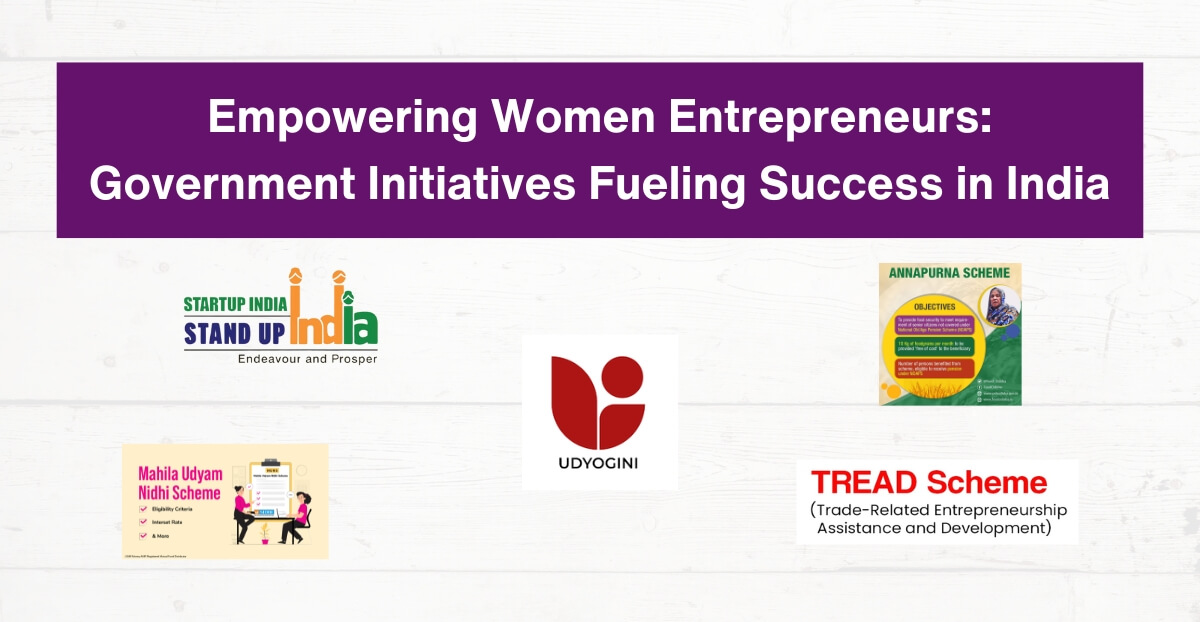
1. Udyogini Scheme
The Udyogini Scheme is a vital initiative focused on promoting women entrepreneurship by providing financial assistance to women from economically weaker sections of society. This scheme is particularly beneficial for women who are new to the entrepreneurial world and need initial support to set up their businesses.
Under the Udyogini Scheme, women can avail of loans at subsidised interest rates, with the amount varying depending on the nature of the business and the woman’s financial background. The scheme is primarily aimed at supporting small businesses in sectors like agriculture, retail, and services. Additionally, it offers training and skill development programs to equip women with the necessary knowledge and expertise to run their businesses successfully.
This initiative has played a significant role in empowering women entrepreneurs in rural areas, where access to financial resources is often limited. By providing easy access to credit and skill development, the Udyogini Scheme is helping women become self-reliant and financially independent.
2. Stand-Up India Scheme
Launched in 2016, the Stand-Up India Scheme is one of the most impactful initiatives aimed at promoting women’s entrepreneurship. This scheme is specifically designed to support women and individuals from Scheduled Castes (SC) and Scheduled Tribes (ST) by providing them with the necessary financial resources to start their businesses.
Under this scheme, each branch of a scheduled commercial bank is required to provide loans ranging from ₹10 lakhs to ₹1 crore to at least one SC/ST borrower and one woman borrower per branch. The loan can be used to start a new enterprise in manufacturing, services, or the trading sector. The scheme ensures that women entrepreneurs receive the financial backing they need to transform their business ideas into reality.
The Stand-Up India Scheme also includes a provision for hand-holding support, where borrowers receive guidance on setting up their businesses, including assistance with financial planning, market research, and compliance with regulatory requirements. This comprehensive support system has enabled many women to overcome the challenges of entrepreneurship and establish successful businesses.
3. Mahila Udyam Nidhi Scheme
The Mahila Udyam Nidhi Scheme is another significant initiative aimed at promoting women’s entrepreneurship. Launched by the Small Industries Development Bank of India (SIDBI), this scheme provides financial assistance to women setting up new projects in the small-scale sector. The scheme offers loans of up to ₹10 lakhs with flexible repayment terms, making it easier for women to start and grow their businesses.
The Mahila Udyam Nidhi Scheme is particularly beneficial for women who wish to start manufacturing units or service enterprises. The scheme also includes a provision for technical and managerial assistance, ensuring that women have the necessary skills to manage their businesses effectively.
This initiative has empowered many women entrepreneurs to take their first steps into the business world, providing them with the financial support and skills needed to succeed. By focusing on small-scale industries, the Mahila Udyam Nidhi Scheme is helping to create a more inclusive and diverse business environment in India.
4. Trade-Related Entrepreneurship Assistance and Development (TREAD) Scheme
The TREAD Scheme is designed to address the unique challenges faced by women entrepreneurs in accessing credit. This scheme, implemented by the Ministry of Micro, Small, and Medium Enterprises (MSME), provides financial assistance to women through Non-Governmental Organisations (NGOs). These NGOs act as intermediaries, helping women access the funds they need to start or expand their businesses.
The TREAD Scheme also focuses on enhancing the technical skills and entrepreneurial capabilities of women. It provides training programs, workshops, and mentoring sessions to equip women entrepreneurs with the knowledge and expertise required to run successful businesses. By addressing both the financial and skill-related challenges, the TREAD Scheme is empowering women to become active participants in the economy.
5. Annapurna Scheme
The Annapurna Scheme is specifically designed to support women in the food catering industry. This initiative provides financial assistance to women who wish to start or expand their food businesses, such as catering services, food stalls, or small restaurants.
Under the Annapurna Scheme, women can avail of loans of up to ₹50,000 to purchase kitchen equipment, utensils, and other essentials needed to set up their businesses. The scheme also includes a provision for a one-month moratorium on loan repayment, giving women entrepreneurs the time they need to establish their businesses before starting to repay the loan.
This initiative has empowered many women to turn their culinary skills into successful business ventures, providing them with the financial support needed to get started. By focusing on the food industry, the Annapurna Scheme is helping women capitalise on their strengths and contribute to the economy.
The Impact of Government Initiatives on Women’s Entrepreneurship
The various government initiatives discussed above have had a significant impact on women’s entrepreneurship in India. By providing financial assistance, skill development, and mentorship opportunities, these schemes have enabled women to overcome the barriers that often prevent them from entering the business world.
The increased participation of women entrepreneurs in the economy has led to several positive outcomes. It has contributed to economic growth, job creation, and poverty reduction, particularly in rural areas where women’s participation in the workforce is traditionally low. Additionally, these initiatives have helped to challenge societal norms and stereotypes, paving the way for greater gender equality in the business world.
However, there is still much work to be done to ensure that all women have access to the resources and opportunities they need to succeed. Continued efforts are needed to raise awareness about these schemes and ensure that they reach women in remote and underserved areas. Moreover, there is a need for ongoing support and mentorship to help women entrepreneurs navigate the challenges of running a business.
Conclusion
Women’s entrepreneurship is crucial to India’s economic growth and development. The government’s initiatives have played a vital role in supporting and empowering women entrepreneurs across the country. Programs like the Udyogini Scheme, Stand-Up India, Mahila Udyam Nidhi Scheme, and others have provided women with the financial assistance, skills, and mentorship needed to start and grow their businesses.
While these initiatives have had a significant impact, it is essential to continue building on this momentum. By supporting women’s entrepreneurship, we can create a more inclusive and dynamic business environment that benefits everyone.
To learn more about how you can take advantage of the resources, visit deAsra’s services and resources section and explore these 5 key government schemes for women entrepreneurs. These resources can help you navigate the various opportunities available and take the next steps in your entrepreneurial journey.