Choosing the Right Social Media Platforms for Business: A Simple Guide for 2025
Picture this: you’ve poured your heart into a small business – maybe crafting candles or baking treats – and now you want the world to know. Where do you start? Social media is your stage, but with so many options, it’s easy to feel lost.
Don’t worry! Inspired by Sagar Babar, a business leader who shared his wisdom on the dreamBIG podcast, this guide simplifies it all. We’ll explore social media platforms for business, pinpoint the top social media platforms for business, and answer which social media platforms should you use for your business in 2025. For extra inspiration, visit deAsra’s blog to fuel your growth!
Why Social Media Matters for Your Business
Social media is where your customers live – scrolling, liking, and sharing. As Babar says, “Everyone carries a phone, and everyone is scrolling. Your consumer is scrolling.” That’s why social media platforms for business are vital. They let you:
- Show off your products or services.
- Build trust by sharing your story.
- Open doors to new customers.
Babar stresses planning over posting: “Execution is just 20%. Planning – understanding your customers, knowing where they go – that’s the most important part.” Before choosing which social media platforms should you use for your business, think about who your customers are. This guide highlights the top social media platforms for businesses to match your goals.
The Top Social Media Platforms for Business in 2025
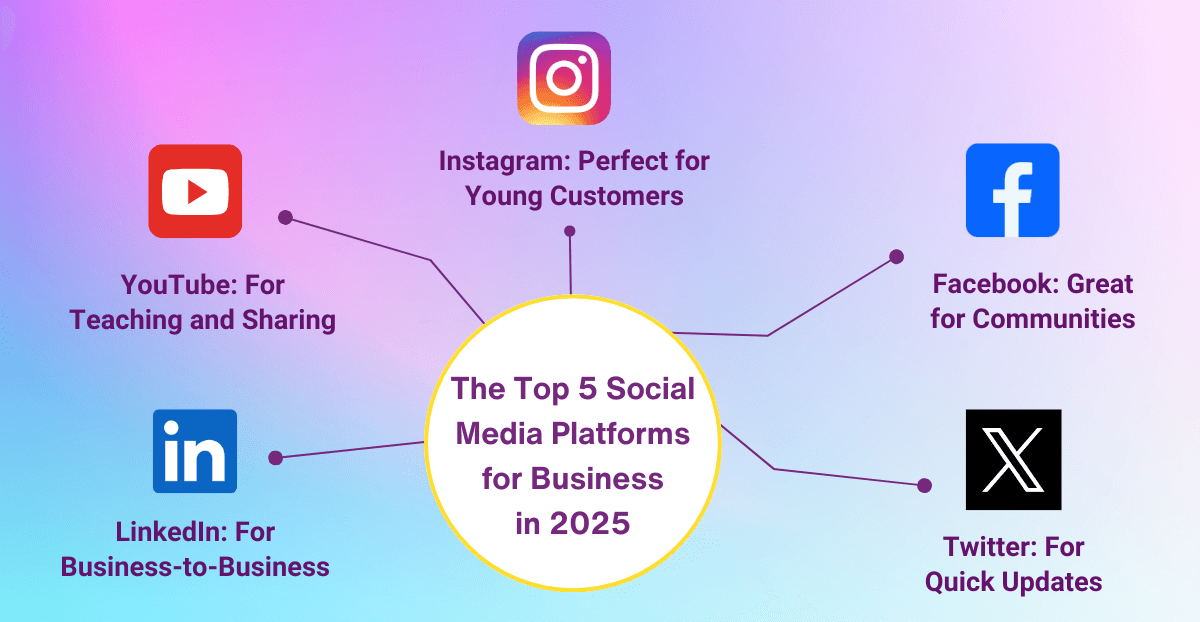
Let’s dive into the top social media platforms for business, each with unique strengths. Babar names five key players: Instagram, Facebook, YouTube, LinkedIn, and Twitter. Here’s how they work for you, with details to make your choice clear.
1. Instagram: Perfect for Young Customers
Instagram is a powerhouse among social media platforms for business, especially for reaching people under 30. Babar explains, “If your customer is under 30, this is your platform.” It shines for visual businesses like fashion or food, thanks to photos and short videos called Reels.
- Who’s on Instagram? Young people who love trends. A jewellery maker can post sparkling designs, while a café can share latte art videos.
- What content works? Bright photos, Reels, and Stories. Babar notes, “Instagram videos are currently the most important content format.”
- How often to post? Every two days keeps you visible without overwhelming followers.
- Why choose it? It’s where young customers discover brands. A consistent style, like bold colours or quirky captions, hooks them.
- How to start? Use your phone to snap photos or record short clips. Try filters to make posts pop.
- Challenges: It’s competitive, so stand out with unique ideas, like behind-the-scenes clips.
Deciding which social media platforms should you use for your business? Instagram is your go-to if your audience craves visuals and trends.
2. Facebook: Great for Communities
Facebook ranks high among social media platforms for business, ideal for customers over 30 or in smaller cities. Babar says, “Facebook: For the 30+ audience, great for communities.” It’s perfect for building groups where fans connect with your brand.
- Who’s on Facebook? Families, locals, and older users. A bakery can share recipes, or a shop can post local events.
- What content works? Photos, short videos, and posts that spark conversation, like asking for customer feedback.
- How often to post? Every two days, as Babar suggests, keeps your page active.
- Why choose it? It fosters loyalty. Groups let you chat directly with customers, making them feel special.
- How to start? Create a free business page, add your logo, and post about your products or story.
- Challenges: Engagement takes effort. Reply to comments to keep the community alive.
When picking which social media platforms should you use for your business, choose Facebook to build trust with local or older audiences.
3. YouTube: For Teaching and Sharing
YouTube is a gem among social media platforms for businesses to share videos that teach or inspire. Babar highlights, “YouTube: For a mature audience, especially for long-form content.” It suits businesses that want to explain their value.
- Who’s on YouTube? All ages, but especially those seeking knowledge. A tutor can post lessons, or a chef can share cooking tips.
- What content works? Short videos (like Shorts) for quick tips or longer ones for in-depth guides.
- How often to post? Weekly videos are enough, balancing quality and effort.
- Why choose it? Videos keep viewers hooked. Babar advises, “If you’ve built an audience, move to YouTube for nurturing.”
- How to start? Record simple videos with your phone. Add clear titles like “How to Use Our Product.”
- Challenges: Videos take time to create, so plan topics.
Wondering which social media platforms you should use for your business? YouTube is ideal for teaching or storytelling.
4. LinkedIn: For Business-to-Business
LinkedIn stands out among social media platforms for businesses to connect with companies. Babar notes, “LinkedIn: Ideal for B2B – businesses selling to other businesses.” It’s where professionals trust your expertise.
- Who’s on LinkedIn? Business owners, managers, and workers. An IT firm can share tech tips, or a consultant can post advice.
- What content works? Articles, short videos, or posts about industry trends. Babar adds, “LinkedIn now has video, but it still leans towards written content.”
- How often to post? Every three days, focusing on quality insights.
- Why choose it? It builds credibility. Sharing knowledge makes companies trust you.
- How to start? Set up a profile, list your services, and share helpful tips.
- Challenges: Keep posts professional – avoid casual tones that work elsewhere.
LinkedIn is best for professional clients when choosing which social media platforms you should use for your business.
5. Twitter: For Quick Updates
Twitter is one of the top social media platforms for business for fast, bite-sized posts. Babar describes it as “a mix, more for branding and presence than direct marketing.” It’s about staying visible.
- Who’s on Twitter? A mix of ages, often following news or brands. A shop can tweet about new stock or sales.
- What content works? Short posts, photos, or links to your website. Keep it real, not sales-oriented.
- How often to post? Daily tweets keep you active without much effort.
- Why choose it? It shows your brand’s personality, like a café tweeting a funny coffee quote.
- How to start? Sign up, follow local businesses, and tweet simple updates.
- Challenges: Tweets get buried fast, so post often and engage with others.
Still unsure which social media platforms should you use for your business? Twitter fits if you want quick, casual visibility.
How to Choose the Right Platform for Your Business
With so many social media platforms for business, Babar’s advice is clear: “Start by knowing: where is my customer? Go there.” Ask:
- Who are they? Young trendsetters? Local families? Professionals?
- What do I offer? Visual products suit Instagram; services fit LinkedIn.
- What can I do? Love videos? Try YouTube. Prefer writing? LinkedIn calls.
A florist might pick Instagram for photos, while a trainer might use YouTube for workouts. The top social media platforms for business depend on your customers.
Tips to Use Social Media Platforms for Business
Babar’s wisdom guides us here: “Content is king.” To succeed on social media platforms for business:
- Plan Smart: “Know where your customer goes, what they read,” says Babar.
- Stay Regular: Post every two days on Instagram or Facebook, and three days on LinkedIn.
- Share Stories: Babar built trust by sharing his journey – do the same.
- Talk Back: “Content without engagement is useless,” he warns. Reply to followers.
- Check Data: Use tools like Instagram Insights weekly, as Babar suggests.
Learn more from deAsra’s social media guide.
Why You Can’t Ignore Social Media in 2025
Babar puts it bluntly: “In today’s world, you can’t do business without social media.” Social media platforms for business offer:
- Visibility: Posts put your brand in front of new eyes.
- Trust: “Share knowledge,” Babar says, like tips or failures, to seem human.
- Growth: Engagement turns followers into buyers.
The top social media platforms for business are your ticket to growth.
Common Mistakes to Avoid
Babar warns against pitfalls on social media platforms for business:
- No Plan: Random posts waste time.
- Ignoring Fans: Reply, or they’ll lose interest.
- Copying: “You need your unique story,” Babar insists.
- Quitting Early: He grew from 50 views to 20,000 with patience.
Choose which social media platforms should you use for your business and stick to it.
Getting Started: A Simple Plan for 2025
Babar’s advice for social media platforms for business: “Educate yourself, create content, stay disciplined.” Try this:
- Pick One: Instagram or Facebook, based on your audience.
- Plan Content: Babar suggests two months’ worth to stay ahead.
- Post Often: Every two days for most platforms.
- Engage: Answer comments to build bonds.
- Improve: Check analytics to grow smarter.
Unsure which social media platforms should you use for your business? Start small and learn.
Final Thoughts
In 2025, social media platforms for business are your bridge to customers. Babar’s insights show the way: Instagram for youth, Facebook for communities, YouTube for teaching, LinkedIn for professionals, and Twitter for updates. The top social media platforms for business thrive when you know your audience and share real stories. “Discipline will make you stand out,” Babar says. So, pick which social media platforms should you use for your business, start posting, and watch your dreams grow!
FAQs
1. Why do I need social media platforms for business if I’m just starting?
Social media is where your customers are, even for a small business. Sagar Babar says, “Everyone carries a phone, right? And everyone is scrolling. Your consumer is scrolling.” Using social media platforms for business helps you show what you sell, build trust, and find new customers. For example, a small baker can post cake photos on Instagram to attract locals. Start with one platform to keep it simple and grow from there.
2. How do I know which social media platforms should you use for your business?
It depends on your customers. Babar advises, “Start by knowing: where is my customer? Go there.” If they’re young, try Instagram. If they’re older or local, use Facebook. For teaching, pick YouTube, or for business clients, choose LinkedIn. Twitter works for quick updates. Think about what you sell and who buys it to decide which social media platforms should you use for your business. A craft shop might start with Instagram for visuals, while a consultant picks LinkedIn.
3. What are the top social media platforms for business in 2025?
The top social media platforms for business are Instagram, Facebook, YouTube, LinkedIn, and Twitter. Instagram suits young people with photos and videos. Facebook builds local communities. YouTube is great for teaching through videos. LinkedIn connects you to businesses. Twitter keeps your brand visible with short posts. Babar highlights these as key choices, so pick one or two from the top social media platforms for business based on your audience.
4. Do I need to post every day on social media platforms for business?
No, daily posting isn’t always needed. Babar suggests, “Instagram: every 2 days. LinkedIn: every 3 days. Facebook: every 2 days.” This keeps you active without stress. Plan your posts ahead – Babar recommends having two months’ worth ready. For social media platforms for business like YouTube, weekly videos are enough. Focus on quality and reply to comments to build trust, no matter how often you post.