AI in Business Operations: How to Automate Repetitive Tasks and Save Time
Picture this: routine chores vanish from your inbox, invoices dispatch themselves, stock adjusts instantly, and reports materialise effortlessly. AI in business makes this a daily reality for leaders in every sector. As discussed in this insightful piece on AI for business growth, smart tools allow smaller enterprises to match the efficiency of giants. AI for small businesses reclaims hours lost to repetition, so you can prioritise strategy and innovation. The change delivers clear time savings and reshapes operations.
AI in business has moved beyond a luxury status. AI solutions for business are now accessible, affordable, and highly effective. These tools manage the routine across industries, freeing leaders to fuel growth. deAsra supports and engages entrepreneurs here, via the dreamBIG podcast and expert guidance.
Automating Invoicing: Faster Payments, Fewer Errors
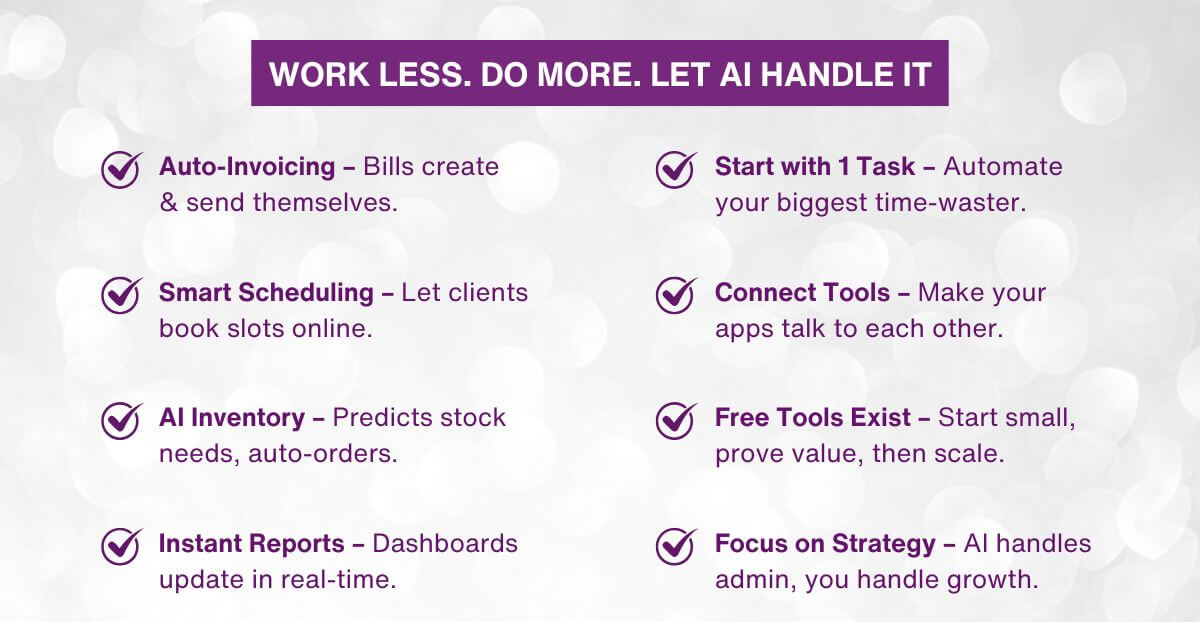
Manual invoicing wastes time on data entry, approvals, and fixes. AI in business ends there. Tools scan receipts, extract order details, and produce accurate invoices immediately. QuickBooks or Zoho Invoice connect to banks, reconciling payments and spotting issues automatically.
Follow-ups gain strength too. AI for small business forecasts delays from history and sends reminders. Cash flow strengthens, admin time plummets, and teams focus on analysis. Dr. Ameya Pangarkar, on the dreamBIG podcast, says: “AI transforms operations, saves time, and drives growth for small businesses, allowing them to compete without significant costs.”
Streamlining Scheduling: Ending Calendar Chaos
Arranging meetings or shifts can consume a significant portion of your day. AI in business removes the hassle. Calendly or Microsoft Bookings adapts to your schedule, handles time zones, and manages changes smoothly. Clients self-book, with automatic confirmations and reminders.
Transforming Inventory Management: Precision Without Paperwork
Balancing stock ties up resources—excess costs money, shortages cost sales. AI in business delivers real-time tracking and forecasting. Shopify-integrated systems watch sales and reorder precisely when needed.
AI for small businesses includes alerts for slow items or expiries, avoiding losses. Visibility rises, manual checks fade. Retail and manufacturing leaders see lower holding costs and fewer crises.

Simplifying Internal Reporting: Insights in Seconds
Weekly report compilation from spreadsheets exhausts everyone. AI in business automates it fully. Power BI or Google Data Studio fetch live data, builds dashboards, and refreshes them constantly. Query in everyday language for instant answers.
AI solutions for business detect trends early, like cost rises or product winners. Decisions accelerate with reliable, current information. This blog on AI reshaping industry trends in 2026 highlights how these features will advance further.
Building an Integrated AI Ecosystem
Maximum value emerges from connected tools. AI in business excels when payments update stock, orders book slots, and levels feed reports. Zapier or native integrations enable effortless data flow.
Begin modestly: target one issue, track savings, then grow. AI for small business designs prioritise ease, with simple setups and templates. deAsra supports and engages via the dreamBIG podcast, offering proven examples and steps.
Addressing Common Concerns
Price and complexity deter many. However, AI solutions for business provide free starters or low fees that repay quickly in saved hours. Security features strong encryption and regulatory compliance. Interfaces become intuitive fast.
Pick one process to start, include your team, and expand assuredly. Returns arrive promptly.
Looking Ahead
From 2026 onward, AI in business will integrate deeper, predicting needs proactively. Early adopters of AI for small businesses secure advantages in efficiency and responsiveness.
AI in business operations provides a direct route to recovered time and sharper priorities. Automating invoicing, scheduling, inventory, and reporting yields quick, lasting gains. AI for small businesses plus wider AI solutions for businesses equalise opportunities, letting any scale operate intelligently. deAsra supports and engages this shift through the dreamBIG podcast and resources. Dr. Ameya Pangarkar concludes: “AI solutions help small ventures compete with big players; a practical approach to adopting AI without stress.” The technology awaits—act now and boost your productivity.

FAQs
1. Why does deAsra focus specifically on nano-entrepreneurs rather than all MSMEs?
Nano-entrepreneurs represent the largest segment within the MSME ecosystem and account for a significant share of employment. While MSMEs contribute substantially to the economy, job creation at scale becomes possible only when nano-enterprises transition from survival to structured growth. By focusing on this segment, deAsra addresses the point where targeted support can unlock the highest employment potential.
2. How does the Dream 50 stage contribute to sustainable job creation?
The Dream 50 stage refers to businesses aspiring to cross ₹50 lakhs in annual revenue. At this stage, enterprises begin formalising operations, investing in systems, building teams, and expanding market reach. These changes enable consistent job creation, moving beyond informal or ad-hoc employment to more stable and scalable livelihoods.
3. What role do research and data play in deAsra’s approach to entrepreneurship support?
Research and data help ensure that entrepreneurship support is grounded in reality. Through INSIGHTs, deAsra consolidates data, conducts research, and develops tools that surface patterns across sectors and regions. This evidence-led approach informs policymakers, ecosystem builders, and institutions, leading to more effective and entrepreneur-centric interventions.
4. How do storytelling and knowledge-sharing platforms support entrepreneur growth?
Entrepreneurs often learn best from real experiences. Platforms like Yashaswi Udyojak share relatable journeys, expert insights, and practical lessons that reduce information gaps and build confidence. These stories help entrepreneurs anticipate challenges, learn from peers, and make more informed decisions at different stages of growth.
5. What does deAsra’s milestone of engaging over 500,000 entrepreneurs signify for the future?
The milestone reflects growing trust and reach, but more importantly, it signals responsibility. It underscores the need to deepen support, strengthen ecosystems, and enable more nano-entrepreneurs to grow into job creators. As deAsra moves forward in 2026, the focus remains on translating engagement into sustained business growth and employment outcomes.