
How to Build a High-Performing Team: A Manager’s Step-by-Step Guide
Imagine leading a team where ideas spark effortlessly, obstacles become opportunities, and results exceed expectations. This is the reality of high-performing teams. In deAsra Foundation’s dreamBIG podcast, host Mr. Anand Godse discusses practical insights with guests like Mr. Adwait Kurlekar, emphasising that trust and delegation unlock growth for small businesses.
Leaders who shift from solo efforts to collaborative strength scale faster. For effective strategies, see this team management guide. This blog offers a clear path to building high-performing teams, with steps on how to build a high-performing team suited for industry leaders across sectors.
Understanding Team Development Stages
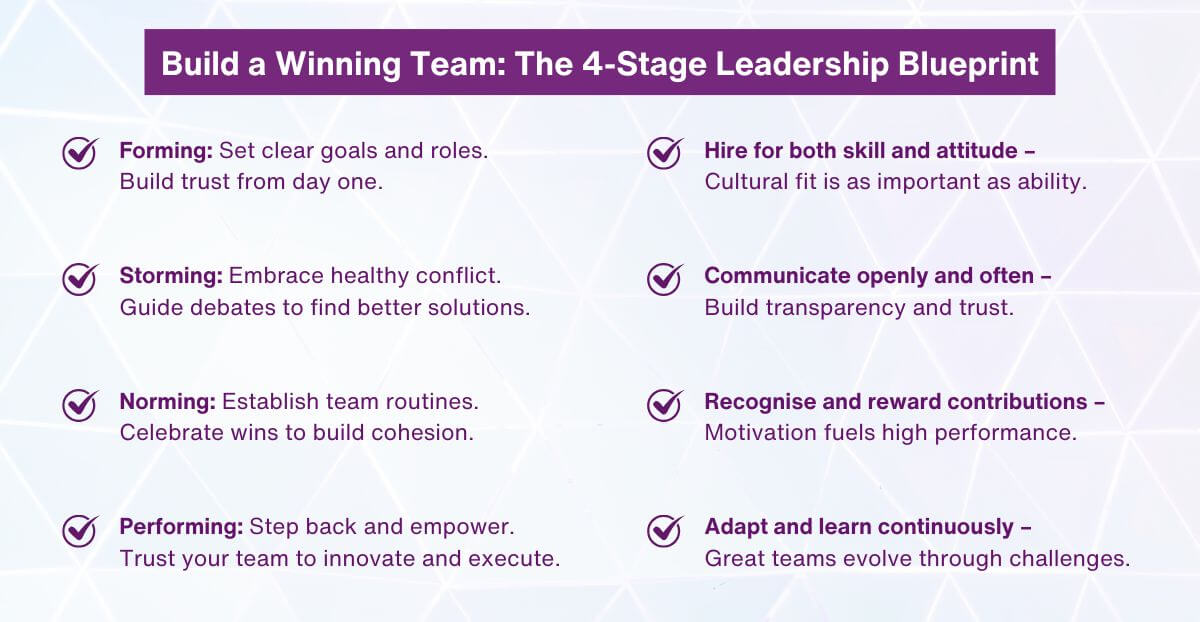
Teams evolve through distinct phases: forming, storming, norming, and performing. Recognising these stages helps managers guide groups towards excellence. In forming, members assemble and seek direction. Clarity on goals and roles builds early trust, essential for high-performing teams. Industry leaders who invest time here create alignment that lasts.
Selection matters greatly in this phase. Choose talent for skills and cultural fit. deAsra supports and engages entrepreneurs with mentoring to spot the right people. This strong start accelerates building high-performing teams, setting a foundation for how to build a high-performing team that delivers consistent results.

Navigating Conflicts in Storming
Storming brings clashes as personalities and ideas collide. This phase challenges managers but strengthens teams when handled well. Encourage open debates to resolve issues constructively. High-performing teams grow resilient through such friction, gaining a deeper understanding.
Mediate calmly and establish ground rules. deAsra supports and engages business owners with tools for accountability. Mr. Adwait Kurlekar notes in the dreamBIG podcast: “Handling conflicts with empathy strengthens bonds and boosts productivity.” Mastering storming is vital for building high-performing teams and progressing in how to build a high-performing team.
Building Harmony in Norming
Norming sees routines form and respect grow. Reinforce positive habits like regular feedback and shared decisions. Celebrate milestones to sustain energy. This stage aligns high-performing teams towards unified goals, reducing wasted effort.
Clarify processes and roles further. Use tools for better coordination, as deAsra supports and engages leaders in workflow optimisation. Norming bridges individual work to collective power, a key step in building high-performing teams and how to build a high-performing team.
Reaching Peak in Performing
Performing is where high-performing teams shine with autonomy and innovation. Managers facilitate rather than direct, empowering independent problem-solving. This drives efficiency and creativity across industries.
Support ongoing growth through training. deAsra supports and engages entrepreneurs with resources to enhance capabilities. Mr. Adwait Kurlekar shares: “Empowering teams through trust and recognition unlocks their full potential.” This phase crowns efforts in building high-performing teams and completes how to build a high-performing team.
Effective Recruitment Strategies
Hiring right underpins high-performing teams. Define roles clearly and source diversely. Assess behavioural fit alongside skills for balance.
Structure onboarding with clear expectations. deAsra supports and engages small businesses in streamlined recruitment. Strong hiring speeds building high-performing teams, a foundational move in how to build a high-performing team.
Fostering Leadership and Communication
Leadership inspires high-performing teams by example and vision-sharing. Listen actively to build trust and encourage input.
Hold regular meetings for alignment. Explore this team management overview for core skills. deAsra supports and engages leaders via mentoring. Open channels are crucial for building high-performing teams and how to build a high-performing team.
Motivation Through Recognition
Recognition fuels high-performing teams. Acknowledge efforts publicly and tailor rewards personally to lift morale.
Provide feedback and development paths. deAsra supports and engages entrepreneurs in fostering ownership. This sustains drive, supporting building high-performing teams and effective ways to build a high-performing team.
Adapting to Challenges
High-performing teams thrive on adaptability. Spot issues early and involve members in solutions for resilience.
Encourage flexibility with cross-training. deAsra supports and engages businesses during change. This turns hurdles into advantages in building high-performing teams and explains how to build a high-performing team.
Measuring and Improving Performance
Track metrics like productivity and satisfaction for high-performing teams. Use reviews to refine strategies continuously.
Promote learning via surveys and workshops. deAsra supports and engages leaders with assessment tools. Data guides lasting success in building high-performing teams and how to build a high-performing team.
Conclusion
Building high-performing teams requires deliberate steps through forming, storming, norming, and performing. Industry leaders who prioritise communication, trust, and growth create outstanding groups. deAsra supports and engages entrepreneurs via its dreamBIG podcast and resources for practical application. Master how to build a high-performing team to turn ambitions into achievements.

FAQs
1. What are the main stages of team development?
Team development follows Tuckman’s model: forming (assembly and direction), storming (conflicts arise), norming (routines and respect build), and performing (peak efficiency and autonomy). Recognising these stages helps managers nurture high-performing teams effectively.
2. How should conflicts be handled in storming?
Create a safe space for open discussion, focus on issues rather than personalities, and mediate neutrally with clear ground rules. Handled with empathy, conflicts strengthen bonds and resilience in high-performing teams.
3. Why does recognition matter for motivation?
Recognition meets the need for appreciation, boosts morale, reinforces positive behaviours, and encourages greater effort and loyalty. Consistent, personalised acknowledgement sustains energy in high-performing teams.
4. What tools support team management?
Project management platforms like Trello or Asana, along with communication tools such as Slack, improve task tracking and collaboration. deAsra supports and engages users with recommendations to enhance coordination for high-performing teams.
5. How is team performance measured?
Use metrics like goal achievement, productivity, satisfaction surveys, and retention rates, combined with regular reviews. This data-driven approach identifies strengths and guides improvements in high-performing teams.