How to Develop an Effective Employee Training Program: A 5-Step Guide
“Training is an investment, not a cost. Not training someone who stays is far worse than training someone who leaves.” – Mr. Sajiri, Founder, Anand HR Solutions
Why Employee Training Matters for Small Businesses
Imagine running a bustling café where your barista brews perfect lattes but struggles with the till during rush hour. Or picture a boutique shop where staff charm customers yet fumble stock updates. These gaps hurt sales, frustrate teams, and stall growth. Employee training bridges such gaps. It equips your people with the skills to shine, boosts productivity, and keeps your business competitive in a rapidly changing market.
Small businesses often skip employee training programs because budgets feel tight. Yet Mr. Sajiri, with over 16 years in HR for SMEs, insists that skipping employee training and development risks far more. As highlighted in the dreamBIG podcast on training and retention, even teams of five thrive when owners invest time upfront.

Step 1: Identify Employee Training Needs
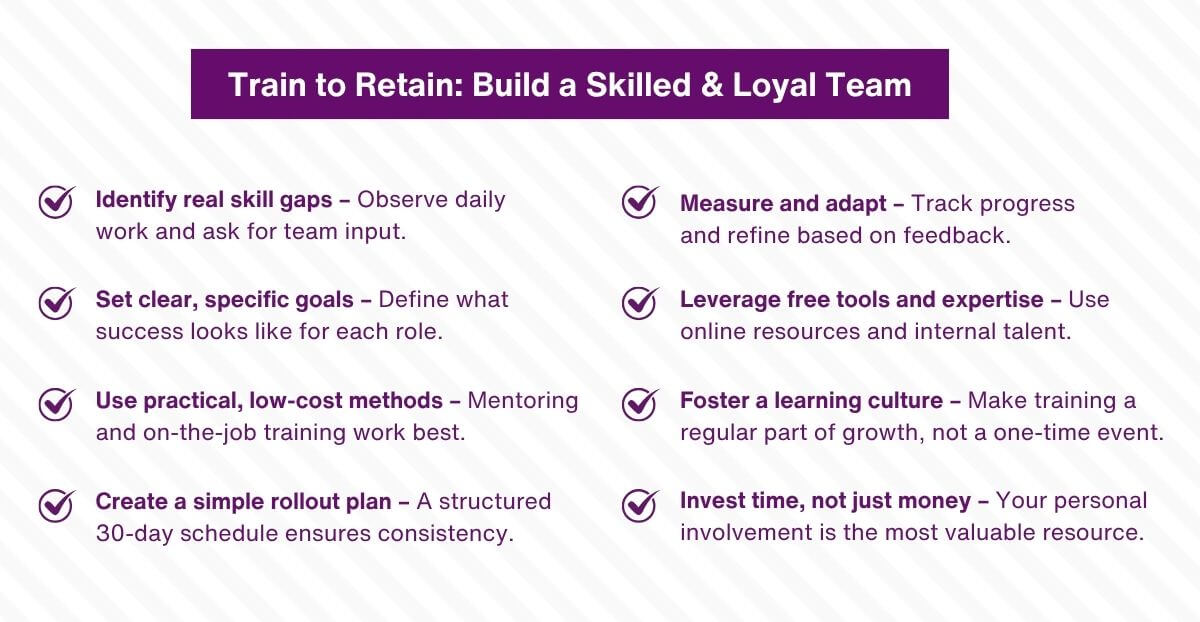
Start by spotting skill gaps. Observe daily operations. Ask: Where do tasks slow down? Which errors repeat? Which feedback do customers give?
Gather input directly. Chat with team members during breaks. Run quick surveys with three questions: What tasks feel tough? What skills would help you excel? What tools confuse you?
Map roles to needs. For a retail store, cashiers might need POS mastery. Delivery riders could require route-planning apps. Prioritise based on business impact. Focus on gaps that affect revenue or customer joy first.
Step 2: Set Clear Learning Objectives for Employee Training and Development
Vague goals waste time. Define what success looks like. Use the SMART framework: Specific, Measurable, Achievable, Relevant, Time-bound.
Break objectives into bite-sized wins. Instead of “improve sales,” aim for “increase upsell rate by 15% in 30 days through product knowledge sessions.”
Align with business aims. If expanding online, train on e-commerce tools. Tie to individual growth. A junior marketer might target “create three social media campaigns independently by quarter end.”
Share objectives openly. Post them on a shared board or chat group. This builds buy-in. Review quarterly. Adjust as skills grow.
Clear objectives turn employee training into a roadmap. They motivate staff by showing progress paths.
Step 3: Choose the Right Methods for Employee Training Programs
Small teams need flexible, low-cost options. Skip fancy classrooms. Embrace hands-on approaches.
- On-the-job mentoring: Pair newcomers with experienced staff. A senior chef demonstrates plating while explaining steps. Costs nothing but time.
- Micro-learning online: Use free platforms like YouTube or Khan Academy for 10-minute videos on Excel basics. Schedule one module weekly.
- Workshops in-house: Gather for 45-minute sessions on customer handling. Role-play scenarios. Invite a local expert occasionally for £50.
- Peer skill swaps: Host “Teach-Back Fridays.” One employee shares a tip, like inventory shortcuts. Builds camaraderie.
Blend methods. Start with mentoring for role clarity. Follow with online refreshers. Tools like Google Workspace simplify scheduling. Trello tracks progress visually.
As Mr. Sajiri notes, “Spend time with the person, give them role clarity, help them understand what’s expected.” These methods make employee training and development practical and engaging.
Step 4: Implement Your Employee Training Plan
Rollout requires structure. Create a 30-day onboarding blueprint. Day 1: Welcome tour and basics. Days 2-7: Shadowing shifts. Weeks 2-4: Solo tasks with check-ins.
Assign accountability. Owners handle initial sessions in tiny teams. Delegate to seniors as you grow. Document everything. Use a shared doc: “Training Log – Week 1: Completed POS demo.”
Make it fun. End sessions with quick wins, like a coffee break quiz. Reward completion with shout-outs or small vouchers.
Track attendance gently. A simple checklist prevents skips. Communicate benefits: “This employee training helps you earn more tips through faster service.”
Consistency builds habits. Even one hour daily compounds. Implementation turns plans into employee training programs that stick.
Step 5: Evaluate and Refine Employee Training and Development
Measure what works. After 30 days, assess outcomes. Did upsells rise? Survey staff: On a scale of 1-10, how confident do you feel?
Use simple metrics. Track error rates pre- and post-training. Monitor productivity, like orders per hour. Gather stories: “Training helped me handle complaints calmly.”
Celebrate successes. Share wins in team huddles. “Our employee training cut refund requests by 20%!”
Refine based on feedback. If online videos bore, switch to live demos. Budget 10% of time for tweaks.
Ongoing evaluation keeps employee training fresh. It proves ROI to sceptics. As the blog “10 Benefits of Training Employees in Small Businesses” explains, regular checks amplify gains such as loyalty and innovation.
Cost-Effective Employee Training Ideas and Tools
Stretch every pound. Leverage free resources:
- Internal experts: Tap team strengths. A tech-savvy admin trains on apps.
- Government schemes: Check local grants for SME skill funding.
- Digital tools: Canva for visuals, Zoom for virtual sessions (free tier).
Examples in action: A bakery owner trained staff on hygiene via 15-minute daily demos. Waste dropped 30%. A consultancy used peer mentoring; client satisfaction soared.
Start small. Invest one hour weekly per employee. Returns multiply through efficiency.
Building a Culture of Employee Training and Development
Tie training to retention. Show growth paths. “Master this, move to supervisor in six months.”
Foster openness. Encourage questions without fear. Mr. Sajiri stresses, “Create a healthy, transparent culture where employees feel comfortable approaching you.”
Link to perks. Better skills mean hikes or bonuses. This counters poaching.
Even nano businesses succeed. A home-based tailor trained apprentices hands-on; turnover halved.
Conclusion
Employee training fuels growth, no matter your size. Follow these five steps: Identify needs, set objectives, choose methods, implement consistently, evaluate relentlessly. Embrace employee training programs that fit your world. Draw from employee training and development successes like those Mr. Sajiri shares.
Your team deserves this investment. Begin with one role tomorrow. Watch productivity climb, engagement soar, and your business thrive. As Mr. Sajiri reminds us, treat employee training like insurance – essential for the unexpected.

FAQs
1. Why prioritise employee training in small businesses with tight budgets?
Small businesses compete through agility and service. Employee training sharpens these edges without huge spends. It turns average hires into stars, cuts mistakes, and lifts morale. Trained staff handle more, freeing owners for strategy. Over time, it reduces hiring costs from turnover.
2. How does employee training and development differ from casual learning?
Casual learning happens by accident, like watching a colleague. Employee training and development plans ahead with goals and tracking. It ensures everyone gains specific skills tied to business needs. This structured approach delivers measurable improvements in output and confidence.
3. What if my team resists employee training programs?
Address resistance head-on with dialogue. Explain benefits: easier work, better pay potential. Start small with high-impact sessions. Involve them in planning. Appreciation works wonders – recognise quick learners publicly. Persistence builds acceptance.
4. Can employee training prevent staff leaving for higher pay?
It helps but pairs with fair wages. Employee training shows investment in growth, creating loyalty. Combine with clear career talks. For replaceable roles, accept natural churn. Focus retention efforts on key players through tailored employee training programs.
5. How often should we run employee training and development?
Make it ongoing, not one-off. Schedule monthly refreshers plus quarterly deep dives. Tie to business changes, like new software. Daily micro-moments count in tiny teams. Regular employee training keeps skills sharp and teams adaptable.