How to Create a Digital Marketing Strategy: A Step-by-Step Guide
“Digital marketing is the right message to the right people through the right channel,” says Mr. Kunal Bajaj, founder of AltXED, on the Dream Big Podcast by deAsra Foundation. With 850 million Indians active online, a well-crafted digital marketing strategy is essential for businesses to stand out. Whether you’re leading a small startup or a large enterprise, this guide simplifies the process of building a digital marketing strategy that drives growth. From setting goals to measuring success, we’ll walk you through each step in a clear, actionable way, tailored especially for digital marketing for small businesses.

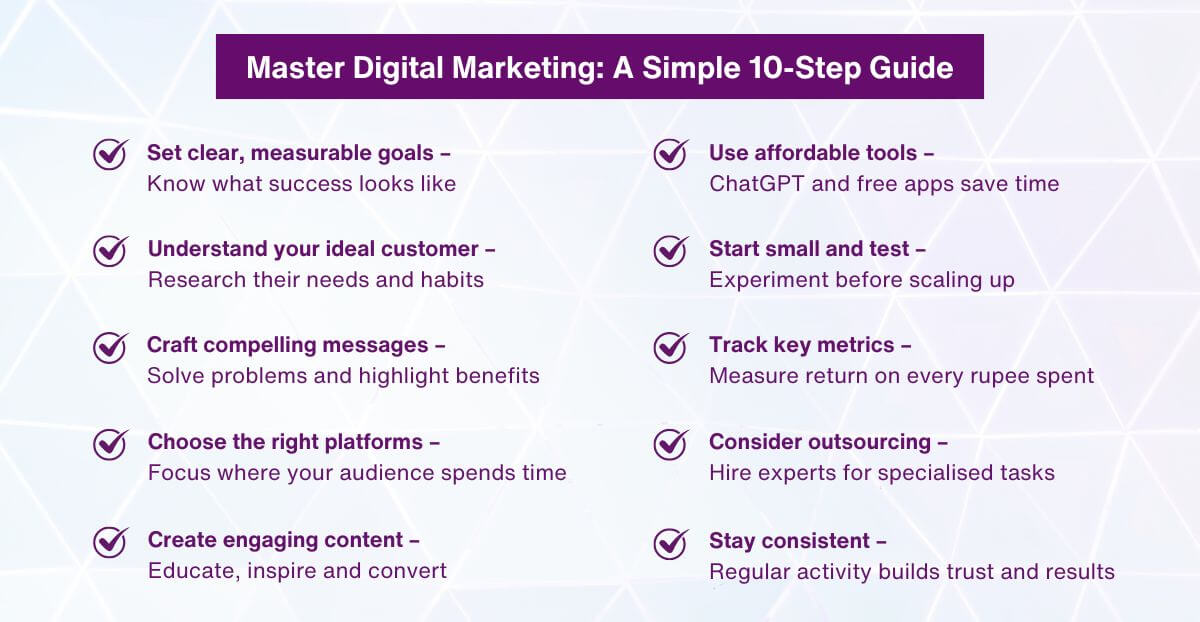
Step 1: Set Clear Goals for Your Digital Marketing Strategy
Every effective digital marketing strategy begins with clear objectives. Mr Kunal highlights three core purposes of marketing: visibility, credibility, and lead generation. For digital marketing for small businesses, these translate into:
- Visibility: Getting your business noticed by the right audience.
- Credibility: Building trust through customer reviews or success stories.
- Lead Generation: Turning interest into inquiries or sales.
Ask yourself: What do you want to achieve? More website traffic, increased sales, or stronger brand recognition? For a small business, like a local café, a goal might be “Increase foot traffic by 15% in three months.” Write down 1–3 specific, measurable goals to guide your digital marketing strategy.
Step 2: Know Your Audience Inside Out
A digital marketing strategy fails without a deep understanding of your audience. Industry leaders must research their customers’ needs, behaviours, and online habits. For digital marketing for small businesses, focus on:
- Demographics: Age, location, income level (e.g., young professionals in tier-1 cities or families in tier-2 areas).
- Pain Points: What problems does your product solve? A café might address the need for quick, affordable meals.
- Online Habits: Where does your audience hang out? Instagram for younger crowds, WhatsApp for B2B, or Google for local searches?
Use free tools like Google Analytics or Meta Business Suite to gather insights. For example, a boutique might discover customers search “fashion near me,” making Google My Business a priority.
Step 3: Build a Compelling Message Stack
Your digital marketing strategy relies on messaging that resonates. Mr. Kunal suggests a “message stack” to communicate effectively:
- Clarity: Define the problem you solve and the transformation you offer (e.g., “We provide stylish clothes for busy professionals”).
- Problem-Solution: List five problems your product addresses (e.g., lack of time, limited variety) and how you solve them.
- Feature-Benefit Metrics: Highlight five features (e.g., sustainable fabrics) and their benefits (e.g., eco-friendly style).
- Unique Value Proposition (UVP): Craft a statement focusing on problem-solution, benefits, or proof (e.g., “Trusted by 300+ customers for affordable, trendy outfits”).
For digital marketing for small businesses, test your message with a small campaign, like an Instagram post, to see what connects with your audience.
Step 4: Choose the Right Channels
Not all platforms suit every business. A digital marketing strategy requires selecting channels based on your audience and resources. Mr. Kunal outlines four ways to reach customers:
- Inbound: Customers find you (e.g., Google My Business for local searches).
- Outbound: You reach out (e.g., WhatsApp messages for B2B).
- Paid: Ads on Meta or Google.
- Partnerships: Collaborate with others’ audiences (e.g., local influencers).
For digital marketing for a small business, start with free channels like Google My Business or Instagram to attract local customers. A B2B service might focus on LinkedIn or WhatsApp. Consider your budget and team size—narrow your focus if resources are tight.
Step 5: Create Engaging Content
Content is the backbone of your digital marketing strategy. Use the “4-5-6-7 framework” to plan it effectively:
- Four Intents: Attract, interest, engage, convert.
- Five Themes: Educational (builds authority), proof (testimonials), promotional (drives action), inspirational (motivates), behind-the-scenes (authenticity).
- Six Angles: Address pain, need, fear, desire, greed, or pride.
- Seven Formats: Video, audio, text, images, etc.
For example, a café could create a behind-the-scenes video showing fresh coffee being brewed (intent: engage, theme: authenticity, angle: desire). Use ChatGPT (paid version, ~£15/month) to generate ideas or images, as highlighted in deAsra’s blog. Train it with your business details for unique content.
Step 6: Use the Right Tools
A smart digital marketing strategy leverages tools to save time and money. Recommended tools for digital marketing for small business include:
- ChatGPT: For content creation, image generation, and marketing ideas. Input your business specifics for tailored results.
- Meta Business Suite: Free for scheduling Instagram/Facebook posts.
- Previer: Free CRM to track leads from Meta ads.
- Google My Business: Free for local visibility. Optimise with the right category and frequent reviews to rank high in local searches.
These tools keep costs low while maximising impact, making them ideal for digital marketing for small businesses.
Step 7: Implement and Test Your Strategy
Start small to test your digital marketing strategy. For example:
- Local Businesses: Optimise Google My Business and post weekly on Instagram.
- B2B: Send targeted WhatsApp messages or run LinkedIn ads.
- Retail: Use Meta ads to target nearby customers with a small budget (e.g., £75).
Track results over three months. For digital marketing for small businesses, focus on one or two channels to avoid overwhelm and refine based on performance.
Step 8: Measure and Optimise
Evaluate your digital marketing strategy every three months using these metrics:
- ROAS (Return on Ad Spend): Revenue from ads divided by ad spend.
- ROMS (Return on Marketing Spend): Includes ad spend and people costs (e.g., agency fees).
- ROBS (Return on Business Spend): Factors in all costs (ads, taxes, goods).
Aim for a £5 return for every £1 invested. If a channel (e.g., Instagram) isn’t delivering, tweak your messaging or switch to another (e.g., Google ads). Consistency is crucial—stick with what works.
Step 9: Outsource Wisely (Optional)
If time or expertise is limited, outsource to freelancers or agencies. For digital marketing for small businesses, ensure:
- Clear Scope of Work: Define deliverables (e.g., 10 posts/month, 5 ads).
- KPIs: Set realistic goals (e.g., 15 leads/month after three months).
- Checklist: Track tasks (e.g., GMB updates, ad launches).
- Reports: Weekly updates, monthly reviews.
Spend ~4 hours/month reviewing progress. Provide business clarity (products, audience, competition) to guide the agency, as many lack strategic expertise.
Step 10: Keep the Momentum Going
To sustain your digital marketing strategy:
- Stay Consistent: Post regularly and maintain ad schedules.
- Review Weekly: Monitor metrics like leads, clicks, or engagement.
- Adapt Quickly: If ads underperform, refine messaging or channels.
- Use AI: Leverage ChatGPT for fresh content to avoid stagnation.
For digital marketing for small businesses, consistent engagement (e.g., GMB reviews, Instagram stories) builds trust and drives sales.
Conclusion
A digital marketing strategy is about clarity, focus, and measurement. By setting goals, understanding your audience, crafting a compelling message, choosing the right channels, and using tools like ChatGPT, businesses can achieve visibility, credibility, and growth. Start small, track results, and stay consistent to turn your digital presence into a revenue-generating machine.

FAQs
1. What is a digital marketing strategy, and why do small businesses need one?
A digital marketing strategy is a plan to deliver the right message to your target audience through digital channels, such as Google, Instagram, or WhatsApp, to achieve goals like increased visibility, credibility, and sales. For small businesses, it’s essential because, with 850 million Indians online, a strategic digital presence ensures you’re not invisible to potential customers. It helps focus efforts, save costs, and drive growth, even on a tight budget.
2. How do I choose the right channels for my digital marketing strategy?
Select channels based on your audience’s online habits and your resources. The blog outlines four methods: inbound (e.g., Google My Business for local searches), outbound (e.g., WhatsApp for B2B), paid (e.g., Meta ads), and partnerships (e.g., influencer collaborations). For digital marketing for small businesses, start with free channels like Google My Business or Instagram if targeting local customers, or LinkedIn for B2B. Test one or two channels first to avoid spreading resources too thin.
3. What tools should I use to support my digital marketing strategy?
The blog recommends free and low-cost tools for digital marketing for small business:
- ChatGPT (paid, ~£15/month) for content creation and image generation.
- Meta Business Suite for scheduling Instagram/Facebook posts.
- Previer (free CRM) to track ad leads.
- Google My Business for local visibility. Train ChatGPT with your business details for tailored content, and use these tools to maximise impact while keeping costs low.
4. How can I measure the success of my digital marketing strategy?
Evaluate your digital marketing strategy every three months using:
- ROAS (Return on Ad Spend): Revenue from ads divided by ad spend.
- ROMS (Return on Marketing Spend): Includes ad and people costs.
- ROBS (Return on Business Spend): Factors in all costs (taxes, goods). Aim for a £5 return per £1 invested. Track leads, clicks, or sales, and adjust channels or messaging if results lag, ensuring consistency in what works.
5. Should I outsource my digital marketing strategy, and how do I manage it?
Outsourcing is helpful if you lack time or expertise, but the blog advises small businesses to provide clear business clarity (products, audience, competition) to freelancers or agencies. Ensure a defined scope of work, realistic KPIs (e.g., 15 leads/month), a task checklist, and weekly/monthly reports. Spend ~4 hours/month reviewing progress to ensure value for money and alignment with your digital marketing strategy goals.