Becoming a Successful Fashion Entrepreneur in India: Key Steps and Strategies
The Indian fashion industry is flourishing, offering tremendous opportunities for those with a creative vision and business acumen. With India’s apparel market expected to grow to USD 135 billion by 2025, becoming a fashion entrepreneur is a lucrative path. However, while the prospects are exciting, navigating the fashion landscape requires meticulous planning, industry knowledge, and a well-defined strategy. This blog will walk you through essential steps to establish a thriving fashion business in India, offering practical advice on everything from brand development to digital marketing.
Step 1: Developing Your Fashion Brand
The first step in becoming a fashion entrepreneur is to create a strong, unique brand identity. Your brand should reflect your personal style, values, and the needs of your target audience. To stand out in the crowded market, ask yourself the following questions:
- What is my brand’s unique selling proposition (USP)?
- Who is my target audience?
- How do I want my customers to perceive my brand?
The answers to these questions will help you shape your brand’s identity, guiding decisions on design, messaging, and marketing. Successful fashion entrepreneurs often incorporate their values into their brand’s story. For example, if sustainability is important to you, make it a core part of your business and share this ethos with your customers. You can explore more tips on innovative ways to build your brand in fashion by referring to this blog.
Step 2: Understanding the Market and Identifying Opportunities
A deep understanding of the fashion market is crucial for anyone learning how to become a fashion entrepreneur. India’s fashion industry is diverse, catering to a wide range of styles, from traditional ethnic wear to contemporary designs. To succeed, you need to pinpoint a niche that aligns with your skills and passions.
Start by conducting market research to identify:
- Trends in consumer preferences.
- Gaps in the market that you can fill.
- Competitor strategies and how you can differentiate your brand.
Staying informed about current and upcoming fashion trends, especially in terms of fabric, colour, and style, can help you stay ahead of the competition. Keep an eye on emerging trends like sustainable fashion or inclusive fashion, which cater to increasingly eco-conscious and diverse customer bases.
Step 3: Building a Strong Business Plan
An effective business plan serves as the foundation for your fashion business. It outlines your goals, target audience, pricing strategies, marketing approach, and financial projections. Here’s a brief overview of what to include in your plan:
- Business Overview: Detail your brand vision, mission, and values. Explain your niche and how your fashion business meets specific market needs.
- Market Research: Present your findings on market trends, target customer segments, and competitor analysis.
- Product Line: Describe the types of clothing, accessories, or services you plan to offer.
- Financial Planning: Include a budget, pricing strategy, and revenue forecasts. Don’t forget to factor in production costs, marketing expenses, and operating costs.
- Marketing Plan: Outline how you’ll promote your brand. Digital marketing is vital for any fashion entrepreneur, as it allows you to reach a wider audience.
Make sure your business plan is not just a document to secure funding but also a roadmap to guide your growth. If you need professional advice on setting up your business plan, consider consulting experts through services like the expert consultation service offered by deAsra Foundation, which provides mentorship for budding entrepreneurs.
Step 4: Navigating Production and Supply Chains
As a fashion entrepreneur, managing your supply chain efficiently can make or break your business. Work closely with suppliers to ensure timely delivery of quality materials. If you focus on sustainable fashion, choose eco-friendly fabrics and ethical suppliers. Always plan to avoid production delays, especially during busy seasons or before launches.
Additionally, consider outsourcing certain tasks, such as manufacturing or logistics, to reduce overhead costs. Many small fashion businesses in India outsource production to local artisans, supporting craftsmanship while managing costs.
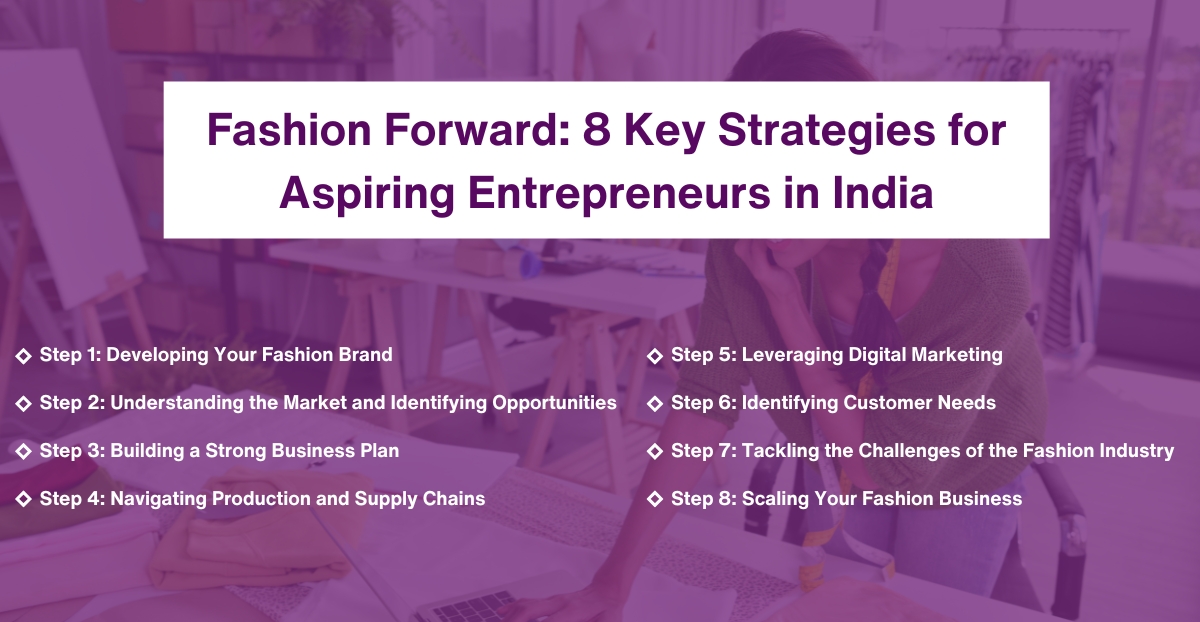
Step 5: Leveraging Digital Marketing
In today’s digital age, a strong online presence is critical for the success of any fashion business. To reach a broad customer base, focus on the following digital marketing strategies:
- Website and E-Commerce: Invest in a well-designed website that showcases your products and allows customers to shop online. Integrate an easy-to-navigate e-commerce platform.
- Social Media: Platforms like Instagram and Pinterest are especially effective for fashion brands. Create engaging, visually appealing content that highlights your products and brand story.
- Influencer Marketing: Collaborate with influencers who align with your brand. This will boost your credibility and expand your reach.
- Email Marketing: Regular newsletters featuring your latest collections, promotions, and fashion tips can help build customer loyalty.
Don’t underestimate the power of digital marketing tools like Facebook Ads or Google Ads. These platforms allow you to target specific demographics and track the effectiveness of your campaigns.
Step 6: Identifying Customer Needs
Understanding customer behaviour and preferences is a must for any fashion entrepreneur. Use customer feedback, online reviews, and social media interactions to gain insights into what your audience wants. This will help you make informed decisions about future designs, collections, and marketing strategies.
Listening to your customers and responding to their needs increases customer satisfaction and builds brand loyalty. For example, if a customer suggests a particular design change or material preference, consider incorporating it into your next product line.
Step 7: Tackling the Challenges of the Fashion Industry
The fashion industry is fast-paced and often unpredictable, with trends changing rapidly. One of the main challenges you’ll face as a fashion entrepreneur is staying ahead of these trends while maintaining your brand’s unique identity.
Another challenge is the competition. The market is saturated with established brands, so standing out requires constant innovation, excellent customer service, and consistent quality.
Lastly, the fashion industry is moving towards greater sustainability, which can present both opportunities and challenges. While there is a growing demand for eco-friendly fashion, integrating sustainable practices into your fashion business can be expensive and complex. However, the long-term benefits of building a sustainable brand can outweigh the initial costs.
Step 8: Scaling Your Fashion Business
Once your fashion business is up and running, focus on scaling it. This could involve expanding your product line, entering new markets, or increasing your online presence. Look for growth opportunities in international markets, especially with the rise of e-commerce platforms that make cross-border sales easier.
Additionally, consider participating in fashion exhibitions and trade shows. These events offer excellent networking opportunities, helping you connect with industry professionals, suppliers, and potential customers.
Conclusion
Becoming a successful fashion entrepreneur in India requires a mix of creativity, business acumen, and adaptability. From developing a distinctive brand to mastering digital marketing, every step of the journey requires careful planning and execution. By understanding the market, identifying customer needs, and leveraging technology, you can carve out a niche and build a thriving fashion business.
If you are looking for expert guidance to help you on this journey, consider consulting with industry professionals through platforms like the deAsra Foundation, which provides valuable resources and mentorship for aspiring entrepreneurs.
FAQs
1. What are the key steps to becoming a successful fashion entrepreneur?
To become a successful fashion entrepreneur, you must begin by researching the market and identifying your niche. Developing a unique brand identity that resonates with your target audience is crucial. You’ll also need to craft a solid business plan, focusing on sustainable practices and digital marketing strategies. Networking with industry insiders and staying up-to-date with trends will help you stay competitive in the fast-paced fashion industry.
2. How can I identify a profitable niche in the fashion industry?
Identifying a profitable niche involves understanding current fashion trends and consumer preferences. Research gaps in the market where demand outpaces supply. For example, eco-friendly fashion and inclusive sizing are rapidly growing niches. Engaging directly with potential customers and analysing competitors’ strategies will also help you pinpoint a niche that aligns with your brand’s strengths and values.
3. What role does digital marketing play in fashion entrepreneurship?
Digital marketing is essential for any fashion entrepreneur. It helps increase brand visibility, engages customers, and drives sales. Effective digital marketing strategies include social media marketing, email campaigns, influencer collaborations, and SEO optimisation. Platforms like Instagram and Pinterest allow for highly visual storytelling, which is perfect for showcasing fashion products and creating brand loyalty.
4. How important is sustainability in the fashion business today?
Sustainability has become a major driving force in the fashion business. Consumers are increasingly concerned with the environmental and ethical impacts of fashion production. Incorporating sustainable practices, such as using eco-friendly materials or fair-trade manufacturing processes, can significantly enhance your brand’s reputation and appeal to a growing segment of conscious consumers.
5. What challenges should I expect when starting a fashion business in India?
Starting a fashion business in India comes with challenges such as intense competition, rapidly changing trends, and the need to keep up with evolving consumer preferences. Other potential hurdles include managing costs, securing funding, and implementing sustainable practices. However, opportunities in digital fashion, global e-commerce, and increasing demand for personalised fashion services offer significant potential for growth.