
Shine Bright: 6 Steps to Start an Artificial Jewellery Business from Home
Interested in turning your passion for jewellery into a profitable venture right from the comfort of your home? Starting an artificial jewellery business could be the golden opportunity you’ve been searching for. Let’s explore how you can set up your dazzling jewellery business with sparkling ideas and practical steps.
Understanding the Market
Before diving into the glitsy world of artificial jewellery, it’s crucial to understand the market dynamics. Who are your potential customers? What types of jewellery are currently in demand? Practising market research will help you identify trends and preferences that will shape your product offerings.
6 Steps to Start an Artificial Jewellery Business from Home
1. Sourcing High-Quality Materials
The quality of the materials used can make or break your artificial jewellery business. Source high-quality beads, stones, and metals from reputable suppliers. Consider the durability and appearance of materials, as these will influence customer satisfaction and repeat business.
2. Designing Unique Pieces
Differentiate yourself in the market by providing distinctive and attractive designs. Whether you’re following current fashion trends or creating classic pieces, your designs should resonate with your target audience. Keep experimenting with different styles and themes to keep your collections fresh and exciting.
3. Setting Up an Online Store
In today’s digital age, it is essential to have an online presence. Set up an online store or utilise platforms like Pinterest or Instagram to showcase and sell your creations. Make sure your website is user-friendly, and your product photos are high-quality to attract and retain customers.
4. Effective Marketing Strategies
How will you catch the eye of potential buyers? Effective marketing strategies are crucial for enhancing your artificial jewellery business. To expand your reach, use social media marketing, collaborate with influencers, and utilise email marketing. Consider special promotions and seasonal discounts to boost sales.
5. Managing Inventory and Pricing
Keep a close eye on which pieces are popular and manage your inventory accordingly to avoid overproduction or stockouts. Pricing your products correctly is also crucial; it should cover your costs, be competitive, and ensure a good profit margin.
6. Staying Competitive
To keep your artificial jewellery business thriving, stay updated with industry trends and continuously ask for feedback from your customers. Engaging with your customers through social media and customer surveys can provide you with invaluable insights that can help improve your business.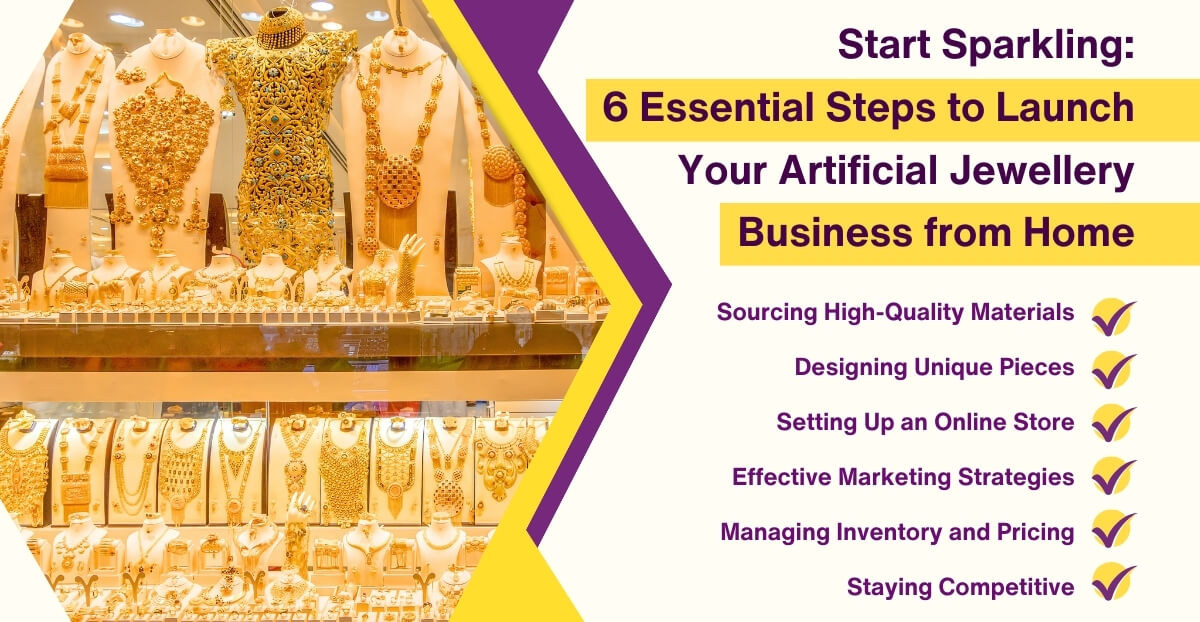
Conclusion
Starting an artificial jewellery business from home is not just about crafting wonderful pieces; it’s about strategically planning every step from production to sales. With creativity, dedication, and the right approach, your jewellery business can not only sparkle but also shine brightly in the competitive market.
Transform Your Passion into Profit: Start Your Jewellery Business with deAsra
Ready to turn your passion for jewellery into a thriving artificial jewellery business? Whether you’re drafting your first business plan or refining your business strategy, deAsra Foundation is here to support every step of your entrepreneurial journey. Visit our Business Planning and Idea Validation Services for expert advice to help validate and plan your business effectively.
For detailed insights into crafting a specialised business plan for your jewellery venture, explore our article on creating a Jewellery Business Plan. Start your journey with the deAsra Foundation today!
FAQs
1. What are the initial steps to begin an artificial jewellery business from home?
The journey begins with comprehensive market research to understand the latest trends, consumer preferences, and the competitive landscape. Identify your target audience and figure out the unique offerings you can provide. Source high-quality materials from the most reliable suppliers to ensure your products stand out from the crowd in terms of quality and design.
2. What are some innovative artificial jewellery business ideas?
To carve a niche in the market, consider specialising in bespoke or custom-made jewellery, which allows customers to have a hand in designing their own pieces. Another idea could be focusing on sustainable jewellery, using eco-friendly materials and processes. Additionally, tapping into cultural themes can attract customers looking for jewellery that celebrates heritage and craftsmanship.
3. How can I effectively market my artificial jewellery business?
One of the artificial jewellery business ideas is to utilise the power of digital marketing to create a strong online presence. This can be gained by creating an appealing, user-friendly website, implementing SEO techniques to enhance visibility, and actively participating on visually-oriented social media platforms such as Instagram and Pinterest, which are quite ideal for showcasing jewellery. Additionally, consider running targeted ads to reach a wider audience and explore opportunities in online marketplaces.
4. What challenges might I face when starting an artificial jewellery business and how can I overcome them?
Challenges may include differentiating your brand in a saturated market, managing inventory, and handling customer service. To overcome these, focus on creating a unique brand identity, use inventory management software to keep track of your stock, and establish clear policies for customer interaction that ensure a positive experience. Networking with other business owners can also provide quite valuable insights and support.
5. Where can I find extra resources to help start an artificial jewellery business?
For a comprehensive support structure, consider platforms like the deAsra Foundation, which offers resources ranging from business planning to marketing and financial management. Also, look for online forums, industry blogs, and webinars that can provide ongoing education and networking opportunities. Local small business development centres and trade shows are also excellent for learning and exposure.