10 Types of Employee Training Every Company Should Consider
Many business owners believe they can skip employee training because “good people already know everything”. In a recent episode of the deAsra Foundation’s dreamBIG podcast on Training and Retention, HR expert Ms Sajiri shattered this myth beautifully. With over 16 years of experience, she said, “There is no perfect employee – every person you hire needs training. What’s worse than training someone who leaves? Not training someone who stays.”
This powerful insight reminds every industry leader that employee training is not an expense; it is the smartest investment you will ever make – just like buying insurance even when you hope you never need it.
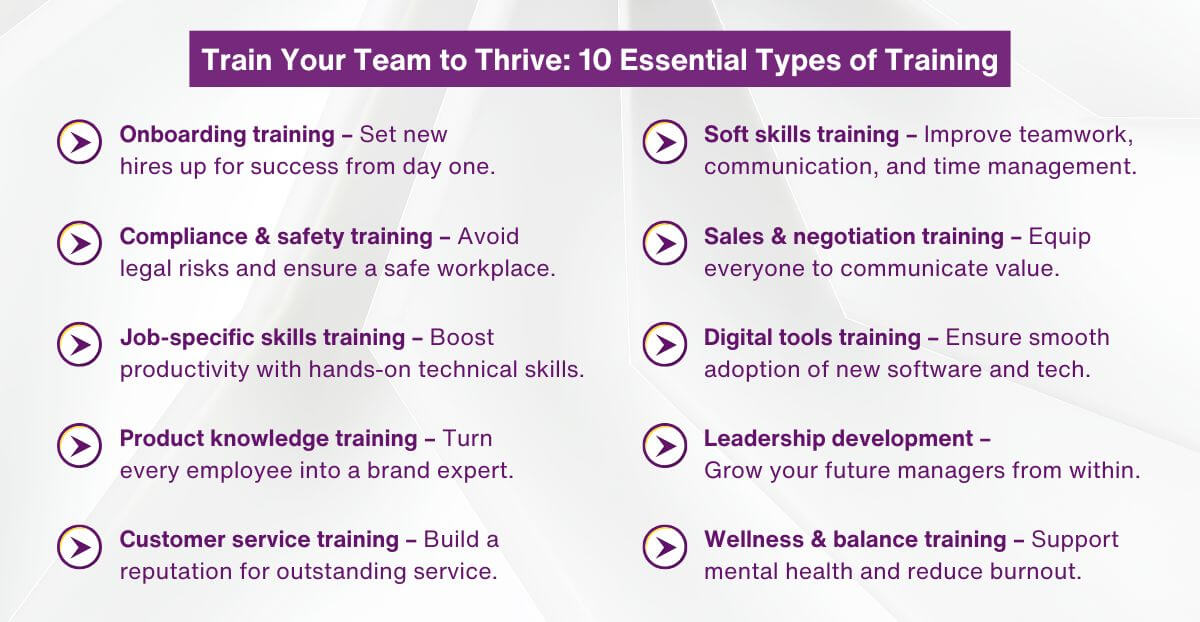
Here are 10 proven types of employee training that every company – from a 5-person startup to a 3000-employee organisation – should seriously consider.
1. Onboarding and Induction Training
The first week decides whether a new joiner becomes an asset or a liability. Proper onboarding covers company culture, basic policies, do’s and don’ts, and role clarity. Ms Sajiri stresses that the founder or a senior team member must personally spend time in the first week. A structured onboarding process reduces early attrition by up to 50 % and sets the tone for long-term performance.
2. Compliance and Safety Training
Legal and regulatory compliance is non-negotiable, whether you run a restaurant, a factory, or an IT firm. Fire safety, POSH (Prevention of Sexual Harassment), data privacy, and labour-law awareness fall under this category. Many small businesses ignore this until an inspection or complaint arrives – by then, it is too late.
3. Technical and Job-Specific Skills Training
This is the classic hands-on employee training and development that directly improves daily output. From teaching Excel shortcuts to training a chef on your signature recipe, job-specific skills make people productive faster. In small teams, peer-to-peer learning sessions of just one hour a day work wonders.
4. Product and Service Knowledge Training
Your front-line staff are your brand ambassadors. Regular updates on new products, pricing changes, or service features ensure customers receive accurate information. Companies that invest in continuous product training see higher customer satisfaction and repeat business.
5. Customer Service and Communication Training
Even experienced hires need to understand “how we speak to customers here”. Role-plays, live call shadowing, and feedback sessions help align everyone with your unique service standards. Outstanding customer service rarely happens by accident – it is trained.

6. Soft Skills and Behavioural Training
Time management, teamwork, conflict resolution, and emotional intelligence matter as much as technical ability. These sessions are particularly useful when you notice “know-it-all” attitudes or resistance to new processes. As Ms Sajiri wisely puts it, “What worked in their previous company may not work here – you have to train them on your culture.”
7. Sales and Negotiation Training
Every employee sells – whether they are in the sales team or not. Basic training on handling objections, upselling, and building rapport can dramatically improve revenue. Even non-sales staff who learn to communicate value add to the top line indirectly.
8. Digital and Technology Adoption Training
New software, CRM tools, or even WhatsApp Business features need proper rollout. Many employee training programs fail because leaders assume “youngsters will figure it out”. A 2–3 hour guided session saves weeks of confusion and mistakes.
9. Leadership and People-Management Training
Future managers are growing in your team today. Early exposure to delegation, feedback techniques, and performance conversations prepares them to lead when the company scales. Small businesses that skip this type of employee training and development struggle the most during growth phases.
10. Wellness and Work-Life Balance Training
Mental health awareness, stress management workshops, and flexible policy education are the new essentials. When employees feel cared for, they stay longer and perform better. Simple half-day sessions or monthly team activities can create that “feel-good factor”, Ms Sajiri says can last ten years.
Listen to the complete dreamBIG podcast episode on Training and Retention here.
How to Choose and Implement the Right Mix
Not every company needs all ten types at once. Start with onboarding, compliance, and job-specific skills – these give the fastest return. Then gradually introduce soft skills and leadership employee training programs as your team matures.
A practical step-by-step guide to building your own effective employee training and development framework is available in this detailed blog.
Conclusion
Employee training is the bridge between hiring someone and turning them into a high-performing team member who grows with your vision. Industry leaders who treat training as an unavoidable investment – rather than an optional luxury – build stronger cultures, higher productivity, and natural retention. Start small, document everything, use your internal experts, and watch your people become your biggest competitive advantage.

FAQs
1. How much time should a small business owner spend on employee training?
Even one hour a day in the first week, followed by weekly 30–to 60–minute sessions, is sufficient. The owner’s personal involvement in early-stage employee training and development shows the team that learning matters.
2. We are only 8 people – do we really need structured employee training programs?
Yes. Without structure, knowledge stays in one person’s head, and the business suffers when someone leaves. Simple checklists and peer sessions are perfect for tiny teams and cost almost nothing.
3. What if we train people and they leave anyway?
Ms Sajiri answers this perfectly: the real risk is an untrained person who stays and drags performance down. Smart employee training programs improve your brand in the job market – many trained ex-employees become your best recruiters.
4. Can senior employees handle training instead of the owner?
Absolutely, provided they fully understand the culture and processes. Document the content so quality remains consistent even when the trainer changes.
5. How do we fund employee training and development in a tight budget?
Start with free or low-cost internal methods, such as peer learning, YouTube tutorials, and lunch-and-learn sessions. The return in productivity far outweighs the tiny time investment. External workshops can come later when cash flow improves