10 Powerful Branding Examples (And What Your Business Can Learn From Them)
What separates a local shop from a legendary name people talk about for decades? The answer lies in brilliant branding examples that go far beyond logos and colours. In the latest episode of deAsra’s dreamBIG podcast, award-winning designer and global brand strategist Mr Dhruva Pakhnikar explained that real branding is the soul of your company – the feeling customers carry in their hearts.
This article (inspired by that masterclass – listen here) breaks down 10 powerful branding examples that industry leaders still study today and shows exactly how smaller businesses can apply the same principles right now.
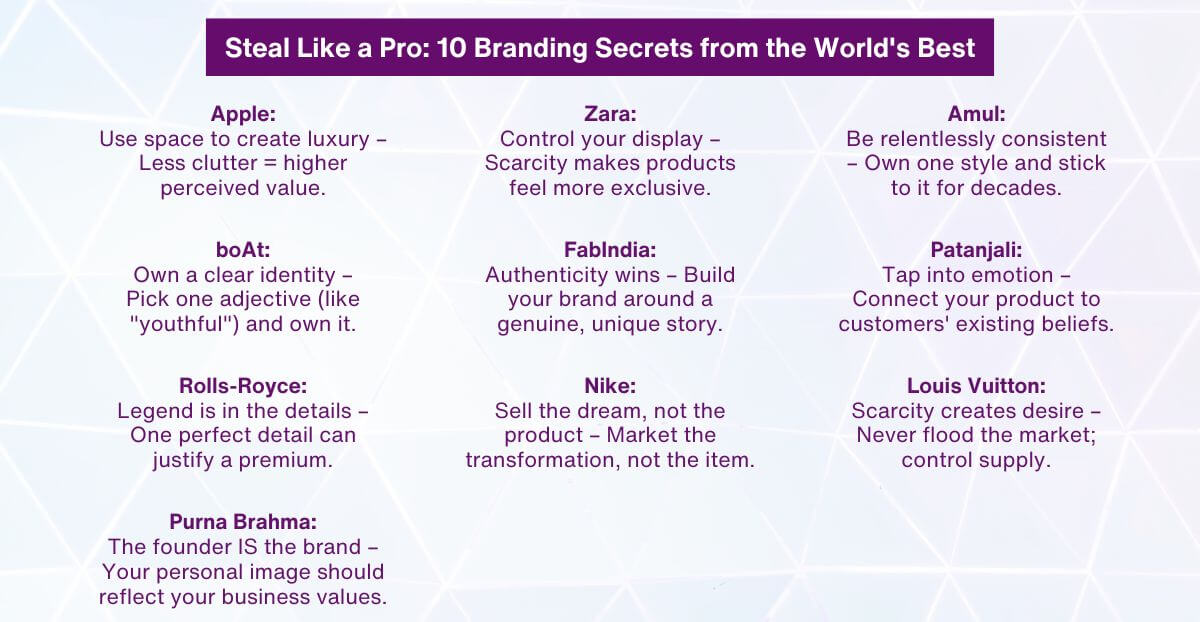
1. Apple – Master of Perceived Value Through Space
Visit apple.com, and you’ll see one huge product image dominating the screen. Mr Dhruva Pakhnikar calls this the “Horror Hokai” principle: the more space you give something, the higher its perceived value becomes. Apple turned good technology into aspirational luxury simply by showing less.
Brand positioning example: Premium without shouting. Small businesses can copy this on their website, Instagram carousel, or even physical store displays – leave breathing room around your hero product.
2. Zara – High Fashion Feel at High-Street Prices
Walk past a local market stall packed with clothes versus a Zara store with just two mannequins in the window. Same fabrics, very different price tags. Zara uses controlled scarcity and space to position itself above fast fashion.
Brand positioning example: Perceived exclusivity. Even a neighbourhood boutique can limit displayed items and instantly feel more premium.
3. Amul – 59 Years of Topical Consistency
For almost six decades, the Amul girl has delivered witty, current-affairs-based hoardings on just 80–90 sites across India. Mr Dhruva Pakhnikar says, “Once Amul caught attention with creativity, the entire game became consistent.”
Brand positioning example: Own one communication style forever. Choose one tone (funny, caring, bold) and never waver.
4. boAt – Youth, Music, Affordable Energy
Red + black colours, crowded product pages, and youth enjoying music – boAt screams “cool yet reachable”. They understood that Indian youth want style without breaking the bank.
Brand positioning example: Clear adjective association. Ask yourself: what one word should people connect with your brand?
5. FabIndia – Authenticity Woven into Every Thread
Handloom, earthy tones, and stories of artisans – FabIndia turned Indian tradition into quiet luxury. They never chase trends; they own heritage.
Brand positioning example: When everyone zigs, zag. Find the one thing competitors ignore and make it your soul.

6. Patanjali – Swadeshi Emotion at Scale
By linking everyday products to national pride, Patanjali created an emotional bond stronger than any discount offer.
Brand positioning example: Tap into existing beliefs. Identify what your customers already feel strongly about and align.
7. Rolls-Royce – Hand-Painted Pinstripes Worth Thousands
A single coachline on every Rolls-Royce is still painted by hand by one man using a brush made from squirrel hair. That tiny detail justifies lakhs extra. Mr Dhruva Pakhnikar reminds us: “Pricing should be directly proportional to the value you deliberately create.”
Brand positioning example: Turn one small detail into a legend.
8. Nike – Aspiration, Not Shoes Second
Nike doesn’t sell footwear; it sells the feeling of being an athlete. “Just Do It” works because every visual shows victory, sweat, and triumph.
Brand positioning example: Sell the transformation, not the product.
9. Louis Vuitton – From Trunk Maker to Cultural Icon
Started as a luggage company, now a symbol of wealth. They achieved this by never discounting and keeping supply tight.
Brand positioning example: Controlled scarcity beats flooding the market every time.
10. Purna Brahma – Founder Becomes the Brand
Mrs Jayanti Kathale appears publicly only in a traditional Maharashtrian nau-vari saree. When people think of authentic Maharashtrian food, they picture her.
Brand positioning example: Personal branding done right. The founder who wears the brand values daily creates unbreakable trust.
Key Lessons Every Business Can Use Today
These branding examples prove that size doesn’t matter – clarity does. Whether you run a cloud kitchen or a software startup, pick one strong association, repeat it consistently across every touchpoint, and give your product generous space (digital or physical). As Mr Dhruva Pakhnikar beautifully puts it, “Everyone is already doing branding subconsciously. Conscious branding is the difference between walking around town and going to the gym to get the exact body you want.”
Want to apply these principles step-by-step to your own business? Read the complete interview with Mr Dhruva Pakhnikar here: Branding for Small Businesses – Dhruva Pakhnikar’s Guide to Growth. And register for more such insights at deAsra’s dreamBIG series here.
Conclusion
Great branding examples are not accidents. Apple, Amul, Zara, and even your neighbourhood paanwala who remembers every customer’s order – they all follow the same rules: know your soul, own one strong association, stay painfully consistent, and let the customer feel the emotion first. Start with one of these ten lessons today and watch your business move from “another shop” to “the only choice”.

FAQs
1. Can a small business really copy Apple or Zara?
Yes – you don’t need their budget, only their thinking. Leave empty space on your website homepage, limit displayed products in your store or catalogue, and instantly raise perceived value. Thousands of boutique owners have done exactly this and doubled their average bill size.
2. We are five years old and never did proper branding. Is it too late?
Mr Dhruva Pakhnikar says it is never too late. You have already built a brand subconsciously through customer experience. Now switch to conscious branding by writing your 20-year vision, listing what customers love/hate, and aligning everything to that vision.
3. Should my pricing go up after branding?
Only if perceived value goes up. Sometimes strong branding actually helps you reduce production costs and price lower while still feeling premium (think Zara). Price must always match the feeling you create.
4. How important is the founder’s personal image?
Extremely. Customers trust people before companies. If you sell organic products, live organically. If you sell fitness, look fit. The founder who wears the brand values daily creates the fastest recall and trust.
5. How do I create recall when there is so much noise on social media?
Recall is built through repetition of the same emotion, not more posts. Mr Dhruva Pakhnikar explained the “exposure effect”: show the same feeling (colour palette, tone of voice, music, packaging smell, employee behaviour) again and again across every sense. Even if someone sees your brand only seven to ten times with the identical emotion attached, it sticks forever. Stop chasing new content every day – chase the same feeling every day.