
10 Essential Questions to Ask When Hiring Employees
“Attitude comes first. Clarity about what the candidate knows and doesn’t know is next. And finally, their scalability—can they grow with the business?” – Mr. Girish Tilak
In the fast-paced world of hiring employees, small business owners often face tough choices. Resumes tell a story of past jobs, but they miss the real spark: a candidate’s attitude, problem-solving skills, and fit within your team. Mr. Girish Tilak, a headhunting expert with over three decades of experience, stresses that mindset drives success in hiring for small businesses. As shared in deAsra Foundation’s DreamBIG program on hiring for growth, the right questions reveal if someone commits to tasks and aligns with your vision. This approach helps hiring employees go beyond paper qualifications, uncovering true potential for long-term growth.
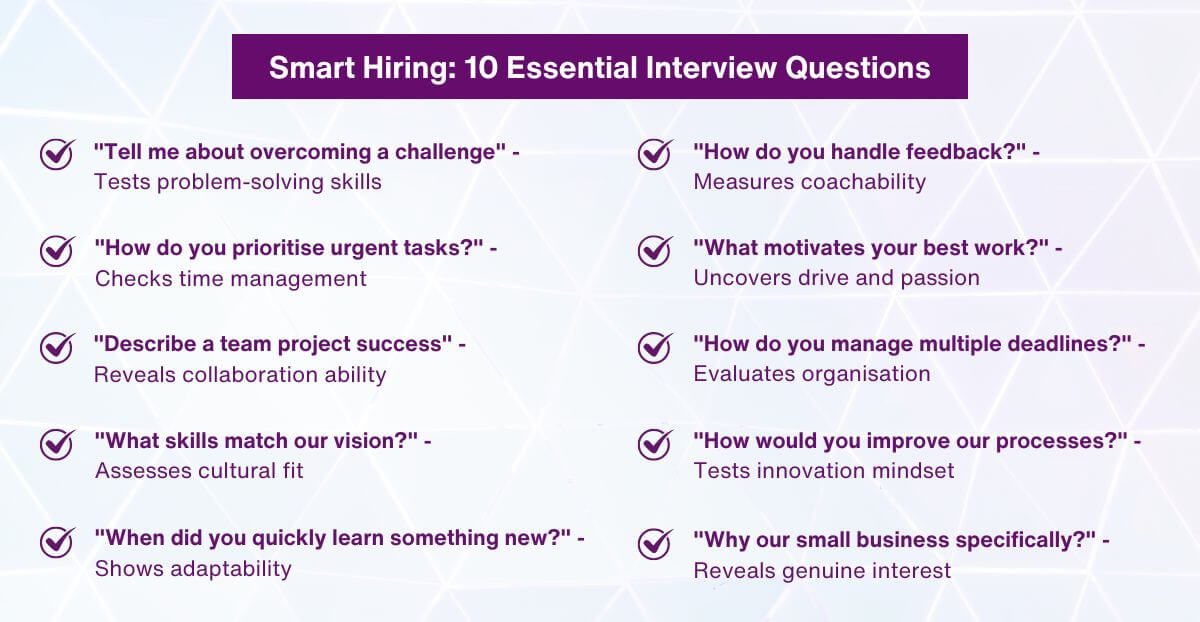
For hiring for small business owners juggling multiple roles, a structured interview process saves time and reduces risks. Asking targeted questions assesses experience, initiative, and cultural fit. It turns interviews into insightful conversations, much like Mr. Tilak advises: focus on specifics to avoid vague answers. Explore strategies for attracting talent on a budget to complement this. Below are 10 essential questions tailored for hiring employees in resource-limited settings.
Question 1: Can You Walk Us Through a Time When You Turned a Challenge into a Success?
This question probes problem-solving ability. In hiring employees, look for responses that show initiative and resilience. A strong candidate details the problem, their actions, and measurable results, like increasing sales by 20% through creative outreach. Mr. Tilak warns against vague claims, such as “I boosted sales hugely.” Seek specifics: What steps did they take? Did they adapt under pressure? For hiring for a small business, this reveals if they can handle real-world hurdles without constant supervision, ensuring they contribute to growth from day one.
Question 2: How Do You Prioritise Tasks When Everything Feels Urgent?
Reliability shines here. When hiring employees, evaluate how candidates balance demands. Ideal answers describe methods like Eisenhower matrices or daily reviews, with examples of meeting deadlines. Watch for accountability—do they own delays or blame others? In hiring for small businesses, where teams are lean, this question identifies self-starters who prevent bottlenecks. Mr. Tilak’s principle of “commit to what you can do, and do what you commit to” fits perfectly; responses should reflect this mindset for sustained performance.
Question 3: Describe a Situation Where You Worked Closely with a Team to Achieve a Goal.
Teamwork is vital in hiring employees. Look for stories highlighting collaboration, communication, and conflict resolution. A good response includes their role, contributions from others, and shared success, such as launching a product ahead of schedule. Red flags include “I did it all myself.” For hiring for a small business, this ensures cultural fit, fostering the “we” synergy Mr. Tilak champions over solo “I” efforts. It helps build trust and efficiency in tight-knit environments.
Question 4: What Skills Do You Bring That Align with Our Company’s Vision?
Motivation and fit come to light. In hiring employees, assess enthusiasm for your goals. Strong replies connect experience to your needs, like adapting marketing skills to your niche market. Probe deeper: Why our business? For hiring for a small business, this question uncovers passion beyond salary, revealing scalability. As Mr. Tilak notes, hire for tomorrow—candidates who envision growth with you will stay longer and drive innovation.
Question 5: Tell Us About a Time You Learned a New Skill to Meet a Job Demand.
Adaptability is key in hiring employees. Seek examples of quick learning, such as mastering software in weeks to improve operations. Look for proactive steps and outcomes, like reducing errors by 30%. Vague answers signal rigidity. Hiring for small business demands versatile players; this question, inspired by Mr. Tilak’s emphasis on trainable skills, ensures hires evolve with your expanding operations, saving training costs.
Question 6: How Do You Handle Feedback, Positive or Constructive?
This tests openness and growth mindset. When hiring employees, positive responses show humility and action, like implementing boss suggestions to boost efficiency. Defensiveness is a warning. For hiring for small business, where direct feedback is common, this builds a receptive team. Mr. Tilak advises handholding new hires; candidates who embrace guidance align with this, leading to faster integration and mutual respect.
Question 7: What Drives You to Perform at Your Best Each Day?
Motivation reveals inner fire. In hiring employees, listen for intrinsic drivers like impact or challenges, not just perks. Examples might include thriving in dynamic settings to exceed targets. Superficial answers miss depth. Hiring for small business benefits from self-motivated individuals who align with entrepreneurial hustle, reducing micromanagement and enhancing productivity.
Question 8: Give an Example of How You’ve Managed Multiple Deadlines Successfully.
Time management is crucial for hiring employees. Ideal answers outline tools or strategies, with results like on-time deliveries despite overlaps. Check for realism and lessons learned. In hiring for small businesses, this prevents overload in small teams, ensuring reliability as volumes grow.
Question 9: How Would You Approach Improving a Process in Our Operations?
Innovation stands out here. When hiring employees, seek practical ideas tied to your context, showing research and creativity. Look for past improvements with metrics. For hiring for small businesses, this identifies value-adders who spot efficiencies, aligning with Mr. Tilak’s call for observant, adaptable mindsets.
Question 10: Why Do You Want to Join Our Small Business Specifically?
Cultural fit caps the list. In hiring employees, a genuine interest in your story—vision, clients, challenges—signals commitment. Generic replies raise doubts. Hiring for small businesses thrives on shared purpose; this question, per Mr. Tilak, builds the “we” journey, boosting retention through belonging.
Conclusion
Mastering these 10 questions transforms hiring employees into a strategic tool for hiring for a small business. By focusing on attitude, specifics, and fit, you sidestep common pitfalls like unrealistic expectations. Mr. Tilak’s wisdom reminds us: “Skills can be trained and groomed… But attitude is often inherent.” Thoughtful questioning leads to hires who scale with you, fostering retention and growth. Implement this process to build a loyal team that propels your business forward.
“When hiring, ensure you’re not just hiring for today but for tomorrow and beyond.” – Mr. Girish Tilak
FAQs
1. Why prioritise attitude over skills when hiring employees?
Attitude forms the base for long-term success in hiring employees. Mr. Tilak explains that a can-do mindset allows skills to develop through training and team interactions. In hiring for small businesses, where resources are tight, adaptable hires learn quickly and align with growth visions, reducing turnover and boosting efficiency over time.
2. How can small businesses use referrals in hiring employees?
Referrals top reliable sources for hiring employees, building trust like family ties. Mr. Tilak recommends them first, as known contacts ensure mindset match. For hiring for small businesses, leverage networks for quick, low-cost vetting, leading to faster onboarding and cultural harmony without heavy advertising spends.
3. What role does job description play in hiring employees?
Clear job descriptions guide hiring employees by outlining essentials like tasks and attitudes. Pin must-haves on a whiteboard, as Mr Tilak suggests, to attract fits. In hiring for small businesses, specifics on location and scalability draw motivated candidates, streamlining interviews and cutting mismatches.
4. How to assess scalability in candidates during the hiring process?
Probe future potential by asking about growth experiences in hiring employees. Look for eagerness to learn and adapt, per Mr. Tilak. For hiring for small businesses, this ensures hires evolve with expansion, turning one-role players into multi-contributors who support scaling without frequent rehires.
5. Can technology aid in hiring employees in small businesses?
Technology connects talent via platforms, but data quality matters first in hiring employees. Mr. Tilak views it as flattening access to skills. In hiring for small businesses, use social media and SEO for branding, enhancing visibility and making decisions while keeping costs low through targeted outreach.